How to Use the Top Reversal Pattern—Rounding Top
Gate Learn's intermediate futures series helps users build a structured framework for technical analysis, covering candlestick basics, chart patterns, moving averages, and trendlines, as well as technical indicators. In this article, we focus on the top reversal pattern—Rounding Top, covering its definition, features, application in BTC markets, and key considerations.
What Is a Rounding Top?
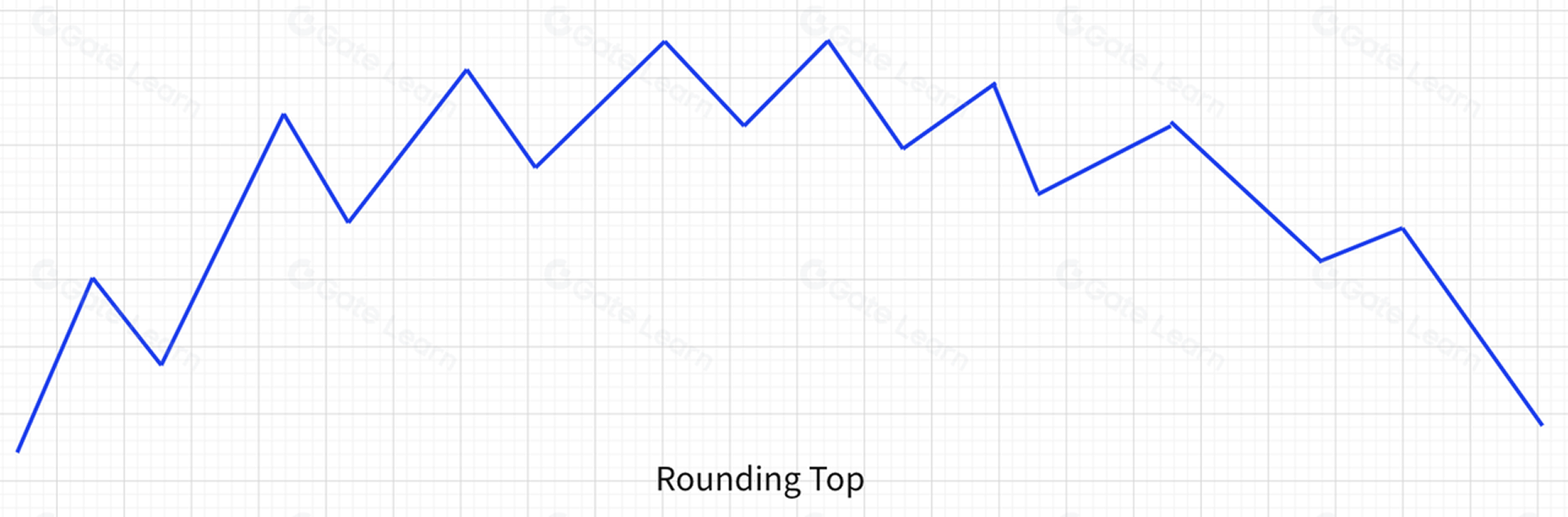
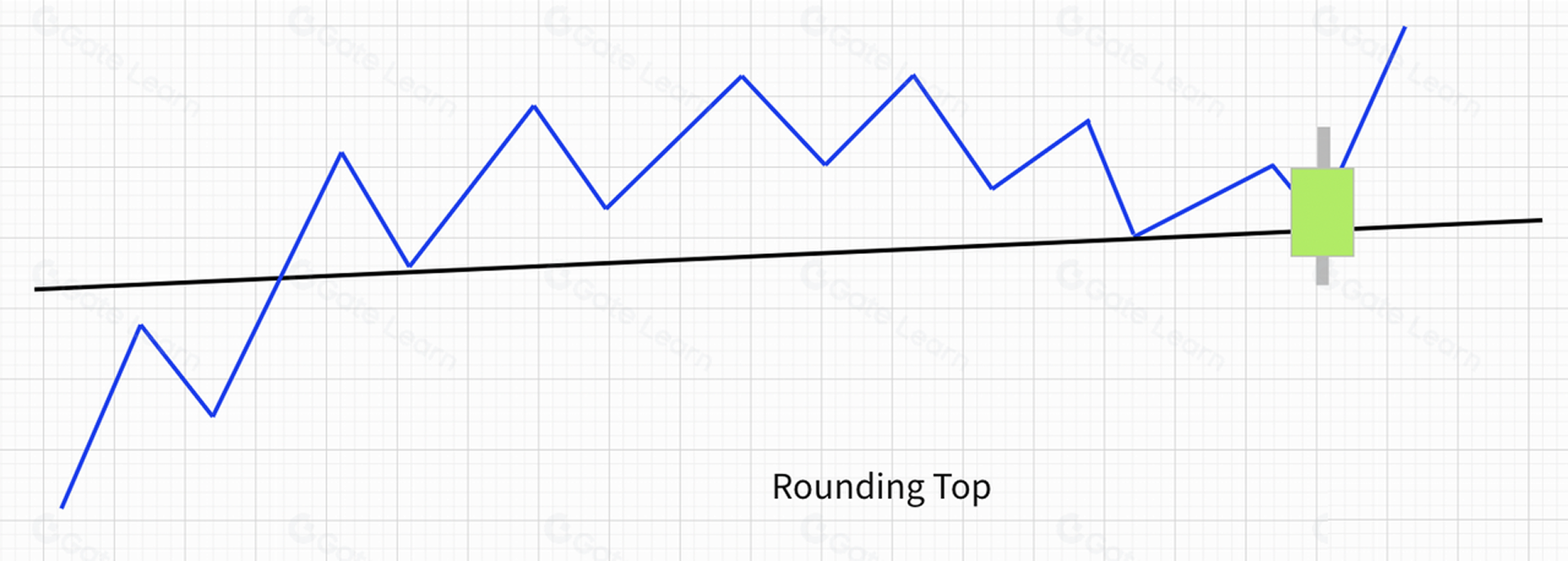
A rounding top refers to a price pattern where, during an uptrend, the rate of increase slows down, and trading volume gradually diminishes. Prices eventually stop rising, move sideways for a period, and then begin to decline slowly, with the decline accelerating over time. Because the overall structure resembles a downward-facing arc, this pattern is called a rounding top, as shown below.
Technical Characteristics of a Rounding Top
- It can appear near the end of an uptrend or during a corrective rally in a downtrend.
- Initially, price swings—both rallies and pullbacks—are relatively sharp. As prices climb higher, trader enthusiasm weakens; each new high exceeds the previous one by a smaller margin before pulling back.
- Gradually, even these pullbacks weaken, and the price transitions from making slightly higher highs to slightly lower highs. Connecting these short-term highs produces an arc-shaped curve. Eventually, more traders exit their positions, and the price accelerates downward.
- Trading volume within a rounding top is not as consistent as in a rounding bottom, though sometimes the volume histogram also forms an arc-like shape near the top.
Technical Implications of a Rounding Top
A rounding top is a reliable reversal pattern—typically more reliable than a rounding bottom. The rationale is simple: rising prices require sustained capital inflows, while falling prices require nothing—without buyers, prices naturally decline.
There are two common outcomes after a rounding top completes: The price breaks down suddenly and sharply—an immediate, steep decline; the price forms a sideways consolidation at the top—known as the cup handle portion—before breaking down.
Regardless of the variation, the rounding top signals a bearish reversal. Most “handles” break downward soon after forming.
Applications of the Rounding Top Pattern
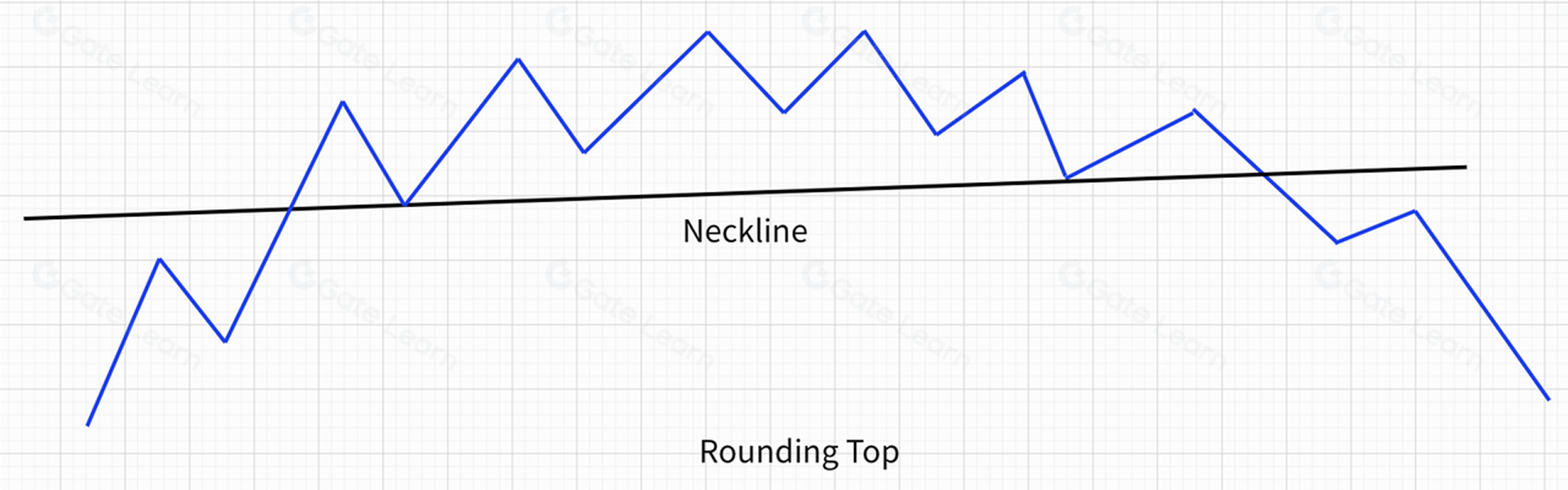
1.In trading practice, a break below the neckline signals that it’s time to exit. The neckline is the straight line connecting the lowest points within the pattern, as shown below.
2.Let’s combine the BTC market conditions and illustrate the application of the Rounding Top pattern in trading.
Above is the BTC daily chart. Between October 1 and December 5, 2021, BTC surged rapidly. As bullish momentum weakened, the uptrend flattened out while selling pressure increased. After failing to break the previous high, the price began to decline—forming a clear rounding top. A sharp decline followed, breaking the neckline and marking the beginning of a year-long downtrend with a total drop of over 70%.
Trading the Rounding Top: Key Exit Points
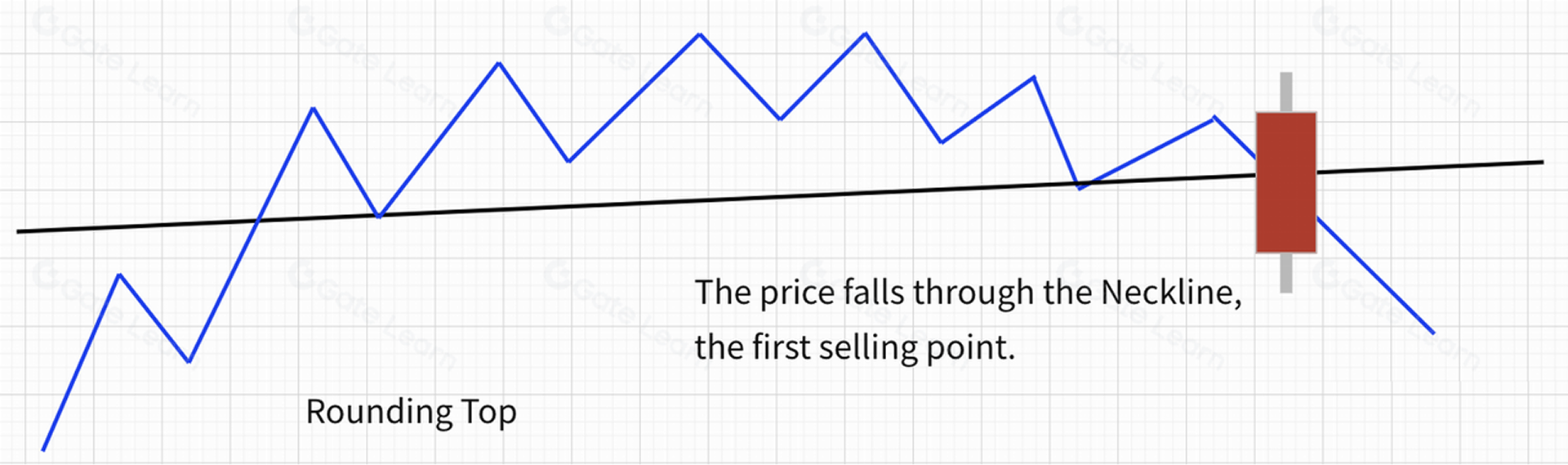
3.After price breaks below the neckline for the first time, an aggressive sell signal appears. This is a relatively aggressive exit, and success rates vary, but this is typically the earliest warning.
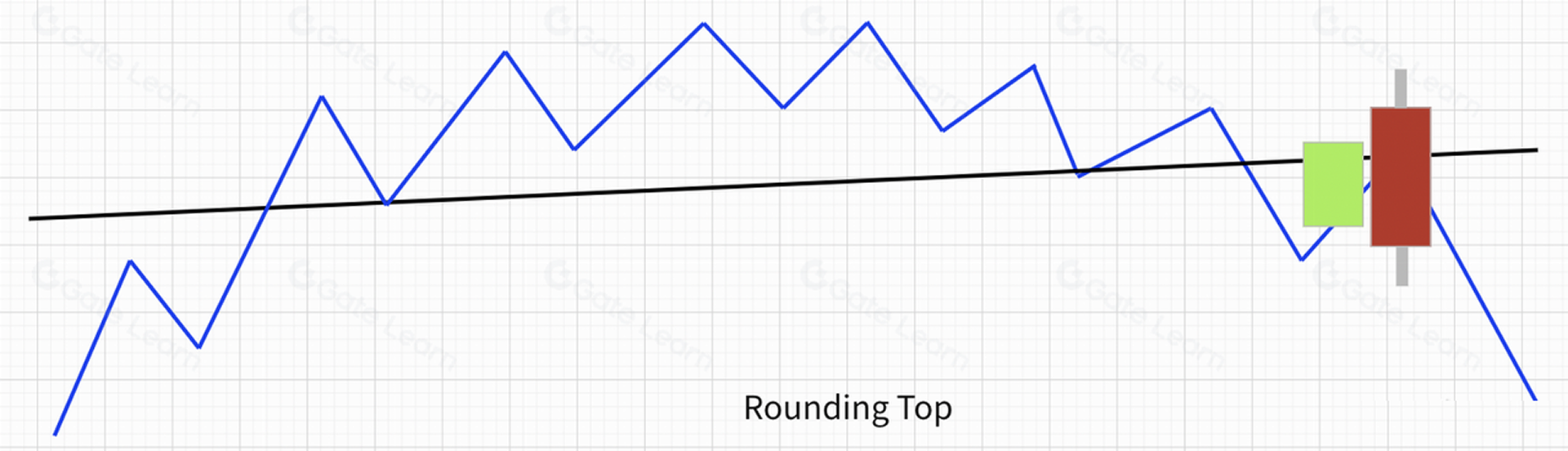
4.After breaking the neckline, the price often rebounds. If the rebound fails to reclaim the neckline, and bearish signals such as a bearish engulfing or evening star appear, a more reliable exit signal is triggered. This is a conservative selling opportunity with significantly higher accuracy.
5.The longer the rounding top takes to form, the longer and deeper the subsequent decline tends to be.
6.As with rounding bottoms, rounding tops can also fail:
7.If price breaks below the neckline but quickly rebounds above it, the breakdown is invalid, and the rounding top fails. In this case, traders should continue observing and use trend indicators to determine whether to exit.
Summary
Rounding tops are common in real-world trading. To use them effectively, keep these points in mind:
- As with rounding bottoms, sometimes the neckline is difficult to draw. Traders must combine other trend analysis methods to exit in time.
- Unlike rounding bottoms, a volume surge is not required for a breakdown to be valid. Whether volume expands or not, a clean break below the neckline confirms the reversal.
For more information on futures trading, please visit the Gate futures platform and sign up to start your futures trading journey.
Disclaimer
This article is for informational purposes only. The information provided by Gate does not constitute investment advice, nor does Gate bear responsibility for any investment decisions made by users. Content involving technical analysis, market interpretation, trading strategies, or trader insights may include potential risks, uncertainties, and market variables. Nothing in this article guarantees profits, either explicitly or implicitly.
Lesson 1:What Is Technical Analysis in the Crypto Market?
Lesson 2:Common Bullish Candlestick Patterns
Lesson 3:Common Bearish Candlestick Patterns
Lesson 4:Bottom Reversal Pattern—Head and Shoulders Bottom
Lesson 5:How to Use the Top Reversal Pattern—Head and Shoulders Top
Lesson 6:How to Use the Bottom Reversal Pattern—Rounding Bottom
Lesson 7:How to Use the Top Reversal Pattern—Rounding Top
Lesson 8:How to Use the Bottom Reversal Pattern—Double Bottom (W-Shape)
Lesson 9:How to Use the Top Reversal Pattern—Double Top (M-Shape)
Lesson 10:How to Use the Bottom Reversal Pattern—V-Shaped Reversal
Lesson 11:How to Use the Consolidation Pattern—Ascending Triangle
Lesson 12:How to Use the Continuation Pattern—Descending Triangle
Lesson 13:How to Use the Continuation Pattern—Other Triangle Patterns
Lesson 14:How to Use the Continuation Pattern—Flag Pattern
Lesson 15:How to Use the Continuation Pattern—Wedge Pattern
Lesson 16:How to Use the Continuation Pattern—Rectangle Pattern
Lesson 17:Mastering Technical Analysis—Methodology Summary
Related Courses

Tools That Help You Trade Better: Moving Averages, Trend Lines, and Indicators

Gate Futures Trading Guide - A must-read for newbies

Futures Grid Trading User Guide

ETF Leveraged Tokens — Product Guide