

Trade
Basic
Futures
Futures
Hundreds of contracts settled in USDT or BTC
TradFi
Gold
Trade global traditional assets with USDT in one place
Options
Hot
Trade European-style vanilla options
Unified Account
Maximize your capital efficiency
Demo Trading
Futures Kickoff
Get prepared for your futures trading
Futures Events
Participate in events to win generous rewards
Demo Trading
Use virtual funds to experience risk-free trading
Earn
Launch
CandyDrop
Collect candies to earn airdrops
Launchpool
Quick staking, earn potential new tokens
HODLer Airdrop
Hold GT and get massive airdrops for free
Launchpad
Be early to the next big token project
Alpha Points
Trade on-chain assets and enjoy airdrop rewards!
Futures Points
Earn futures points and claim airdrop rewards
Investment
Simple Earn
Earn interests with idle tokens
Auto-Invest
Auto-invest on a regular basis
Dual Investment
Buy low and sell high to take profits from price fluctuations
Soft Staking
Earn rewards with flexible staking
Crypto Loan
0 Fees
Pledge one crypto to borrow another
Lending Center
One-stop lending hub
VIP Wealth Hub
Customized wealth management empowers your assets growth
Private Wealth Management
Customized asset management to grow your digital assets
Quant Fund
Top asset management team helps you profit without hassle
Staking
Stake cryptos to earn in PoS products
Smart Leverage
New
No forced liquidation before maturity, worry-free leveraged gains
GUSD Minting
Use USDT/USDC to mint GUSD for treasury-level yields

More


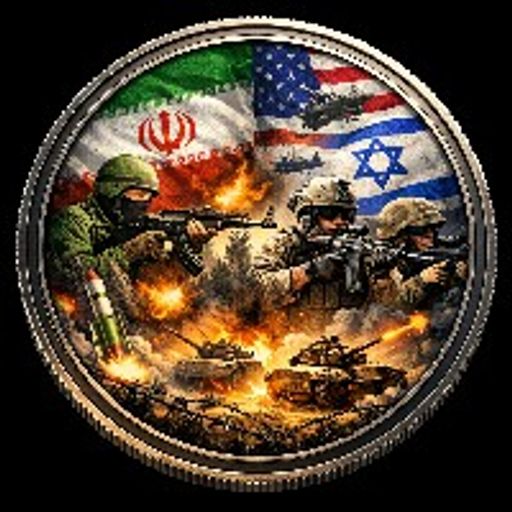



Industrial Securities: What is the essence of this US-Iran conflict? What impact will it have on the A-share market?
In our report released on December 30, 2025, titled “Six Potential Geopolitical ‘Black Swans’ for 2026,” we highlighted the need to focus on geopolitical risks in six major regions this year: Russia-Ukraine, the Middle East, South Asia, East Asia, the U.S. “backyard,” and domestic U.S. issues. Following the Venezuela incident earlier this year, on February 28, the U.S. and Israel jointly conducted military operations against Iran in the Middle East, marking the substantial realization of the second “Black Swan”—Middle East risk. This article is based on the content of a conference call with Dr. Wang Han on February 28 regarding the U.S.-Israel-Iran conflict, aiming to provide investors with timely and professional analysis and insights.
Q1: What is the essence of this U.S.-Iran conflict? Why did the U.S. choose to act now?
A: Essentially, this conflict is a strategic gamble by the U.S. to reverse its strategic dilemmas in supply chains, industry, tariffs, and other areas. The U.S. chose to act now mainly due to three factors: First, Israel’s proactive push, attempting to leverage the U.S. to resolve Iran issues; second, the U.S.-Israel intelligence network in Iran may have been compromised during recent unrest, prompting Trump to intervene directly; third, Trump faces domestic political pressure and urgently needs a quick victory to boost approval ratings and reverse unfavorable midterm election trends.
Q2: What are the strategic goals of Israel, the U.S., and Iran?
A: Israel’s core goal is to overthrow the current Iranian regime and eliminate Iran’s threat to its security. Trump’s goal is more complex: not only to topple Iran’s regime but also to achieve a swift and decisive regime change victory to stabilize domestic political support, deter strategic allies, and slow the decline of U.S. global hegemony. Iran’s bottom line is regime survival. As long as the current regime remains in power, and if Iran can drag the U.S. into a prolonged Middle East conflict, its geopolitical value will increase, and it may gain more support from other major powers.
Q3: What geopolitical chain reactions could occur if the current Iranian regime is overthrown?
A: First, a reshaping of the Middle East landscape, with Sunni forces forced to compromise with Israel and the U.S., and Turkey possibly adopting a more pro-Western diplomatic stance; second, impacts on South Asia, with key nodes of the Belt and Road Initiative potentially severed, and Pakistan facing a dilemma of fighting on both eastern and western fronts; third, shifts in the global power game, with increased geopolitical pressure on southern Russia, the U.S. opening pathways into Central Asia, and a possible formation of a new global resource alliance.
Q4: What regional linkage risks might this conflict trigger?
A: Focus on three main directions: First, a short-term escalation of the Russia-Ukraine battlefield, with Ukraine possibly increasing offensives to contain Russia; second, a significant rise in strategic risks for India in South Asia, potentially threatening Pakistan; third, accelerated risks of Japan’s militarization in East Asia, with the U.S. possibly easing restrictions on Japan.
Q5: How will this conflict impact the A-share market?
A: The previous view of a “bull market with sharp declines” remains valid:
In the short term, the market may face shocks due to three reasons: first, insufficient recognition of Iran’s importance in Eurasian geopolitics; second, rising concerns over the U.S. building a global resource monopoly alliance; third, potential inflation in resource prices affecting manufacturing sectors.
The medium-term bull market foundation remains intact. First, China possesses the world’s largest industrial system, which is its core strategic advantage; second, if Iran withstands the initial U.S.-Israel assault, market perceptions of great power competition will undergo a systemic reversal, leading to significant changes in assets like U.S. Treasuries, the dollar, and gold; third, historical patterns over the past 300 years since the Industrial Revolution show that the world’s largest industrial nation remains the most stable in geopolitical competition.
Q6: Besides, what key signals should financial markets observe?
A: Focus on U.S. Treasuries, precious metals, and forex markets: when gold prices accelerate upward, the dollar and U.S. Treasuries turn from rising to falling, and the RMB begins to appreciate, it indicates the market believes Iran can withstand the initial U.S.-Israel attack.
Q7: From a strategic perspective, what is the long-term impact of this conflict on the U.S.?
A: This is a tactical gamble by the U.S. that could yield huge rewards if successful, significantly delaying its decline in global hegemony. However, if Iran withstands the first wave of attacks, the U.S. may face serious consequences of “losing principal,” falling into a prolonged Middle East quagmire, with increased strategic disadvantages. Regardless, the previous global hegemon has relied on such tactical risks to address internal and external issues, indicating that the major transformation is already in the “midgame” stage.
Risk Warning: Uncertainty in domestic and international economic policies, geopolitical risks, and global economic and financial risks.
(Source: Industrial Securities)