Bitcoin at a Liquidity Turning Point: Macro Shifts, Tech-Sector Stress, and Rate-Cut Momentum
Bitcoin Experiences Sharp Pullback, Marking Rare Divergence from US Equities
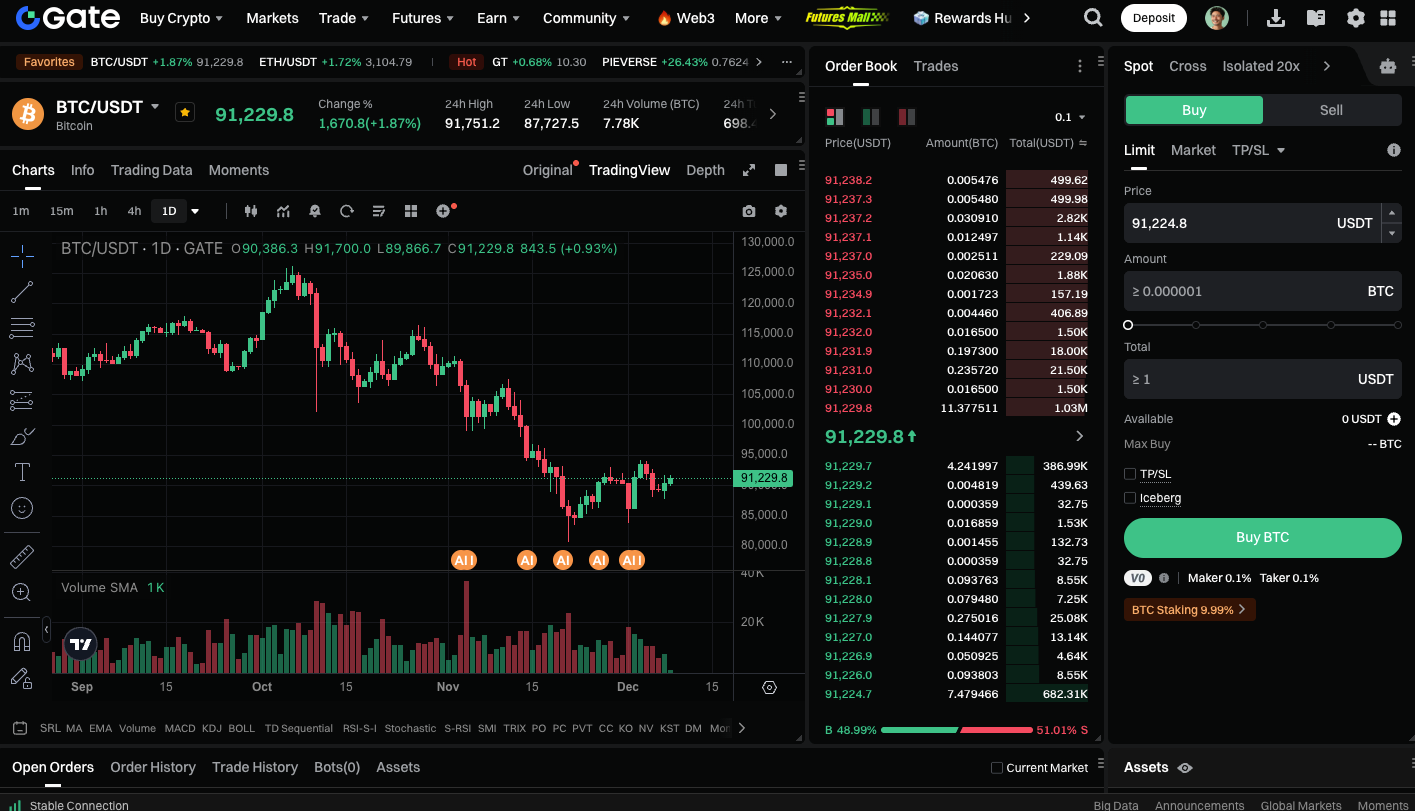
Bitcoin recently slid to $88,140, registering a nearly 19% correction since November. In contrast, the S&P 500 is trading less than 1% below its all-time high, creating a notable divergence between the two asset classes. Historically, such gaps tend to close over time. Given the current macro landscape, Bitcoin remains poised to potentially retest the $100,000 mark before year-end. At the time of writing, BTC has rebounded to approximately $91,000.
Federal Reserve Policy Shift Drives Capital Repricing
One of the primary forces behind Bitcoin’s recent price movement is the shift in policy from the US Federal Reserve.
Fed Officially Ends Quantitative Tightening (QT)
- On December 1, the Fed announced it would stop reducing its balance sheet
- Over the past six months, assets decreased by approximately $136 billion
- System liquidity is now flowing back into the market
This development is fueling expectations for an imminent rate-cut cycle.
Rate-Cut Expectations Accelerate
According to CME FedWatch:
- There is an 87% probability of an FOMC rate cut next week
- Markets are fully pricing in the potential for three rate cuts by September 2026
Money Market Funds Reach Record Levels
US money market fund assets have soared to an unprecedented $8 trillion. As rates decline:
- Yields on newly issued bonds are falling
- Institutional interest in fixed income is waning
- Capital is seeking assets with higher returns
This trend of capital reallocation could serve as a tailwind for Bitcoin.
Rising Credit Risk in the Technology Sector
Debt risk among technology companies is another source of market anxiety.
Oracle’s Credit Risk Surges
Oracle’s credit default swap (CDS) costs have reached their highest level since 2009, driven by:
- Corporate debt totaling $105 billion
- Significant dependence on revenue tied to OpenAI
- Market concerns about future bond supply
A Citigroup report also cautions that bond supply and debt pressure from large tech companies could emerge as the next major market risk.
Heightened Macro Uncertainty Underscores Bitcoin’s Scarcity
The US government’s Genesis Mission, which focuses on AI and nuclear energy, represents substantial and high-risk technology investment. The market is questioning:
- Whether debt-driven spending will deliver adequate returns
- Whether economic growth will slow further
Michael Hartnett of Bank of America notes that if the Fed maintains current rates, the risk of an economic slowdown will increase significantly. Under these circumstances, capital is reducing exposure to technology and seeking assets with limited supply and minimal policy dependence—areas where Bitcoin has a clear advantage.
Start trading BTC spot now: https://www.gate.com/trade/BTC_USDT
Summary
From the Federal Reserve’s policy reversal and declining fixed income appeal to rising tech credit risk and returning liquidity, the market is swiftly entering a new phase of asset repricing. As these dynamics converge, Bitcoin is gradually establishing a bottom and is well-positioned to challenge the $100,000 level in the coming months. The divergence between Bitcoin and US equities could signal the beginning of a new market cycle, rather than its end.
Share
Content


Related Articles

2025 BTC Price Prediction: BTC Trend Forecast Based on Technical and Macroeconomic Data

Pi Coin Transaction Guide: How to Transfer to Gate.com

Flare Crypto Explained: What Is Flare Network and Why It Matters in 2025

How to Use a Crypto Whale Tracker: Top Tool Recommendation for 2025 to Follow Whale Moves

What is N2: An AI-Driven Layer 2 Solution