Bitcoin Drops 26% but Outperforms Major Cryptos: In-Depth Market Analysis
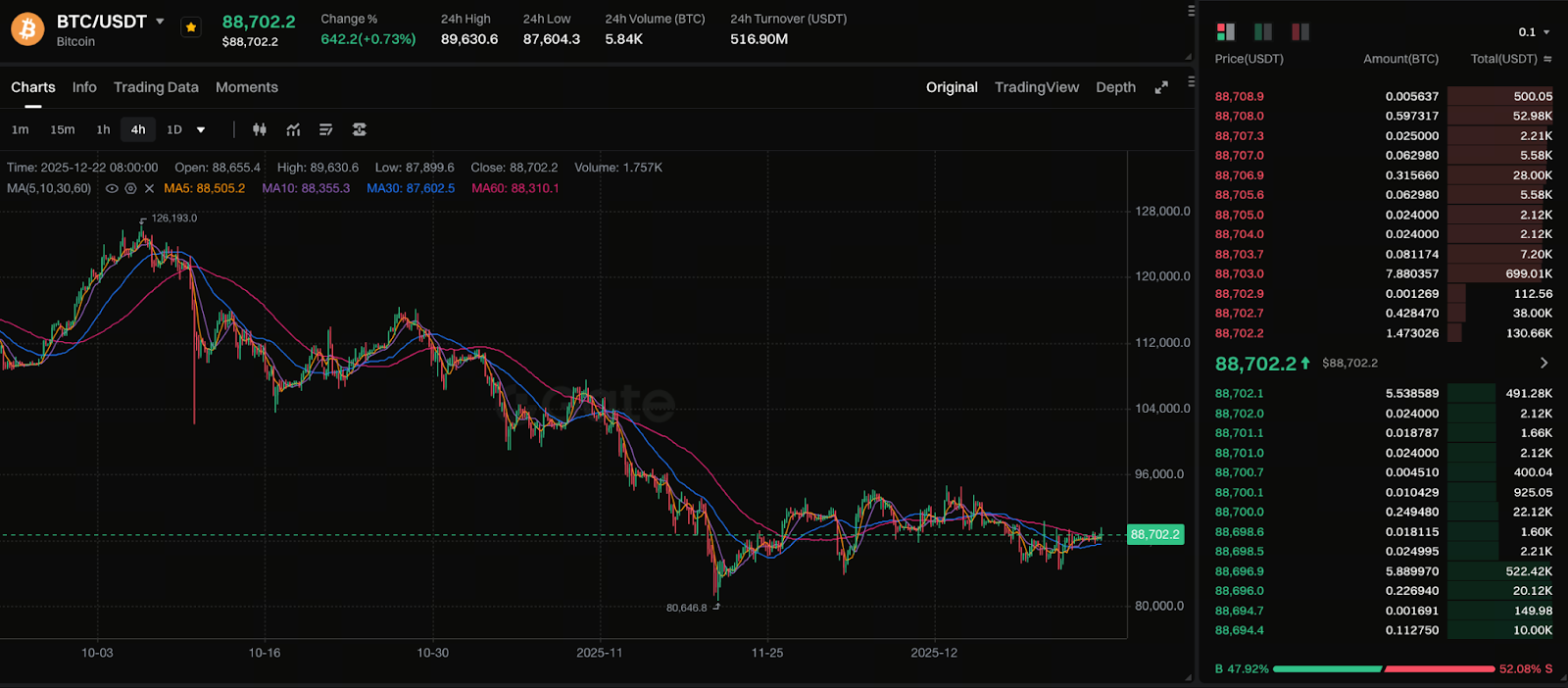
Image: https://www.gate.com/trade/BTC_USDT
As the flagship asset of the crypto market, Bitcoin has faced substantial volatility during the latest correction. Over the past three months, data shows Bitcoin’s price has fallen about 26% from its peak. While this appears to be a sharp pullback, Bitcoin’s decline is actually relatively moderate compared to the broader crypto market, maintaining an edge over several major asset classes.
This trend is a frequent topic among industry analysts: Bitcoin has dropped 26% but still outperformed most mainstream crypto assets. According to on-chain analytics provider Glassnode, Bitcoin’s overall drawdown during this downturn has been milder than that of most leading crypto sectors.
Summary of Recent Bitcoin Price Movements
Recent market data indicates Bitcoin reached a record high near $126,200 in October, then gradually retreated to trade around $85,000. Even so, Bitcoin has shown greater stability than many narrative-driven or high-beta assets.
This pullback clearly reflects declining risk appetite, macroeconomic pressures, and rising investor caution. In this environment, Bitcoin’s scale, liquidity, and portfolio allocation characteristics have led many to regard it as a safe-haven asset. As a result, during periods of extreme risk aversion, capital has partially shifted into Bitcoin instead of high-risk altcoins.
Why Is Bitcoin Outperforming All Major Crypto Assets?
Outperformance in this context doesn’t mean Bitcoin has risen in value, but rather that its decline has been less severe compared to other categories within the crypto market. For example, DeFi, NFT, and high-profile themes like AI tokens have all experienced deeper losses than Bitcoin over the same period.
This pattern reflects a broader reallocation of capital as markets adapt to heightened macro volatility:
- Funds exit high-risk sectors
- Shift toward more traditional, highly liquid assets like Bitcoin
- Market sentiment favors capital preservation over speculation
Capital Flows and Risk Appetite in a Down Market
During periods of intense market swings, investors tend to reassess their risk tolerance. In the crypto space, Bitcoin is often viewed as “digital gold” due to its established market size, deep liquidity, and significant institutional participation. This perception has contributed to Bitcoin’s relative resilience during downturns.
Shifts in capital flows also help explain why Bitcoin’s losses have been smaller than those of small-cap altcoins and narrative-driven assets.
Comparing Performance Across Crypto Asset Classes
Data from the past three months shows:
- Bitcoin declined about 26%
- DeFi assets fell by nearly or over 30%
- NFT-related assets dropped even further
- High-beta themes such as AI tokens suffered the largest losses
This comparison underscores that Bitcoin remains more resilient than the high-risk segments of the market.
How Should Investors Interpret the Current Trend?
For investors, the current correction represents both risk release and the reshaping of opportunity. Consider the following points:
- Prioritize risk management: In a bearish environment, position control and prudent diversification are essential.
- Monitor macro and on-chain signals: Besides price, on-chain capital flows and position data are key indicators of market sentiment.
- Think long-term: For long-term investors, the current pullback may offer attractive entry points, but always weigh fundamentals and your own risk tolerance.
Potential Future Market Directions
As volatility intensifies, demand for low-risk assets may continue to support Bitcoin’s relative strength in the near term. However, if macro conditions improve, sentiment turns positive, and new capital enters the market, altcoins could resume their upward trend.
Ultimately, understanding changes in market structure, asset correlations, and capital preference shifts will be key to anticipating the next phase of the market.
Share
Content


Related Articles

2025 BTC Price Prediction: BTC Trend Forecast Based on Technical and Macroeconomic Data

Flare Crypto Explained: What Is Flare Network and Why It Matters in 2025

Pi Coin Transaction Guide: How to Transfer to Gate.com

How to Use a Crypto Whale Tracker: Top Tool Recommendation for 2025 to Follow Whale Moves

What is N2: An AI-Driven Layer 2 Solution