Bitcoin Price Forecast: $40,000 Could Be the 2026 Floor, With Declines of Over 50% Possible
Recent Bitcoin Market Consolidation
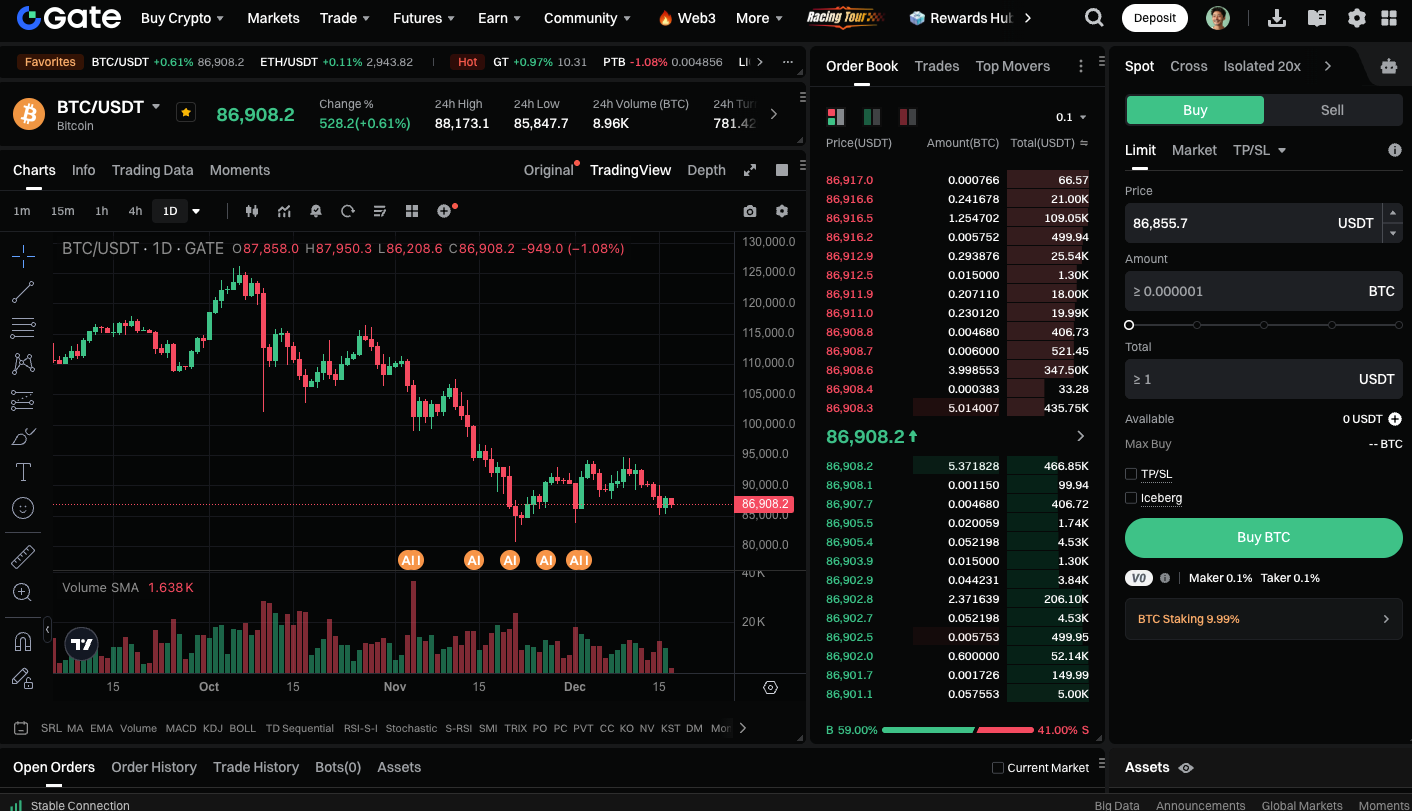
Bitcoin (BTC) has struggled to break through the critical resistance level at $94,400 for nearly a month, with its price largely ranging between $84,000 and $94,000. This period of sideways movement has sparked concerns about a possible further pullback in the coming months.
Expert Forecast: 2026 Market Bottom
Market analyst NoLimit noted on X (formerly Twitter) that he anticipates Bitcoin could reach a bottom around $40,000 in 2026. This projection represents a decline of more than 50% from the current price, which is approximately $86,800.
Insights from Historical Market Cycles
NoLimit emphasized that Bitcoin has historically delivered surprises when market confidence peaks. While each price cycle may look different on the surface, the underlying dynamics remain largely consistent. Bitcoin operates on an approximate four-year cycle, driven by liquidity, leverage, and behavioral factors, rather than just market sentiment.
He outlined that Bitcoin bull markets typically unfold in three phases:
A rapid price surge following the halving event;
A wave of leveraged traders and late entrants entering the market;
A sharp correction as the cycle concludes, paving the way for the next major rally.
Historically, Bitcoin has experienced steep corrections of 77% to 85% during these periods, as seen in 2013-2014, 2017-2018, and 2021-2022.
$40,000: Setting the Stage for the Next Bull Run
NoLimit stressed that although there are downside risks, this potential correction should not be seen as catastrophic. The market has already experienced significant gains, with institutional investors entering and ETF approvals boosting liquidity. However, high leverage, compressed volatility, and widespread bullish expectations also signal increased downside risk.
From a technical perspective, the $40,000 level is supported by several factors, including former resistance turning into support, long-term moving averages, and the liquidity gap created by ETF approvals. This zone may help absorb selling pressure and lay a solid foundation for Bitcoin’s next bull run.
Start trading BTC spot now: https://www.gate.com/trade/BTC_USDT
Summary
Bitcoin could face a major correction in 2026. Based on historical market cycles and expert analysis, the $40,000 range is likely to serve as a crucial support area, absorbing selling pressure and potentially laying the groundwork for the next bull market. Investors should remain patient, closely monitor technical indicators and liquidity trends, and manage their positions prudently to navigate short-term volatility while capturing long-term growth opportunities.
Share
Content


Related Articles

2025 BTC Price Prediction: BTC Trend Forecast Based on Technical and Macroeconomic Data

Flare Crypto Explained: What Is Flare Network and Why It Matters in 2025

Pi Coin Transaction Guide: How to Transfer to Gate.com

How to Use a Crypto Whale Tracker: Top Tool Recommendation for 2025 to Follow Whale Moves

What is N2: An AI-Driven Layer 2 Solution