BlackRock Bets on Ethereum, Vitalik Buterin Reignites the Gas Futures Debate — What Happens After ETH Falls Below $3,000?
Recent developments in the crypto market have spotlighted three key news items: BlackRock’s submission of an Ethereum staking ETF application to the U.S. Securities and Exchange Commission (SEC), Vitalik Buterin’s innovative proposal for gas futures, and the leading Ethereum token, ETH, falling below the critical $3,000 support level amid selling pressure. These stories continue to drive discussion among market participants, creating significant price swings and influencing investor sentiment.
Recap: Three Major Ethereum Market Headlines
Crypto media outlets and trading platforms have been closely tracking three major events in the Ethereum ecosystem: BlackRock’s Ethereum ETF filing, Buterin’s concept for a gas futures market, and ETH’s price breaking below the $3,000 mark during a period of heightened volatility.
The Impact of BlackRock’s iShares Staked Ethereum Trust ETF Filing
BlackRock, the world’s largest asset manager, recently filed with the SEC to register the “iShares Staked Ethereum Trust” ETF. This move demonstrates how traditional financial institutions are seeking to open the Ethereum ecosystem to institutional capital through regulated investment vehicles. The ETF will not only track ETH’s price but also generate yield through staking, giving institutions a new tool and potentially accelerating mainstream capital flows into blockchain assets.
For the ETH market, this development is widely seen as a long-term catalyst. While the price impact may not be immediate, the introduction of an ETF stands to boost market liquidity and institutional participation, enhancing Ethereum’s asset profile and its appeal to sovereign investors.
Vitalik Buterin’s Trustless Gas Futures Market Proposal
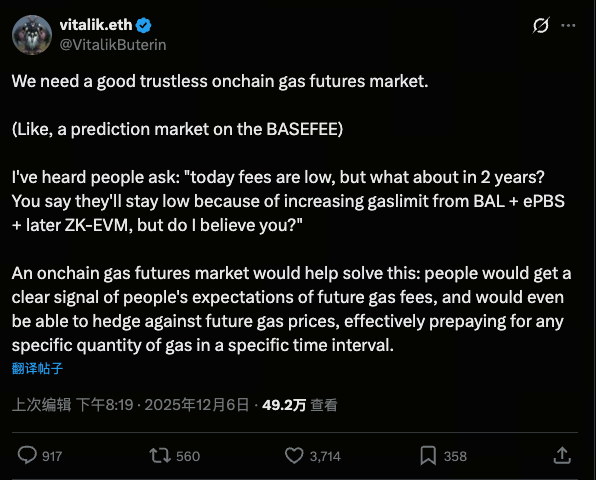
Source: https://x.com/VitalikButerin/status/1997279838252531823
Ethereum co-founder Vitalik Buterin has recently proposed the creation of a blockchain-based market for gas futures. This mechanism aims to give market participants a way to hedge against future gas fee volatility and improve cost transparency. In essence, users would be able to lock in future transaction fees, reducing uncertainty from price swings.
If implemented, this proposal could have a significant impact on DeFi users and on-chain traders. Reliable fee forecasts would make Ethereum a more predictable smart contract platform, likely attracting additional dApp developers and users.
Why Did ETH Fall Below $3,000?
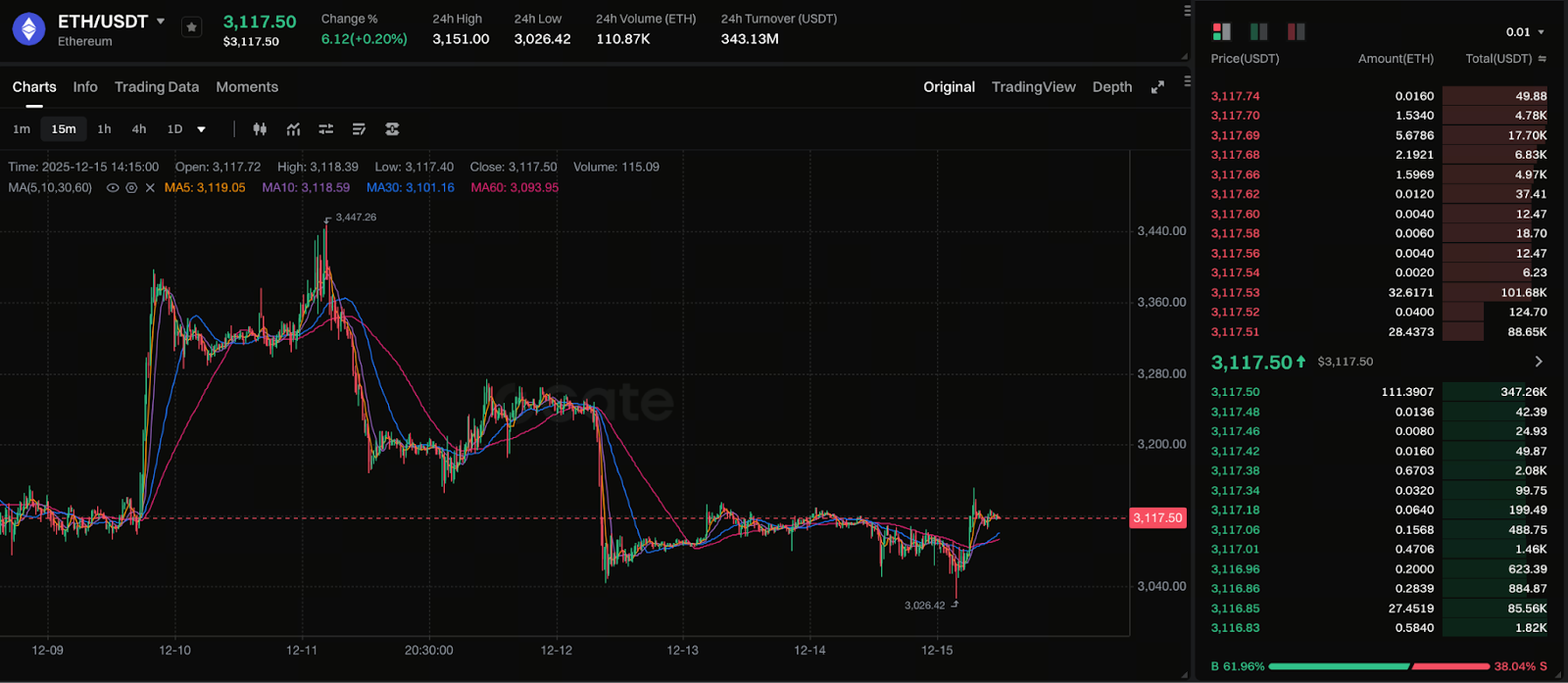
Source: https://www.gate.com/trade/ETH_USDT
Ethereum’s price has recently experienced a sharp decline, briefly falling below the critical $3,000 support level. Market analysts attribute this correction to a combination of factors: weaker risk appetite across crypto markets, tightening macro liquidity, and forced liquidations on exchanges.
In this volatile environment, investor fear has intensified, increasing selling pressure and causing ETH to lose a major psychological level. However, technical analysis indicates that breaking this support does not signal a trend reversal, but rather reflects the kind of volatility typical during structural market adjustments.
What Does This Mean for Investors? Risks and Opportunities
For long-term investors, these events present both risks and opportunities. On the downside, further price drops could trigger stop-losses and pose risks for highly leveraged positions. On the upside, BlackRock’s potential ETF approval and Buterin’s innovative proposal highlight sustained institutional and developer interest in Ethereum. This could help support prices over the medium to long term and deepen market liquidity.
Outlook: Where Is ETH Headed Next?
ETH’s future price trends will continue to depend heavily on market sentiment, macroeconomic conditions, and the pace of on-chain ecosystem development. If the ETF is approved and institutional inflows accelerate, and if gas futures help lower user costs, ETH could enter a new rally. In the near term, though, the fight to hold key support around $3,000 remains a primary focus for the market.
Share
Content


Related Articles

2025 BTC Price Prediction: BTC Trend Forecast Based on Technical and Macroeconomic Data

Flare Crypto Explained: What Is Flare Network and Why It Matters in 2025

Pi Coin Transaction Guide: How to Transfer to Gate.com

How to Use a Crypto Whale Tracker: Top Tool Recommendation for 2025 to Follow Whale Moves

What is N2: An AI-Driven Layer 2 Solution