


 :
:






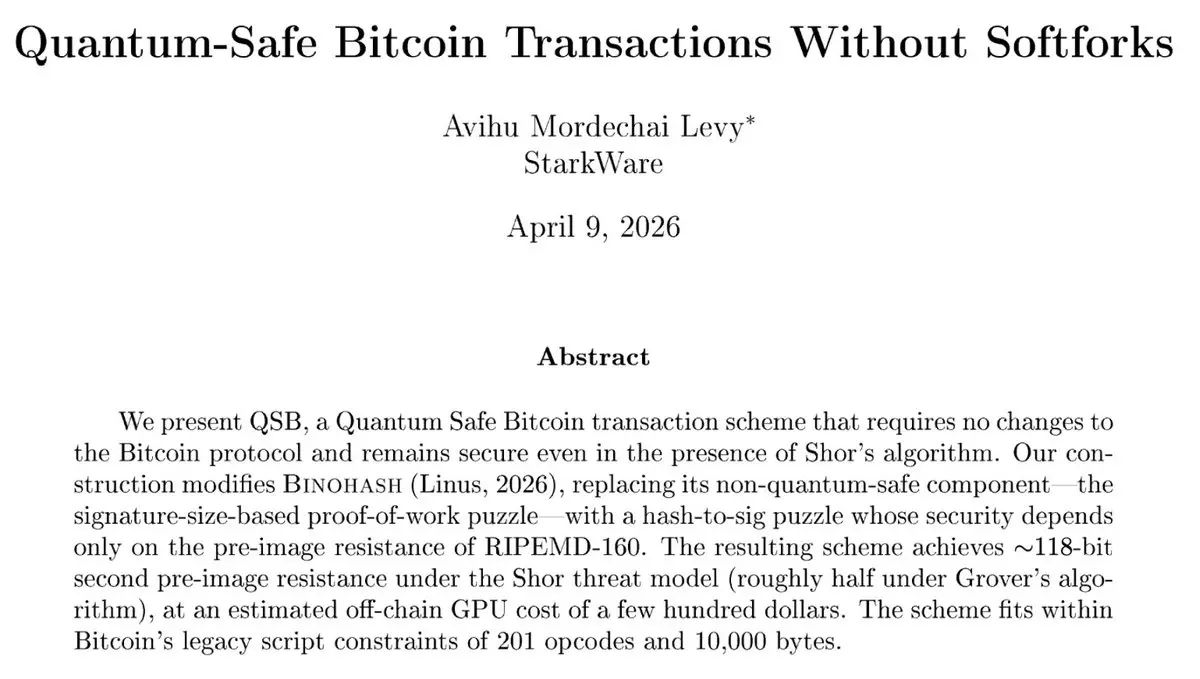
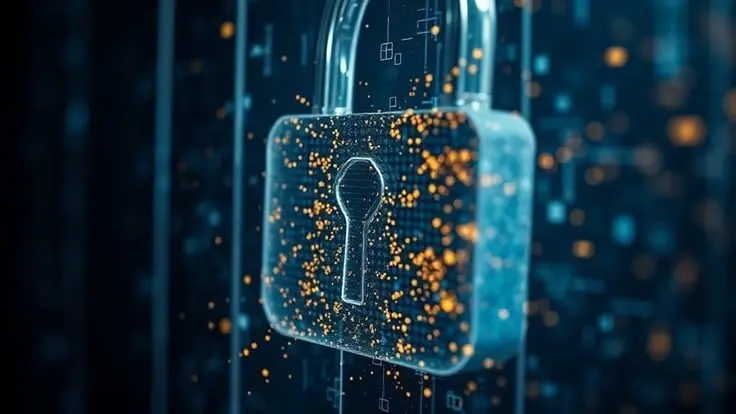
✍️Bitcoin's biggest "bear case" has been the same for years: quantum computers. By 2026, this fear has moved from theory to engineering schedule — and concrete steps are being taken towards a solution. Thanks to teams like StarkWare, Google Quantum AI, and BTQ, the post-quantum transition is now a roadmap.
🧐1. StarkWare and its 5-step action plan
StarkWare CEO Eli Ben-Sasson has unveiled a five-step plan to prepare the cryptography industry for the quantum threat. The plan includes early post-quantum upgrades, training, collaboration with experts, standardization, and protocol updates. This is a natural position for the team that invented ZK-STARKs, as STARK proofs rely on hash functions instead of elliptic curves, making them naturally resistant to quantum attacks.
🧐2. First concrete step in Bitcoin: BIP-360 (Pay-to-Merkle-Root)
What: BIP-360 proposes a new output type similar to Taproot but without key path expenditure:
Authors: Hunter Beast, Ethan Heilman, and Isabel Foxen Duke from the StarkWare team.
Date: The proposal was created on December 18, 2024, its status is "Draft" as of 2026.
How it works: P2MR commits directly to the root of the script tree and removes key path expenditure. This provides resistance against long exposure quantum attacks on public keys.
Address format: Starts with bc1z... (example: not bc1p, but bc1z).
💥This is the first soft fork proposal that lays the groundwork for quantum-resistant script trees in Bitcoin while maintaining Taproot compatibility.
🧐3. Google Quantum AI: Threat 20 Times Closer
On March 31, 2026, Google published a whitepaper titled "Securing Elliptic Curve Cryptocurrencies against Quantum Vulnerabilities."
The findings are clear:
A 20-fold reduction in quantum resources required to break ECDLP-256 was detected.
20 times less than 2019 estimates, an attack becomes possible with fewer than 500,000 physical qubits.
A machine of this scale could crack the Bitcoin signature in under 9 minutes.
Today, approximately 6.9 million BTC (∼$468 billion) are held in quantum-enabled addresses.
Google also announced that it plans to migrate its own systems to post-quantum cryptography by 2029.
🧐4. Practical wallets on the Starknet side
Since Starknet is already STARK-based, its backbone is quantum-resistant. In 2026, the ecosystem took a step forward:
In March 2026, developer Paul Bark shared progress on Falcon-512-based quantum-resistant smart wallets. Gas consumption was reduced by 37% with SHAKE256 integration.
These wallets use lattice-based signatures compliant with NIST standards and can be easily updated because the signature logic is moved outside the protocol.
In short, Starknet supports its claim to be both a scalable and quantum-secure execution layer for Bitcoin with code.
🧐5. BTQ Technologies: Bitcoin Quantum Testnet goes live
January 12, 2026: BTQ launched a Bitcoin-like testnet. The goal is to test post-quantum signatures without risking the mainnet.
It uses NIST-approved ML-DSA instead of ECDSA, aiming to protect the $2.4 trillion Bitcoin market.
The testnet can handle large post-quantum signatures by increasing the block size to 64 MiB. BTQ's analysis confirms the number of coins at risk is 6.65 million BTC.
The same team also published a study showing that quantum mining is impractical with current technology — the real immediate threat is signatures.
🤔Is Bear Case becoming history?
No, it's not over yet, but it's now a manageable engineering problem. Three things happened simultaneously in 2026:
👉 Google set 500,000 qubits and a timeline in the order of minutes.
Bitcoin responded: An output type that closes the long-term public key risk with BIP-360 is on the table.
The implementation layer was prepared: StarkWare's 5-step plan, Falcon-512 wallets on Starknet, and BTQ's ML-DSA testnet.
💥StarkWare's approach is open source and free, which spreads the transition cost across the community. When quantum computers arrive, Bitcoin will not only survive — it will also have received the biggest cryptographic upgrade in its history, thanks to hash-based proofs and NIST standard signatures.
$BTC #CreatorLeaderboard
#Web3SecurityGuide
#GateSquareAprilPostingChallenge
🧐1. StarkWare and its 5-step action plan
StarkWare CEO Eli Ben-Sasson has unveiled a five-step plan to prepare the cryptography industry for the quantum threat. The plan includes early post-quantum upgrades, training, collaboration with experts, standardization, and protocol updates. This is a natural position for the team that invented ZK-STARKs, as STARK proofs rely on hash functions instead of elliptic curves, making them naturally resistant to quantum attacks.
🧐2. First concrete step in Bitcoin: BIP-360 (Pay-to-Merkle-Root)
What: BIP-360 proposes a new output type similar to Taproot but without key path expenditure:
Authors: Hunter Beast, Ethan Heilman, and Isabel Foxen Duke from the StarkWare team.
Date: The proposal was created on December 18, 2024, its status is "Draft" as of 2026.
How it works: P2MR commits directly to the root of the script tree and removes key path expenditure. This provides resistance against long exposure quantum attacks on public keys.
Address format: Starts with bc1z... (example: not bc1p, but bc1z).
💥This is the first soft fork proposal that lays the groundwork for quantum-resistant script trees in Bitcoin while maintaining Taproot compatibility.
🧐3. Google Quantum AI: Threat 20 Times Closer
On March 31, 2026, Google published a whitepaper titled "Securing Elliptic Curve Cryptocurrencies against Quantum Vulnerabilities."
The findings are clear:
A 20-fold reduction in quantum resources required to break ECDLP-256 was detected.
20 times less than 2019 estimates, an attack becomes possible with fewer than 500,000 physical qubits.
A machine of this scale could crack the Bitcoin signature in under 9 minutes.
Today, approximately 6.9 million BTC (∼$468 billion) are held in quantum-enabled addresses.
Google also announced that it plans to migrate its own systems to post-quantum cryptography by 2029.
🧐4. Practical wallets on the Starknet side
Since Starknet is already STARK-based, its backbone is quantum-resistant. In 2026, the ecosystem took a step forward:
In March 2026, developer Paul Bark shared progress on Falcon-512-based quantum-resistant smart wallets. Gas consumption was reduced by 37% with SHAKE256 integration.
These wallets use lattice-based signatures compliant with NIST standards and can be easily updated because the signature logic is moved outside the protocol.
In short, Starknet supports its claim to be both a scalable and quantum-secure execution layer for Bitcoin with code.
🧐5. BTQ Technologies: Bitcoin Quantum Testnet goes live
January 12, 2026: BTQ launched a Bitcoin-like testnet. The goal is to test post-quantum signatures without risking the mainnet.
It uses NIST-approved ML-DSA instead of ECDSA, aiming to protect the $2.4 trillion Bitcoin market.
The testnet can handle large post-quantum signatures by increasing the block size to 64 MiB. BTQ's analysis confirms the number of coins at risk is 6.65 million BTC.
The same team also published a study showing that quantum mining is impractical with current technology — the real immediate threat is signatures.
🤔Is Bear Case becoming history?
No, it's not over yet, but it's now a manageable engineering problem. Three things happened simultaneously in 2026:
👉 Google set 500,000 qubits and a timeline in the order of minutes.
Bitcoin responded: An output type that closes the long-term public key risk with BIP-360 is on the table.
The implementation layer was prepared: StarkWare's 5-step plan, Falcon-512 wallets on Starknet, and BTQ's ML-DSA testnet.
💥StarkWare's approach is open source and free, which spreads the transition cost across the community. When quantum computers arrive, Bitcoin will not only survive — it will also have received the biggest cryptographic upgrade in its history, thanks to hash-based proofs and NIST standard signatures.
$BTC #CreatorLeaderboard
#Web3SecurityGuide
#GateSquareAprilPostingChallenge