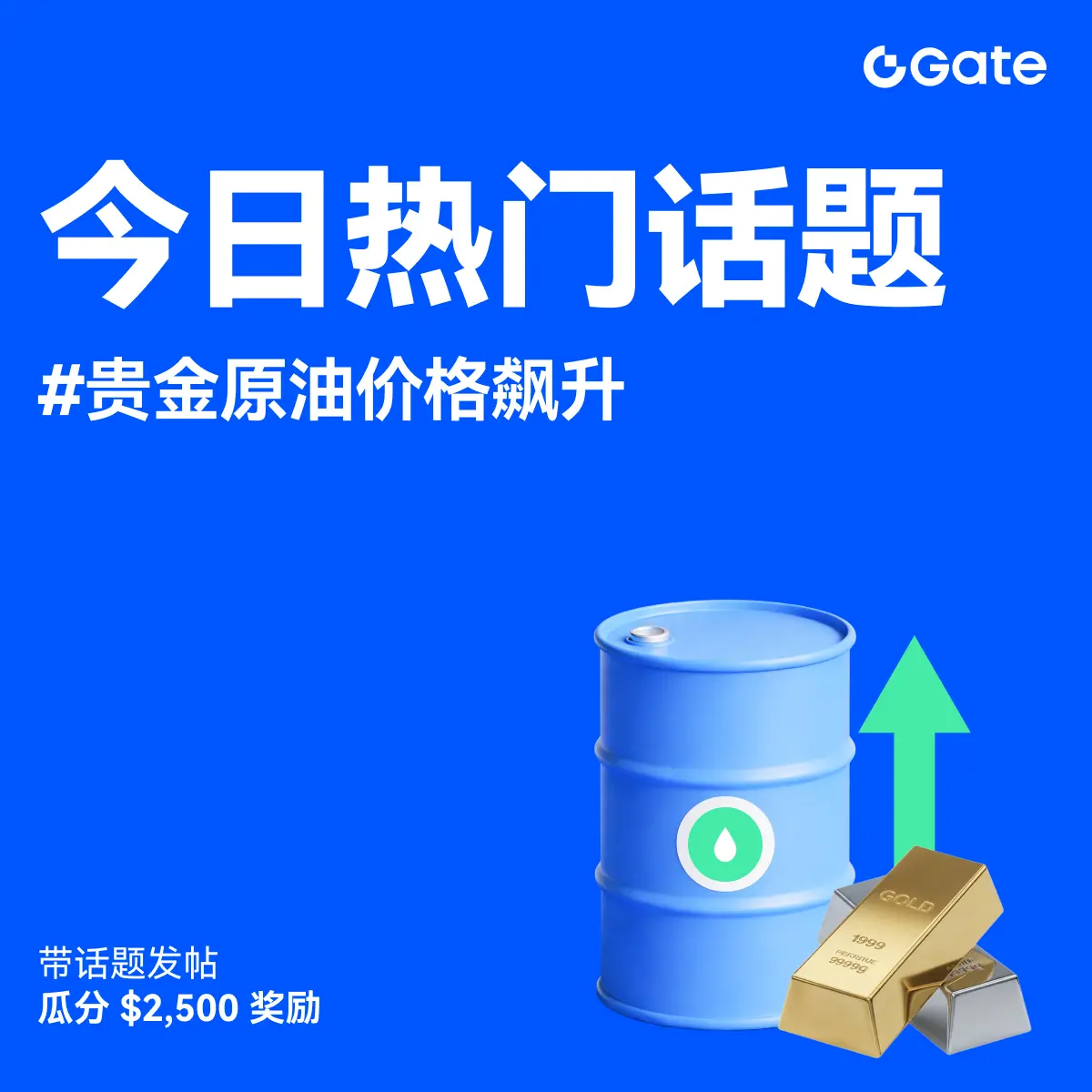
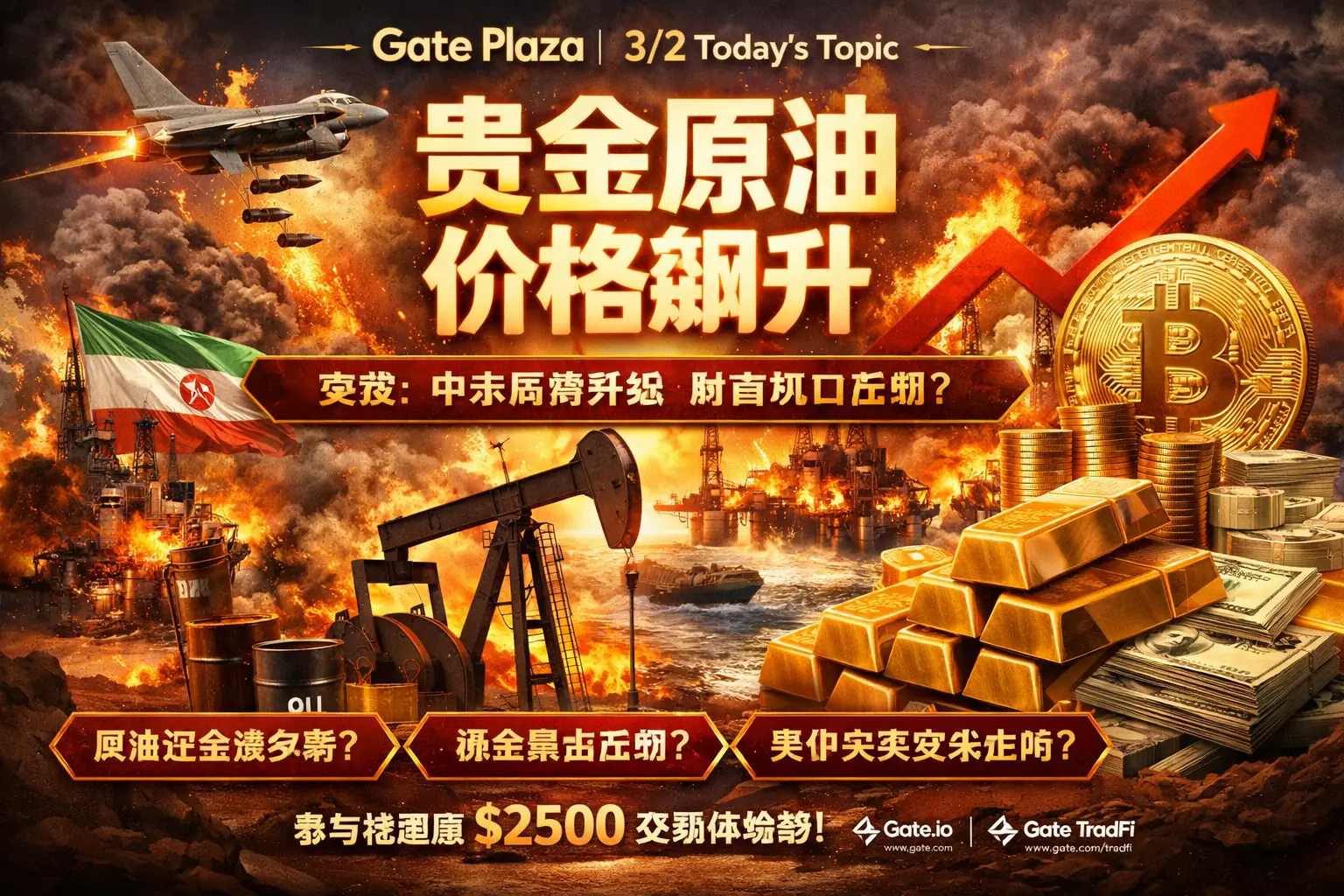
Gate Plaza|3/2 Today’s Topic: #贵金原油价格飙升
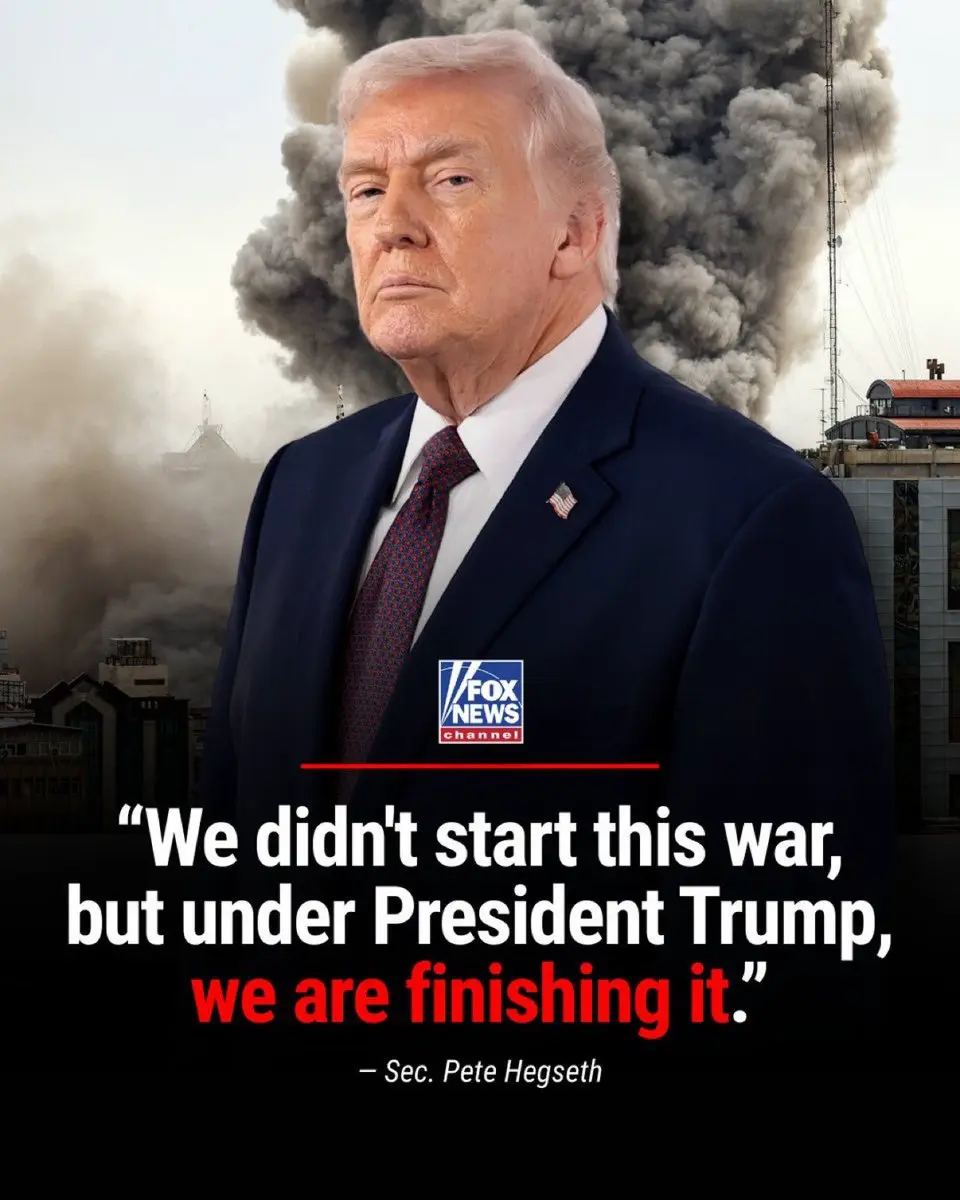
The geopolitical chessboard has shifted dramatically. A sudden escalation in the Middle East — involving coordinated airstrikes by the United States and Israel and retaliatory actions from Iran, including threats to block the Strait of Hormuz — has sent shockwaves through global markets. Oil tankers are rerouting, insurance premiums are surging, and investors are rushing toward safe-haven assets. As a result, crude oil prices have spiked sharply, while gold and other precious metals have staged a powerful rally.
In times of volatility, fear reshapes capital flows — but chaos also breeds opportunity. Let’s break down the key drivers, technical outlook, and cross-market implications to identify where the next wave of wealth creation may emerge.
I. Crude Oil Surge: Supply Shock Meets Geopolitical Risk Premium
The Strait of Hormuz handles nearly one-fifth of global oil supply. Any credible disruption instantly injects a geopolitical risk premium into crude pricing. With shipping lanes threatened and freight costs rising, physical supply constraints are being priced into futures markets.
From a structural perspective, the rally is supported by three pillars:
1. Supply-Side Risk: Even partial disruptions create short-term shortages.
2. Speculative Momentum: Hedge funds and institutions aggressively add long positions.
3. Inflation Hedge Demand: Energy price spikes feed inflation expectations.
Key Technical Levels to Watch
Immediate resistance: Previous swing highs near psychological round-number zones.
Breakout target: Extension toward major Fibonacci levels and multi-month highs.
Support zone: Prior consolidation base before geopolitical escalation.
If tensions persist or escalate, crude could extend higher in stages. However, any diplomatic breakthrough may trigger sharp pullbacks due to crowded long positioning.
II. Precious Metals Soar: Capital Seeks Safety
Gold thrives in uncertainty. When geopolitical risk rises, capital rotates into defensive assets. Beyond safe-haven demand, additional drivers include:
Potential weakening of the U.S. dollar
Expectations of monetary policy adjustments
Portfolio hedging against systemic shocks
Silver often follows gold with amplified volatility, while platinum and palladium react more to industrial demand expectations.
Gold Outlook: How Far Can It Run?
If geopolitical tension remains unresolved, gold may attempt to break historical highs. A confirmed breakout above resistance levels could ignite momentum-driven inflows. However, profit-taking at psychological price zones is likely, so volatility should be expected.
III. Have You Captured the Move on Gate TradFi?
For traders on Gate TradFi, this volatility represents a prime opportunity. Leveraged instruments allow both long and short positioning in crude oil and precious metals.
Those who entered early on breakout confirmation likely captured significant upside. Risk-managed traders who scaled in during pullbacks may now be managing trailing stops to protect gains.
The key in such environments is discipline:
Avoid emotional chasing
Respect leverage
Monitor macro headlines closely
Volatility rewards preparation — not impulse.
IV. What’s Next for US–Iran Relations?
The trajectory of U.S.–Iran relations will determine the next macro wave.
Scenario 1: Escalation
Further military actions or prolonged blockade attempts could push oil sharply higher, strengthen gold, pressure equities, and increase crypto volatility.
Scenario 2: Diplomatic De-escalation
Negotiations could cool prices quickly, leading to profit-taking in oil and metals while risk assets rebound.
Impact on Crypto Markets
Historically, crypto reacts in two phases:
Initial risk-off shock (short-term volatility)
Narrative shift toward decentralized hedge assets
If inflation fears rise due to sustained oil spikes, Bitcoin could benefit as a macro hedge narrative strengthens.
V. Where Are the Wealth Opportunities?
Trend Continuation Trades – Riding momentum with strict risk controls.
Volatility Breakouts – Trading range expansions post-news events.
Hedging Strategies – Pairing oil longs with equity or crypto hedges.
Precious Metals Swing Positions – Buying pullbacks within strong uptrends.
The most important factor is timing and discipline. In geopolitical-driven markets, headlines move faster than indicators.
Conclusion: Crisis Creates Capital Rotation
This surge in crude oil and precious metals is not random — it is a classic market response to supply disruption and geopolitical uncertainty. The question is not whether volatility will persist, but how traders position themselves within it.
Opportunities exist in momentum, hedging, and cross-market rotation. The key lies in understanding macro drivers, identifying critical technical levels, and executing with precision.
Markets reward the prepared. In times of turbulence, strategic clarity separates winners from spectators.
#贵金原油价格飙升
The geopolitical chessboard has shifted dramatically. A sudden escalation in the Middle East — involving coordinated airstrikes by the United States and Israel and retaliatory actions from Iran, including threats to block the Strait of Hormuz — has sent shockwaves through global markets. Oil tankers are rerouting, insurance premiums are surging, and investors are rushing toward safe-haven assets. As a result, crude oil prices have spiked sharply, while gold and other precious metals have staged a powerful rally.
In times of volatility, fear reshapes capital flows — but chaos also breeds opportunity. Let’s break down the key drivers, technical outlook, and cross-market implications to identify where the next wave of wealth creation may emerge.
I. Crude Oil Surge: Supply Shock Meets Geopolitical Risk Premium
The Strait of Hormuz handles nearly one-fifth of global oil supply. Any credible disruption instantly injects a geopolitical risk premium into crude pricing. With shipping lanes threatened and freight costs rising, physical supply constraints are being priced into futures markets.
From a structural perspective, the rally is supported by three pillars:
1. Supply-Side Risk: Even partial disruptions create short-term shortages.
2. Speculative Momentum: Hedge funds and institutions aggressively add long positions.
3. Inflation Hedge Demand: Energy price spikes feed inflation expectations.
Key Technical Levels to Watch
Immediate resistance: Previous swing highs near psychological round-number zones.
Breakout target: Extension toward major Fibonacci levels and multi-month highs.
Support zone: Prior consolidation base before geopolitical escalation.
If tensions persist or escalate, crude could extend higher in stages. However, any diplomatic breakthrough may trigger sharp pullbacks due to crowded long positioning.
II. Precious Metals Soar: Capital Seeks Safety
Gold thrives in uncertainty. When geopolitical risk rises, capital rotates into defensive assets. Beyond safe-haven demand, additional drivers include:
Potential weakening of the U.S. dollar
Expectations of monetary policy adjustments
Portfolio hedging against systemic shocks
Silver often follows gold with amplified volatility, while platinum and palladium react more to industrial demand expectations.
Gold Outlook: How Far Can It Run?
If geopolitical tension remains unresolved, gold may attempt to break historical highs. A confirmed breakout above resistance levels could ignite momentum-driven inflows. However, profit-taking at psychological price zones is likely, so volatility should be expected.
III. Have You Captured the Move on Gate TradFi?
For traders on Gate TradFi, this volatility represents a prime opportunity. Leveraged instruments allow both long and short positioning in crude oil and precious metals.
Those who entered early on breakout confirmation likely captured significant upside. Risk-managed traders who scaled in during pullbacks may now be managing trailing stops to protect gains.
The key in such environments is discipline:
Avoid emotional chasing
Respect leverage
Monitor macro headlines closely
Volatility rewards preparation — not impulse.
IV. What’s Next for US–Iran Relations?
The trajectory of U.S.–Iran relations will determine the next macro wave.
Scenario 1: Escalation
Further military actions or prolonged blockade attempts could push oil sharply higher, strengthen gold, pressure equities, and increase crypto volatility.
Scenario 2: Diplomatic De-escalation
Negotiations could cool prices quickly, leading to profit-taking in oil and metals while risk assets rebound.
Impact on Crypto Markets
Historically, crypto reacts in two phases:
Initial risk-off shock (short-term volatility)
Narrative shift toward decentralized hedge assets
If inflation fears rise due to sustained oil spikes, Bitcoin could benefit as a macro hedge narrative strengthens.
V. Where Are the Wealth Opportunities?
Trend Continuation Trades – Riding momentum with strict risk controls.
Volatility Breakouts – Trading range expansions post-news events.
Hedging Strategies – Pairing oil longs with equity or crypto hedges.
Precious Metals Swing Positions – Buying pullbacks within strong uptrends.
The most important factor is timing and discipline. In geopolitical-driven markets, headlines move faster than indicators.
Conclusion: Crisis Creates Capital Rotation
This surge in crude oil and precious metals is not random — it is a classic market response to supply disruption and geopolitical uncertainty. The question is not whether volatility will persist, but how traders position themselves within it.
Opportunities exist in momentum, hedging, and cross-market rotation. The key lies in understanding macro drivers, identifying critical technical levels, and executing with precision.
Markets reward the prepared. In times of turbulence, strategic clarity separates winners from spectators.
#贵金原油价格飙升