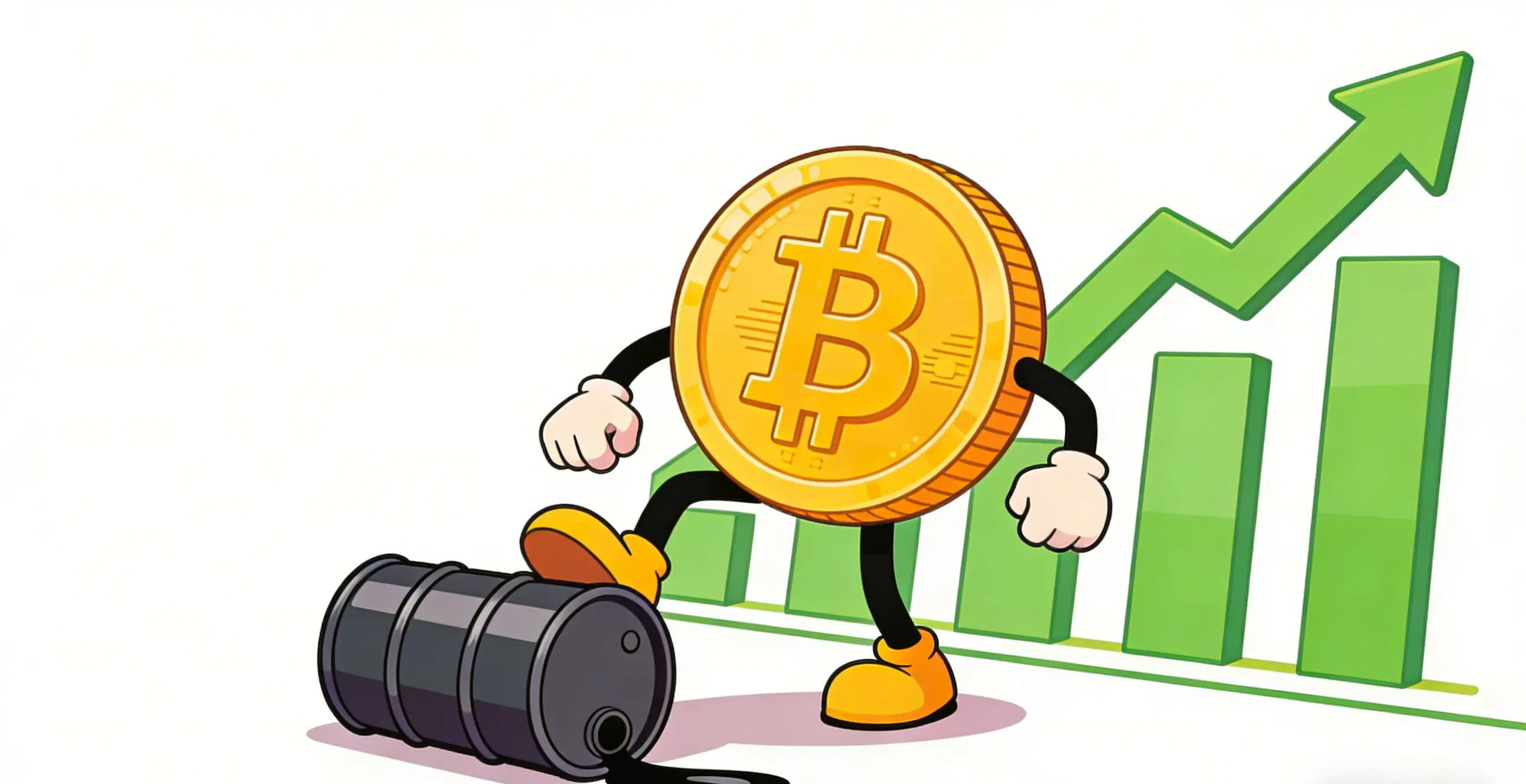
 Bitcoin has climbed more than 4 percent to approximately $69,100 as risk assets steadied following a retreat in oil prices from spike levels tied to Middle East tensions, with on-chain analytics firm Glassnode reporting that internal metrics suggest the worst of recent market stress may be easing.
The recovery remains “tentative,” however, as spot trading volumes and network activity stay subdued while futures open interest and aggressive buying in perpetual markets indicate traders are cautiously returning to leveraged positions.
Price Recovery and Macro Context
Bitcoin Price Action
Bitcoin rose 4.3 percent on March 9, 2026, to trade near $69,100, holding relatively steady after recent volatility tied to geopolitical tensions and surging oil prices sent digital assets lower the previous week. The cryptocurrency’s rebound coincided with a stabilization in broader risk markets following President Donald Trump’s suggestions that the conflict involving Iran might soon de-escalate.
Oil Price Volatility
Crude prices had surged Monday on fears the conflict could disrupt shipments through the Strait of Hormuz, briefly pushing Brent crude as high as approximately $119.50 per barrel. Prices subsequently retreated to the $91-$100 range after Trump’s comments indicating potential de-escalation. The sharp swing in energy markets had created inflationary concerns and tightened financial conditions, weighing on risk assets including cryptocurrencies.
Equity Market Response
U.S. equities swung sharply in recent sessions, with major indexes slipping as investors weighed the inflationary impact of higher oil prices and the risk of prolonged geopolitical conflict. Modest uplifts were observed late in the U.S. trading session following Trump’s comments, with the S&P 500 closing 0.8 percent higher on the day.
On-Chain and Derivatives Market Signals
Glassnode Analysis
In its weekly market pulse published March 9, Glassnode reported that several indicators within the Bitcoin market are beginning to stabilize. “Overall, conditions are stabilizing, with momentum, ETF demand, and profitability metrics improving,” the firm wrote, noting that price momentum has firmed modestly but still lacks the strength of a decisive bullish shift.
The analysis suggests that crypto’s internal metrics point to easing stress, though the recovery remains tentative and broader conviction has yet to fully return.
Derivatives Positioning
Futures open interest has increased, suggesting a modest build-up of leverage in the market. Aggressive buying in perpetual derivatives markets points to renewed interest from traders seeking exposure to Bitcoin’s price movements. These indicators suggest that professional traders are cautiously returning to leveraged positions after recent deleveraging.
ETF Flows and Capital Movements
Inflow Recovery
U.S. spot Bitcoin ETF flows have strengthened, rising to approximately $934 million, representing a 20 percent increase or $158 million gain from the prior week. This rebound in institutional product flows provides demand-side support for Bitcoin’s price recovery.
Subdued Activity Indicators
Despite improved ETF flows, other indicators suggest the recovery remains fragile. Spot trading volumes remain subdued across exchanges, and network activity has waned, pointing to limited participation from retail traders and on-chain users. Glassnode noted that “capital flows remain soft,” indicating broader conviction has yet to fully return to the market.
Institutional Perspectives on Bitcoin’s Role
QCP Capital Analysis
In an investor note published March 9, analysts at QCP Capital addressed Bitcoin’s evolving market function. While Bitcoin has yet to “fully earn” its “digital gold” narrative, its practical use case as a “digital escape hatch” is becoming “increasingly relevant,” the firm wrote.
“Although its long-term trajectory remains uncertain, recent price action against a backdrop of escalating tensions suggests growing recognition of this function,” the analysts added. This perspective highlights Bitcoin’s potential role as a hedge during geopolitical uncertainty, even as its correlation with risk assets remains elevated.
Narrative Implications
The characterization of Bitcoin as a “digital escape hatch” suggests that investors may be turning to the cryptocurrency as a means of preserving value during periods of geopolitical stress, even if its safe-haven properties remain less established than traditional assets like gold.
FAQ: Bitcoin Market Stabilization
Q: What factors contributed to Bitcoin’s recent price recovery?
A: Bitcoin’s 4.3 percent climb to approximately $69,100 was driven by a retreat in oil prices from spike levels following President Trump’s comments suggesting potential de-escalation of the Iran conflict, which stabilized broader risk markets. Rebounding U.S. spot Bitcoin ETF inflows, which rose 20 percent to $934 million, also provided demand-side support.
Q: What does Glassnode’s analysis indicate about Bitcoin’s market health?
A: Glassnode reports that conditions are stabilizing with momentum, ETF demand, and profitability metrics improving, suggesting the worst of recent stress may be easing. However, the recovery remains “tentative” as spot trading volumes and network activity stay subdued, and capital flows remain soft.
Q: How are derivatives traders positioning in response to the recovery?
A: Futures open interest has increased, indicating modest build-up of leverage, while aggressive buying in perpetual derivatives markets points to renewed interest from traders. This suggests professional market participants are cautiously returning to leveraged positions after recent deleveraging.
Q: What is QCP Capital’s view on Bitcoin’s current market role?
A: QCP Capital analysts note that while Bitcoin has yet to fully earn its “digital gold” narrative, its practical use case as a “digital escape hatch” is becoming increasingly relevant. Recent price action against a backdrop of escalating tensions suggests growing recognition of this function.
Disclaimer: The information on this page may come from third parties and does not represent the views or opinions of Gate. The content displayed on this page is for reference only and does not constitute any financial, investment, or legal advice. Gate does not guarantee the accuracy or completeness of the information and shall not be liable for any losses arising from the use of this information. Virtual asset investments carry high risks and are subject to significant price volatility. You may lose all of your invested principal. Please fully understand the relevant risks and make prudent decisions based on your own financial situation and risk tolerance. For details, please refer to
Disclaimer.


