2025 MAGIC Price Prediction: Expert Analysis and Market Forecast for the Upcoming Year

Introduction: Market Position and Investment Value of MAGIC
MAGIC (MAGIC) serves as the native utility token of the Treasure ecosystem, positioned at the intersection of DeFi, NFT, and gaming. Since its launch in December 2021, MAGIC has evolved into a critical resource powering the interconnected metaverse network. As of December 2025, MAGIC maintains a market capitalization of approximately $32.63 million with a circulating supply of 317.36 million tokens, trading at around $0.09386 per token. This asset, recognized as the "natural resource" of the Treasure metaverse, plays an increasingly vital role in activating NFTs and transforming them into productive, revenue-generating assets within the ecosystem.
This article will provide a comprehensive analysis of MAGIC's price dynamics and market performance, examining historical trends, supply and demand dynamics, ecosystem development, and broader market conditions to deliver professional price forecasts and practical investment strategies for cryptocurrency investors.
MAGIC (Magic) Cryptocurrency Analysis Report
I. MAGIC Price History Review and Current Market Status
MAGIC Historical Price Evolution
All-Time High (ATH): $6.32, reached on February 20, 2022
All-Time Low (ATL): $0.01999252, reached on October 7, 2021
The price trajectory from 2021 to present reflects significant volatility characteristic of emerging metaverse and gaming ecosystem tokens. MAGIC experienced substantial appreciation during the 2021-2022 bull market period before entering a prolonged correction phase.
MAGIC Current Market Status
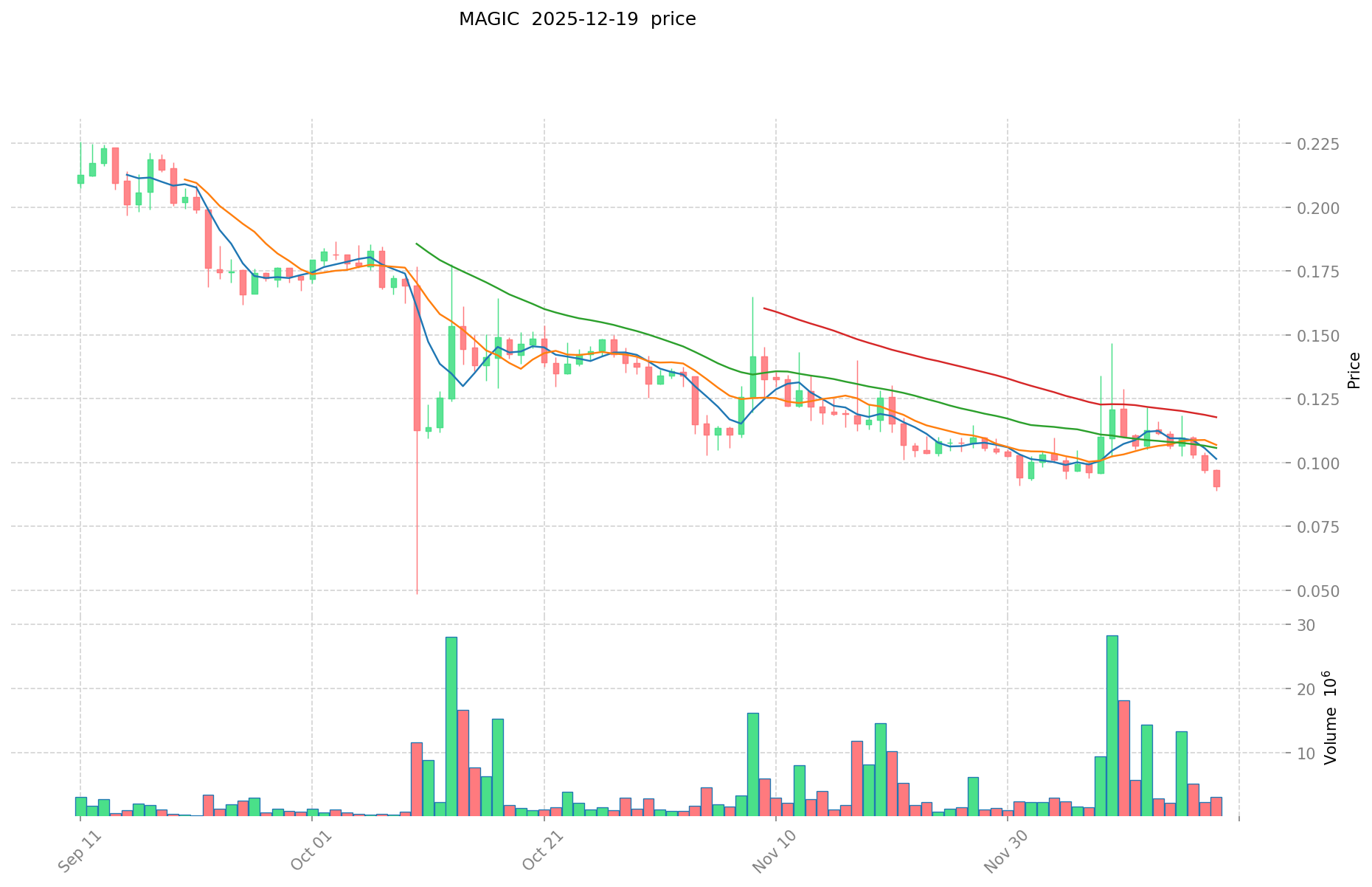
As of December 19, 2025, MAGIC is trading at $0.09386, with the following market characteristics:
Price Performance:
- 1-Hour change: -0.12%
- 24-Hour change: +0.35%
- 7-Day change: -17.45%
- 30-Day change: -18.91%
- 1-Year change: -80.12%
Market Capitalization Metrics:
- Market Cap: $29,787,174.75
- Fully Diluted Valuation (FDV): $32,633,905.85
- 24-Hour Trading Volume: $265,398.99
- Current Ranking: #695 by market capitalization
Supply Information:
- Circulating Supply: 317,357,497.88 MAGIC (91.27% of total)
- Total Supply: 347,687,042.97 MAGIC
- Maximum Supply: 347,714,007 MAGIC
Market Distribution:
- Number of Holders: 412,725
- Listed on 40 exchanges
- Market Dominance: 0.0010%
The token currently trades within a 24-hour range of $0.08887 to $0.09675, indicating relatively tight intraday price consolidation.
Click to view current MAGIC market price
MAGIC Market Sentiment Indicator
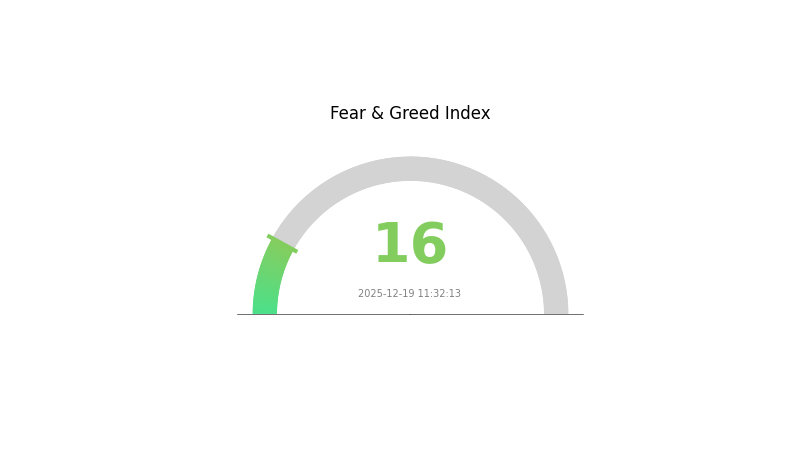
2025-12-19 Fear and Greed Index: 16 (Extreme Fear)
Click to view current Fear & Greed Index
The cryptocurrency market is experiencing extreme fear with an index reading of 16. This level typically indicates significant market pessimism and widespread selling pressure. Investors should exercise caution during such volatile periods. Extreme fear often presents opportunities for long-term investors to accumulate assets at lower valuations, though short-term volatility remains elevated. Monitor market developments closely and consider your risk tolerance before making trading decisions on Gate.com.
MAGIC Holdings Distribution
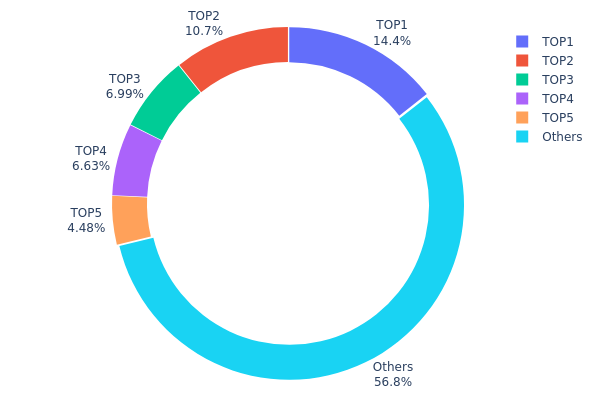
The address holdings distribution map illustrates how MAGIC tokens are concentrated across blockchain addresses, providing critical insights into the tokenomics structure and potential market concentration risks. By analyzing the top holders and their respective percentages of total supply, we can assess the degree of decentralization and evaluate the risk of price manipulation or sudden liquidity shifts.
Current data reveals a moderate concentration pattern in MAGIC's holder distribution. The top five addresses collectively hold 42.14% of the token supply, with the largest holder commanding 14.41% and the second-largest holding 10.66%. While this concentration level is not extreme by industry standards, it does indicate that a significant portion of MAGIC's circulating supply remains in a limited number of addresses. The remaining 56.86% distributed among other addresses suggests a relatively fragmented secondary tier of holders, which provides some cushion against extreme centralization.
This distribution structure presents a balanced but noteworthy risk profile. The concentration among top addresses could potentially facilitate coordinated market movements or create susceptibility to liquidation cascades during periods of market stress. However, the substantial allocation to dispersed holders suggests a reasonable degree of decentralization that mitigates extreme manipulation scenarios. The current holder landscape reflects a market structure with meaningful participation from multiple stakeholders, though investors should monitor whether top holders' positions remain stable or undergo significant changes, as shifts in these concentrated holdings could materially impact price discovery mechanisms and overall market stability.
Click to view current MAGIC holdings distribution
| Top | Address | Holding Qty | Holding (%) |
|---|---|---|---|
| 1 | 0x76ec...78fbd3 | 42492.35K | 14.41% |
| 2 | 0xf977...41acec | 31451.26K | 10.66% |
| 3 | 0x5a52...70efcb | 20605.33K | 6.98% |
| 4 | 0xb38e...82891d | 19542.58K | 6.62% |
| 5 | 0xbfa4...8dc62d | 13205.04K | 4.47% |
| - | Others | 167517.67K | 56.86% |
II. Core Factors Influencing MAGIC's Future Price
Supply Mechanism
-
Game-Centric Issuance Model: Treasure historically utilized a game-focused distribution mechanism (Bridgeworld mining/halving mechanism) to distribute MAGIC to players and stakers. This design created initial network effects but also generated periodic selling pressure, as acquiring game rewards was easier than long-term holding.
-
Historical Patterns: The continuous supply of game rewards to the market created cyclical selling pressure that limited price appreciation despite demand from players and NFT buyers.
-
Current Impact: A critical community proposal (TIP-42 and related governance discussions) suggests reallocating Bridgeworld emissions to support a Treasure Chain staking model and EigenLayer-style restaking opportunities. This would fundamentally shift MAGIC's narrative from "pure utility token" to collateral/yield-bearing infrastructure service, substantially changing supply dynamics, staking incentives, and potential value appreciation if implemented.
-
Token Supply: MAGIC has a maximum supply in the hundreds of millions range, with current circulating supply of approximately 316,789,148 tokens and a market cap of $37,773,938 as of 2025.
Machine and Whale Dynamics
-
Institutional Interest: MAGIC's value growth depends on execution—particularly governance decisions that may alter issuance—and the ability to convert token supply into sustained demand (staking, collateral, multi-game utility).
-
Concentration and Liquidity Risks: Like many mid-cap gaming tokens, concentrated holdings (team, treasury, early supporters) or insufficient depth in certain trading pairs may cause abnormal volatility during listings or large transactions.
Technology Development and Ecosystem Building
-
DeFi, NFT, and Multi-Application Integration: DeFi, NFT, and payments applications drive MAGIC's investment value. MAGIC is positioned as the native and governance token of the Treasure ecosystem, serving as a reserve currency for in-game economic functions, marketplace purchases, and DAO governance. Treasure positions MAGIC as the economic glue between collaborative games and shared NFT tools.
-
Bridgeworld and Core Products: The ecosystem includes Bridgeworld, Trove, and collaborative games. Successful reallocation of emissions to staking and infrastructure, coupled with major game integrations using MAGIC as a collateral layer, could support multi-fold price growth over 12-36 months through increased token scarcity and staking/escrow demand.
-
Arbitrum-Based Ecosystem: MAGIC operates as the native token of the Treasure ecosystem built on Arbitrum, a leading gaming and NFT infrastructure platform.
Three. MAGIC Price Forecast for 2025-2030
2025 Outlook
- Conservative Forecast: $0.0727 - $0.0944
- Neutral Forecast: $0.0944 - $0.1100
- Optimistic Forecast: $0.1303 (requires sustained market stability and positive ecosystem developments)
2026-2027 Medium-term Outlook
- Market Stage Expectation: Recovery and consolidation phase with gradual price appreciation driven by ecosystem expansion and increased adoption
- Price Range Forecast:
- 2026: $0.0674 - $0.1348 (19% upside potential)
- 2027: $0.0778 - $0.1310 (31% upside potential)
- Key Catalysts: Protocol upgrades, partnership announcements, increased institutional interest, and organic user growth within the ecosystem
2028-2030 Long-term Outlook
- Base Case Scenario: $0.1082 - $0.1769 (35% appreciation by 2028, assuming steady market conditions and continued development)
- Optimistic Scenario: $0.1201 - $0.1992 (62% appreciation by 2029, contingent on accelerated adoption and favorable market sentiment)
- Transformational Scenario: $0.1511 - $0.2617 (87% appreciation by 2030, under extreme positive conditions including major institutional adoption, significant technological breakthroughs, and broader cryptocurrency market bull run)
- December 19, 2030: MAGIC projected at $0.2617 (peak price target representing multi-year accumulation and market maturation)
| 年份 | 预测最高价 | 预测平均价格 | 预测最低价 | 涨跌幅 |
|---|---|---|---|---|
| 2025 | 0.13026 | 0.09439 | 0.07268 | 0 |
| 2026 | 0.13479 | 0.11232 | 0.06739 | 19 |
| 2027 | 0.13097 | 0.12356 | 0.07784 | 31 |
| 2028 | 0.1769 | 0.12726 | 0.10817 | 35 |
| 2029 | 0.19922 | 0.15208 | 0.12014 | 62 |
| 2030 | 0.26172 | 0.17565 | 0.15106 | 87 |
MAGIC Token Professional Investment Strategy and Risk Management Report
IV. MAGIC Professional Investment Strategy and Risk Management
MAGIC Investment Methodology
(1) Long-term Holding Strategy
- Target Investors: Game and NFT ecosystem enthusiasts, DeFi participants seeking exposure to metaverse infrastructure, risk-tolerant investors with multi-year time horizons
- Operational Recommendations:
- Accumulate MAGIC during market downturns to benefit from the token's governance utility within the Treasure ecosystem
- Participate in Treasure ecosystem activities (Bridgeworld, mining) to earn additional MAGIC while maintaining core holdings
- Monitor ecosystem expansion and new game/protocol integrations that could drive utility demand
(2) Active Trading Strategy
- Market Analysis Considerations:
- Current Price Action: MAGIC has declined 80.12% over the past year, currently trading at $0.09386 with 24-hour volatility of 0.35%
- Volume Analysis: Daily trading volume of $265,398.99 indicates moderate liquidity; monitor volume spikes around ecosystem announcements
- Trading Operation Points:
- Support/Resistance Levels: Historical highs at $6.32 (ATH on February 20, 2022) and current support near $0.089 provide key reference levels
- Ecosystem Catalyst Monitoring: Track Treasure DAO governance updates, new game launches within the ecosystem, and DeFi protocol integrations
MAGIC Risk Management Framework
(1) Asset Allocation Principles
- Conservative Investors: 1-3% of digital asset portfolio (exposure to gaming/metaverse sector with significant downside protection)
- Active Investors: 3-8% of digital asset portfolio (participation in ecosystem while maintaining diversification)
- Professional Investors: 5-15% of sector-specific allocations (dedicated gaming/NFT infrastructure positions with hedging strategies)
(2) Risk Hedging Approaches
- Sector Diversification: Balance MAGIC holdings with exposure to other DeFi and gaming tokens to reduce concentration risk
- Dollar-Cost Averaging: Implement systematic purchasing strategies during extended downtrends to reduce timing risk and average entry costs
(3) Secure Storage Solutions
- Non-Custodial wallet Options: Store MAGIC on Arbitrum-compatible wallets for direct blockchain control and participation in staking/governance activities
- Security Best Practices: Enable multi-signature authentication, maintain offline backup of private keys, and regularly audit wallet access logs
- Critical Security Warnings: Never share private keys or seed phrases; verify smart contract addresses before transactions; use hardware-wallet-backed addresses for long-term holdings above $10,000 in value
V. MAGIC Potential Risks and Challenges
MAGIC Market Risk
- Long-term Price Decline: Token has experienced 80.12% depreciation over twelve months, indicating sustained market headwinds and potential loss of investor confidence in the project's execution
- Low Trading Liquidity: Daily volume of $265,398.98 relative to market cap of $29.79 million suggests potential slippage on large trades and difficulty exiting positions quickly
- Market Concentration: With 412,725 token holders and market rank of 695, MAGIC faces competition from established gaming and metaverse tokens with deeper liquidity pools
MAGIC Regulatory Risk
- Gaming Classification Uncertainty: Regulatory treatment of gaming tokens and NFT-based game assets remains ambiguous across jurisdictions, potentially subjecting MAGIC to unfavorable crypto or gaming regulations
- Staking and Governance Implications: Changes in securities law interpretations could affect the classification of MAGIC governance participation, impacting token utility and compliance costs
- Cross-Border Compliance: Treasure ecosystem's global user base creates exposure to divergent regulatory frameworks, particularly regarding NFT transactions and play-to-earn mechanisms
MAGIC Technology Risk
- Smart Contract Vulnerabilities: NFT and DeFi interactions within the ecosystem depend on multiple deployed smart contracts; any vulnerability could compromise user assets or ecosystem integrity
- Ecosystem Adoption Dependency: MAGIC's value proposition relies entirely on continued development and adoption of Treasure ecosystem games and protocols; failure to maintain development momentum would diminish token utility
- Arbitrum Chain Risk: Deployment exclusively on Arbitrum creates dependency on the Arbitrum network's security and availability; network outages or failures would prevent token transfers and ecosystem interactions
VI. Conclusion and Action Recommendations
MAGIC Investment Value Assessment
MAGIC represents exposure to an integrated gaming and NFT metaverse ecosystem combining DeFi, gaming, and NFT mechanics through an open, composable architecture. The token's natural resource positioning within Treasure enables NFT activation and player reward mechanisms via Bridgeworld and mining participation. However, the 80.12% twelve-month decline reflects significant execution challenges and market skepticism regarding the project's ability to drive sustainable adoption. Success depends critically on game development progress, ecosystem expansion, and sustained player engagement within an increasingly competitive gaming and metaverse landscape.
MAGIC Investment Recommendations
✅ Beginners: Limit exposure to 1-2% of total cryptocurrency portfolio; focus on understanding Treasure ecosystem fundamentals and use cases before accumulating; consider dollar-cost averaging over 6-12 months rather than lump-sum purchases
✅ Experienced Investors: Implement 3-8% position sizing with tactical rebalancing around ecosystem milestones; actively monitor developer activity and game launches; use Gate.com platform for efficient entry and exit execution
✅ Institutional Investors: Evaluate 5-15% allocations within gaming/metaverse sector strategies; establish relationships with Treasure DAO governance to access liquidity improvements; implement hedging strategies against sector-wide gaming token underperformance
MAGIC Trading Participation Methods
- Gate.com Spot Trading: Execute buy/sell orders with real-time MAGIC/USDT and MAGIC/ETH pairs; leverage limit orders to optimize entry prices during volatility
- Ecosystem Participation: Earn MAGIC directly through Treasure games, Bridgeworld mining, and ecosystem activities; reinvest earned tokens to compound returns while reducing fiat-denominated costs
- Governance Participation: Participate in Treasure DAO governance proposals and voting as a MAGIC holder to influence ecosystem development priorities and receive governance rewards
Cryptocurrency investments carry extreme risk. This report does not constitute investment advice. Investors must make decisions based on individual risk tolerance and financial circumstances. Always consult qualified financial advisors before committing capital. Never invest more than you can afford to lose completely.
FAQ
Will magic coin reach $1?
Based on current market trends and projections, MAGIC token is unlikely to reach $1 in the near term. Market analysis suggests a potential peak of around $0.93584 by 2032, falling slightly short of the $1 target.
What factors influence MAGIC token price predictions?
MAGIC token price is influenced by market sentiment, trading volume, technological developments, and user adoption rates. These factors combine to shape price movements and market dynamics.
What is the historical price performance of MAGIC token?
MAGIC token reached its all-time high of $0.22068 on September 17, 2025. The token has experienced price volatility throughout its trading history, with fluctuations reflecting market dynamics and investor sentiment in the crypto sector.
What are the risks in predicting MAGIC token price movements?
MAGIC token price prediction faces high market volatility, speculative trading activity, and limited historical data. External market factors and sentiment shifts create unpredictable fluctuations, making accurate predictions inherently challenging.
How does MAGIC token compare to other gaming/metaverse tokens in terms of price potential?
MAGIC token powers the Treasure Metaverse on Arbitrum with a $34.572M market cap. Its price potential is driven by gaming adoption, NFT ecosystem growth, and staking utility in Atlas Mine, positioning it competitively within the gaming token sector.
Share
Content
Introduction: Market Position and Investment Value of MAGIC
I. MAGIC Price History Review and Current Market Status
II. Core Factors Influencing MAGIC's Future Price
Three. MAGIC Price Forecast for 2025-2030
IV. MAGIC Professional Investment Strategy and Risk Management
V. MAGIC Potential Risks and Challenges
VI. Conclusion and Action Recommendations
FAQ
How to Buy Cryptocurrency


Trending Cryptocurrencies



Is Magic (MAGIC) a good investment? An In-Depth Analysis of Token Fundamentals, Market Performance, and Future Potential

Exploring Decentralized Gaming Platforms on Blockchain

2025 MAGIC Price Prediction: Expert Analysis and Market Forecast for the Coming Year

Open Loot Explained: Core Whitepaper Logic and Gaming Applications

What Are Credentials in Crypto and Web3 ?

2025 MAGICPrice Prediction: Analyzing Market Trends and Future Growth Potential for MAGIC Token in the Crypto Ecosystem
What does Kaspa on-chain data reveal about whale accumulation and transaction trends?

Understanding EMA: Key Indicator for Positive Trends in Crypto Trading

How Does SHIB Community and Ecosystem Activity Compare with Other Cryptocurrencies in 2025?

How to Trade Pi Coins: A Guide for 2025
Top 5 Promising Digital Coins Set to Surge by 2025: Are You Prepared?