Fluid is designed as a unified liquidity infrastructure for DeFi, bringing lending, trading, and liquidity markets into a single liquidity layer. The goal is to improve capital efficiency and reduce liquidity fragmentation across the DeFi ecosystem. As DeFi continues to expand, the inability to share capital across protocols has become increasingly evident, making Fluid’s unified liquidity model a notable direction for infrastructure innovation.
2026-04-23 02:06:58
Fluid (FLUID) is a unified liquidity infrastructure protocol designed to build a more efficient DeFi capital system by combining decentralized trading, lending, and liquidity markets. As decentralized finance continues to evolve, liquidity fragmentation has become a major constraint on DeFi efficiency. Fluid attempts to address this issue through a unified liquidity model.
2026-04-23 02:02:51
GRT is the native utility token of The Graph network. It is mainly used for paying on-chain data query fees, supporting Indexer node staking, and participating in protocol governance. As the primary incentive mechanism for decentralized data indexing, GRT's value is driven by rising on-chain data query demand, increased node staking requirements, and the ongoing expansion of The Graph ecosystem.
2026-04-23 02:00:37
The Graph and Chainlink are both foundational Web3 infrastructure protocols, each serving distinct functions. The Graph specializes in indexing and querying blockchain data, delivering efficient data access for DeFi, NFT, and DAO applications. Chainlink, on the other hand, provides decentralized oracle services, enabling the transmission of off-chain data to Smart Contracts. In summary, The Graph handles "reading on-chain data," while Chainlink focuses on "bringing in off-chain data." Together, they are essential components of Web3 data infrastructure, with the value of their tokens—GRT and LINK—driven by data query demand and oracle invocation demand, respectively.
2026-04-23 02:00:32
The Graph establishes indexing rules via Subgraph, with Indexers handling data indexing tasks, and leverages GraphQL for efficient data querying services. This enables Developers to access on-chain data quickly, greatly lowering data processing costs for Web3 applications. The Graph’s operational model makes it a crucial infrastructure for applications like DeFi, NFT, and DAO, and serves as a key driver of value for the GRT token.
2026-04-23 02:00:07
The Graph (GRT) is a decentralized blockchain data indexing protocol aimed at enabling developers to efficiently access and query on-chain data. Leveraging technologies such as Subgraph, Indexer, and GraphQL, it delivers essential data services for Web3 applications like DeFi, NFT, and DAO. GRT serves as the native token of The Graph network, facilitating query fee payments, staking rewards, and network governance.
2026-04-23 01:59:18
USD.AI is a yield-focused synthetic dollar protocol designed for AI infrastructure financing. By integrating stablecoins with GPU-backed lending, it establishes a dual-token structure: USDai as the stability layer and sUSDai as the yield layer. The governance token, CHIP, manages interest rates, risk parameters, and return distribution, facilitating both the financialization and enhanced liquidity of AI physical hash power assets.
2026-04-23 00:51:07
On the Mantle network, the MNT token is used to pay transaction fees, engage in governance decisions, and power ecosystem incentives. As the core asset, it connects user activity with the operation of the system.
2026-04-23 00:27:25
Mantle operates by executing transactions on Layer 2 using the Rollup mechanism and settling them on Ethereum, striking a balance between low cost and high security.
2026-04-23 00:25:54
Mantle is an Ethereum Layer 2 network built on a modular architecture, delivering enhanced scalability and reduced costs by decoupling the execution, data availability, and settlement layers.
2026-04-23 00:23:22
The fundamental distinction between Mantle and Optimism is their architectural design strategy. Mantle utilizes a modular approach, separating the execution and data layers, whereas Optimism runs on a unified monolithic Rollup architecture.
2026-04-23 00:21:00
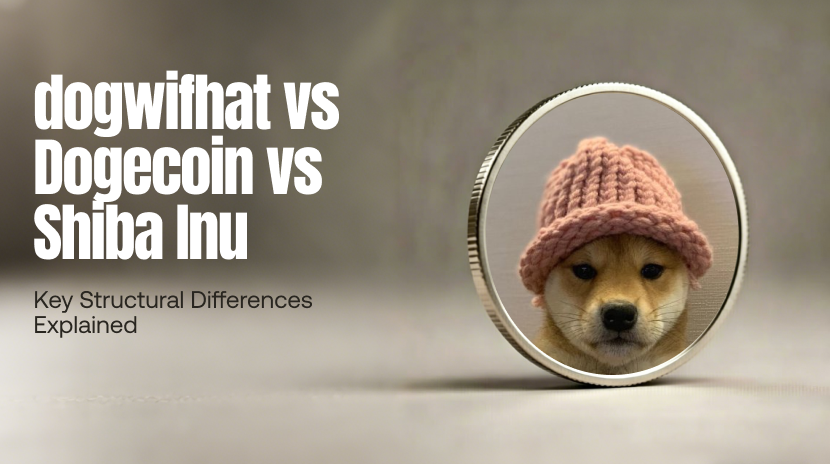
dogwifhat (WIF), Dogecoin (DOGE), and Shiba Inu (SHIB) are all Meme tokens, yet they differ markedly in their underlying blockchain infrastructure, token mechanisms, and approaches to community development. Dogecoin stands out as an early Meme token with its own independent blockchain. Shiba Inu, on the other hand, is built on the Ethereum ecosystem and has evolved to offer a wide range of features. Meanwhile, dogwifhat leverages the Solana network, achieving rapid growth through a streamlined, community-driven model.
2026-04-22 15:03:32
Shiba Inu (SHIB) is a meme token built on Ethereum, initially branded as the "Dogecoin Killer," and rapidly attracted marketplace attention through community-driven initiatives. As ecosystem products like Shibarium, ShibaSwap, BONE, and LEASH have developed, SHIB has evolved from a simple meme token into an ecosystem asset supporting payment, governance, and DeFi use cases.
2026-04-22 15:02:52
Shibarium is a Layer2 blockchain network developed by the Shiba Inu ecosystem, aimed at expanding SHIB’s use cases through reduced Gas fees and improved transaction efficiency. With support for Decentralized Finance (DeFi), on-chain payments, and token burn mechanisms, Shibarium increases the availability of the SHIB ecosystem and links network activity to SHIB’s value appreciation. It serves as a vital foundation for Shiba Inu’s evolution from a meme token to a comprehensive ecosystem asset.
2026-04-22 15:02:23
Drawing on the most recent public Marketplace Posts from April 2026, this article provides a comprehensive analysis of position management differences between bull runs and ranging markets. It covers position limits, phased strategies for increasing and Reduce Position, Stop-Loss (SL) and Take-Profit (TP) mechanisms, risk budgeting, and execution checklists, enabling investors to optimize their return-to-risk ratio and minimize drawdown amid market volatility.
2026-04-22 11:10:14