


Futures
Access hundreds of perpetual contracts
TradFi
Gold
One platform for global traditional assets
Options
Hot
Trade European-style vanilla options
Unified Account
Maximize your capital efficiency
Demo Trading
Introduction to Futures Trading
Learn the basics of futures trading
Futures Events
Join events to earn rewards
Demo Trading
Use virtual funds to practice risk-free trading
Launch
CandyDrop
Collect candies to earn airdrops
Launchpool
Quick staking, earn potential new tokens
HODLer Airdrop
Hold GT and get massive airdrops for free
Launchpad
Be early to the next big token project
Alpha Points
Trade on-chain assets and earn airdrops
Futures Points
Earn futures points and claim airdrop rewards


More


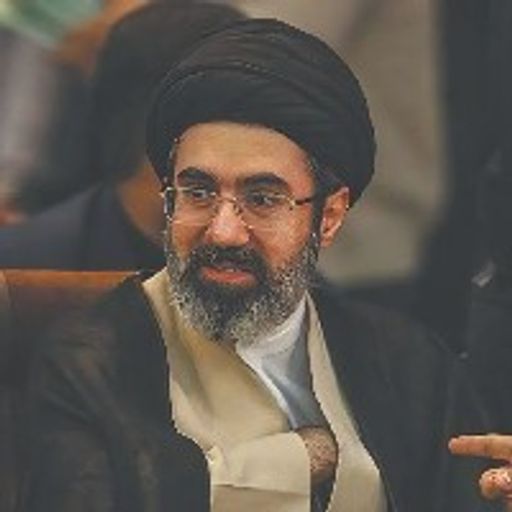


#IranSetsClearCeasefireConditions
The geopolitical landscape of the Middle East has entered a highly volatile phase as tensions between Iran, the United States, and Israel continue to escalate. In the midst of ongoing military confrontation and regional instability, Iran has publicly outlined clear conditions under which it would consider a ceasefire, signaling that any potential pause in hostilities must address long-term security concerns rather than simply halting the conflict temporarily.
The Iranian leadership has made it clear that it does not view a traditional short-term ceasefire as a meaningful solution. Instead, Tehran is demanding structural guarantees that address what it describes as aggression from external actors. Iranian officials argue that previous negotiations and ceasefire arrangements failed because military actions resumed shortly after diplomatic engagement, eroding trust in the process.
From Iran’s perspective, the conflict was triggered by a series of coordinated military strikes targeting Iranian infrastructure, leadership figures, and military installations. The situation intensified after reported attacks by the United States and Israel on strategic Iranian positions, which significantly escalated the regional confrontation and increased the risk of broader conflict across the Middle East.
As a result, Iranian policymakers are now emphasizing that any ceasefire must go beyond symbolic diplomacy and create a permanent shift in the regional security environment.
One of the primary conditions articulated by Iranian officials is the requirement for guarantees that future attacks on Iranian territory will not occur. According to statements from senior diplomatic officials, a ceasefire would only be meaningful if there are firm assurances that military aggression against Iran will not be repeated.
This demand highlights Iran’s strategic concern that temporary ceasefires could simply allow opposing forces to regroup and launch further attacks later. In Tehran’s view, a ceasefire without long-term guarantees risks repeating the same cycle of escalation and retaliation that has characterized several previous regional conflicts.
Another key element of Iran’s stance involves international recognition of Iran’s security rights and sovereignty. Iranian leaders argue that the conflict was imposed on the country and that Tehran’s military response, including missile and drone operations targeting regional military assets, has been carried out under the principle of self-defense as outlined in international law.
Iranian officials have also indicated that external mediation efforts are already underway, with several global and regional powers attempting to facilitate diplomatic discussions. Multiple countries have reportedly initiated communication with Tehran in an effort to explore potential pathways toward de-escalation and conflict management.
However, despite these diplomatic efforts, Tehran’s public messaging suggests that Iran is not actively seeking an immediate ceasefire. Iranian officials have repeatedly emphasized that negotiations cannot take place while military operations against the country continue.
This position reflects a broader strategic message: Iran wants the conflict to end on terms that fundamentally alter the balance of power and security guarantees in the region.
From a geopolitical standpoint, Iran’s ceasefire conditions reveal several deeper strategic objectives.
First, Iran appears to be attempting to shift the negotiation framework from a temporary battlefield pause toward a broader political settlement. By insisting on guarantees and structural changes, Tehran is signaling that it wants negotiations to address the underlying causes of the conflict rather than merely managing its immediate consequences.
Second, the stance is designed to maintain deterrence credibility. If Iran were to accept an unconditional ceasefire immediately after sustaining attacks, it could risk appearing strategically weakened. By insisting on conditions and continuing military responses, Iran aims to demonstrate that it retains the capacity to retaliate and defend its strategic interests.
Third, the conditions reflect an effort to mobilize international diplomatic pressure. By framing the ceasefire discussion around guarantees and legal justifications, Tehran is attempting to position itself within the narrative of defensive legitimacy while encouraging international actors to intervene diplomatically.
The broader implications of this situation extend far beyond the Middle East. Global energy markets, financial systems, and international trade routes are highly sensitive to instability in the region. Any prolonged conflict risks disrupting oil supply routes, increasing geopolitical risk premiums in global markets, and creating ripple effects across commodities, equities, and digital asset markets.
Historically, geopolitical tensions of this scale have driven investors toward safe-haven assets such as gold, energy commodities, and in some cases Bitcoin, as market participants attempt to hedge against rising uncertainty and systemic risk.
From a strategic perspective, Iran’s current stance reflects a calculated effort to transform a battlefield confrontation into a negotiation framework that reshapes regional security dynamics. Rather than accepting a quick ceasefire that preserves the existing geopolitical balance, Tehran appears focused on securing guarantees that would deter future military action and redefine its long-term strategic position.
Whether these conditions lead to meaningful negotiations or prolong the conflict will depend heavily on the responses of the United States, Israel, and key diplomatic intermediaries. For now, the situation remains fluid, and the possibility of escalation or de-escalation will hinge on whether competing strategic objectives can be reconciled through diplomacy.