0xSideQuest

vip
Age 0.1 Yıl
Peak Tier 0
No content yet
These past two weeks, I've been following the meme narrative again; it's really lively, and my hands are really itchy... But to be honest, I only have one rule for myself now: before entering, write down "where I admit defeat," otherwise a long upper shadow will wash me out. Usually, I set my stop-loss just below the previous low, don't dream of "waiting a bit longer and it'll come back," after being educated three times, I’ve learned my lesson. Don't be greedy with profits either, take two profits, and treat the remaining as lottery tickets. By the way, watching the community argue about priv
View Original
  • Reward
  • Comment
  • Repost
  • Share
The moment it is absorbed into the system, the revolution becomes product iteration.
View Original
TheBuzzingBee
💥💢✨️ Crypto Didn’t Replace The System It Became Part Of It
Crypto was supposed to replace the system.
Now it’s slowly becoming it!
That wasn’t the plan.
At least not the one most people believed in.
Crypto was built on the idea of removing control.
No gatekeepers. No centralized power.
No one deciding who gets access and who doesn’t.
It felt like an exit.
But look at it now.
Institutions are here. ETFs are shaping flows.
Banks are integrating crypto services.
Governments are circling stablecoins.
Regulation is no longer coming.
It’s already forming the foundation!
And the shift didn’t happen all at once.
It happened quietly.
Step by step. Feature by feature. Justified every time.
More security, more adoption, more trust! That’s how it’s usually explained.
And on paper, it all makes sense.
That’s the narrative.
That’s the direction things are supposed to move in.
But if you step back a little, it starts to feel different.
Not like a revolution anymore. More like integration.
The system didn’t disappear.
It adjusted.
And crypto didn’t stay outside of it.
It started blending into it.
Quietly. Step by step. Without much resistance!
That’s the part most people still don’t see.
Because nothing about this feels like control.
It feels like progress.
Better platforms. Easier access.
Institutional validation. Cleaner interfaces.
Everything looks like improvement.
But it also looks familiar.
Mass adoption always comes with rules.
With structure. With oversight.
Systems don’t scale without them.
They never have.
Freedom doesn’t disappear overnight.
It gets negotiated away.
One upgrade at a time.
Crypto didn’t break the system.
It grew large enough to be absorbed by it.
And maybe that was inevitable.
Or maybe it wasn’t.
But we’re not looking at an outsider anymore.
We’re watching something that is becoming part of the machine.
Not against it.
Inside it!
✅️ FOLLOW FOR MORE ✅️
$XRP
$BTC $SOL
#GatePreIPOsLaunchesWithSpaceX

repost-content-media
  • Reward
  • Comment
  • Repost
  • Share
These days, I've been messing around again with AI agents to help me monitor on-chain activity and automatically sign interactions. It really saves effort, but honestly, someone still has to be the safety net. I only put what it can do into "observation + draft orders": scanning new pools, checking if there are obvious traps in the contracts, calculating routing slippage, etc. It writes scripts faster than I do; but when it comes to actually granting permissions / changing access / cross-chain operations—one wrong step and there's no turning back—I still click manually, and I also double-check
View Original
  • Reward
  • Comment
  • Repost
  • Share
The IMF is already warning about near-recession risks. Don't just focus on the market trends; the macro turning point could be this week.
View Original
CryptoFrontier
Iran War Stagflation Risks Tested by Global PMI Data
Seven weeks of Middle East conflict are expected to reveal their economic impact through a second round of purchasing manager indexes and inflation data from multiple countries in the week of April 20–24, 2024. The International Monetary Fund warned of potential near-recession risks, with IMF
  • Reward
  • Comment
  • Repost
  • Share
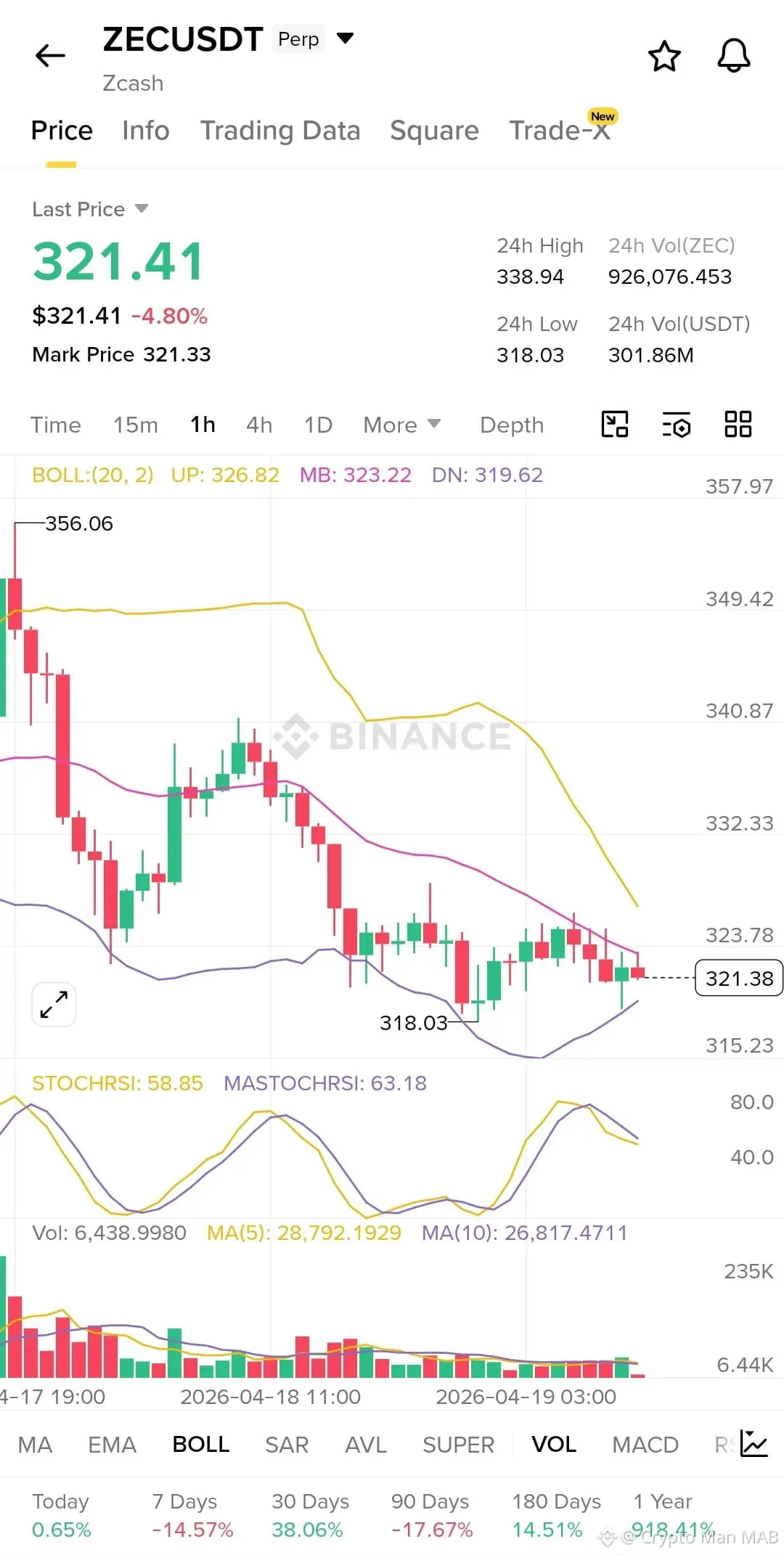
ZEC is holding its position well; wait for a pullback to give an opportunity.
ZEC-0,69%
View Original
CryptoManMab
{future}(ZECUSDT)
Price is holding nicely above a solid demand area. Planning to enter on a dip or confirmation here.
Entry: 312 – 330
Stop Loss: 300
Take Profit 1: 345
Take Profit 2: 370
Take Profit 3: 400
repost-content-media
  • Reward
  • Comment
  • Repost
  • Share
I'm not very good at predicting market trends, but when a lending position is only three steps away from the liquidation line, my hands move a bit faster than my brain: first, close a portion of the leverage that can be closed—don’t stubbornly hold on to “it’s just about to rebound.” Then, bring the collateral ratio back to a comfortable range. Whether it’s topping up margin or reducing some debt, the priority is to lower the probability of getting kicked out of the game with a single move. The third thing is to turn on automation: price alerts, on-chain health factor monitoring, and scripts t
View Original
  • Reward
  • Comment
  • Repost
  • Share
Recently, I saw someone in the group ask again about "depegging" with stablecoins.
I tend to get itchy to check reserve proofs and on-chain flows...
Honestly, it's not that I understand more; I'm just afraid of being the last to find out.
Depegging often starts with psychological pressure: when a bunch of people start to withdraw, even if you're transparent, you'll still get trampled.
My current habit is to first check if the redemption channels are smooth and whether the reserve disclosures match large on-chain inflows and outflows,
then decide whether to split my position a bit.
View Original
  • Reward
  • Comment
  • Repost
  • Share
The structure looks quite good; the short-term bullish trend is indeed being controlled.
View Original
LedgerBull
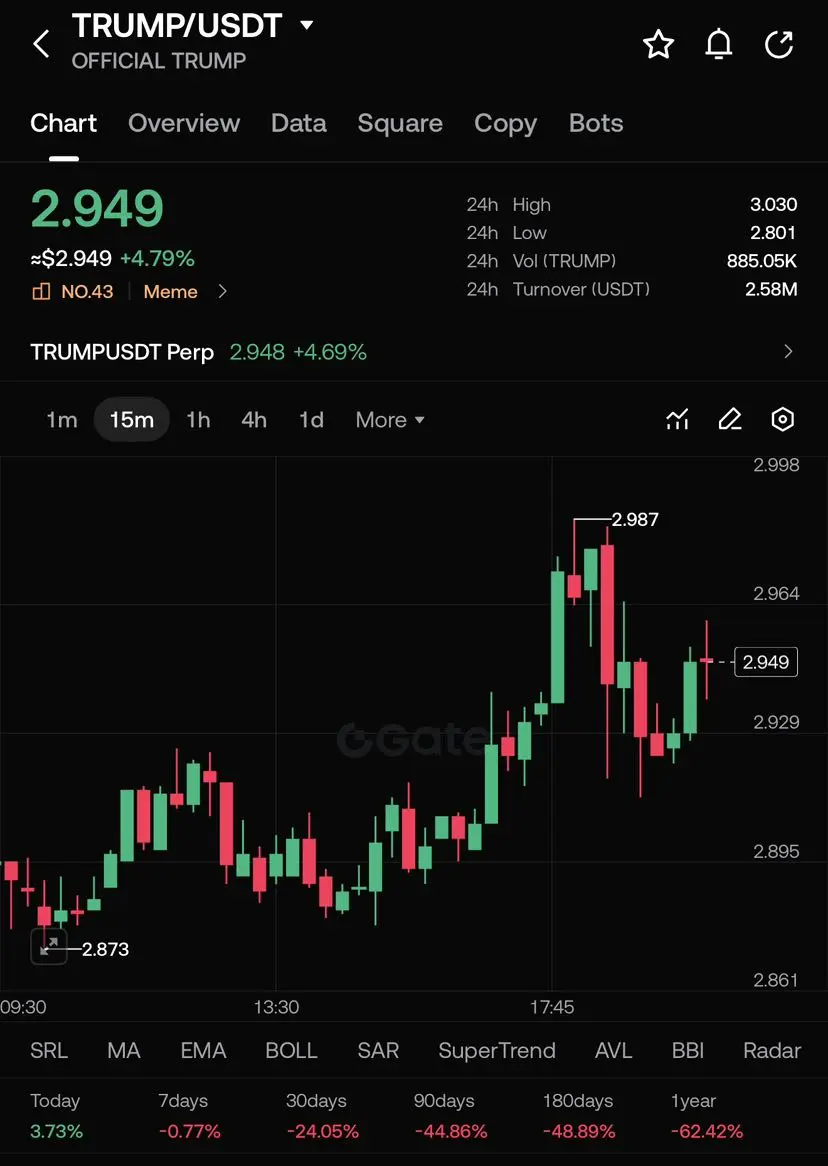
$TRUMP showing short-term strength with continuation after reclaiming range.
Buyers in control as structure forms higher highs on lower timeframes.
EP
2.90 - 2.95
TP
TP1 3.05
TP2 3.20
TP3 3.40
SL
2.80
Liquidity below 2.90 was absorbed before upside expansion, confirming demand. Strong push and higher lows suggest continuation potential as long as buyers maintain control above the range.
Let’s go $TRUMP ‌
repost-content-media
  • Reward
  • Comment
  • Repost
  • Share
$BASED has also achieved its 4th goal 🎯; you can't deny this execution power.
View Original
Original content no longer visible
  • Reward
  • Comment
  • Repost
  • Share
Recently I’ve been looking at a bunch of “smart money tags/address clustering” tools—they’re pretty convenient, but lately I’m getting less and less willing to trust them completely... To put it plainly, they just write wallets as if they were characters. One address might be a “whale” today, but tomorrow it could be just some multi-signature/pooled wallet moving stuff around; clustering is even more mystical—once the same batch of funds goes in and out of CEXs and gets routed through a cross-chain hop, you basically can’t tell who’s actually in control in the end.
My own habit these days is:
View Original
  • Reward
  • Comment
  • Repost
  • Share
The most feared phrase: I have already understood.
View Original
CryptoPsychic
The Moment You Start Feeling Confident Is Usually the Beginning of the Mistake
Confidence feels like progress in trading.
You catch a few good trades.
You read the market correctly.
Things start to “make sense.”
And slowly, without noticing, your behavior changes.
You start trusting your feeling more than your rules.
You enter a bit earlier.
You size a bit bigger.
You hold a bit longer.
Not because the setup improved.
Because your confidence did.
That’s where the problem begins.
Crypto doesn’t punish insecurity.
It punishes overconfidence.
When confidence rises: • risk control usually drops
• patience decreases
• discipline becomes flexible
You stop waiting for confirmation because you “already know.”
You stop respecting invalidation because you “see the move.”
And that’s exactly when the market does something unexpected.
Not because it’s against you.
Because uncertainty never disappears — you just stopped respecting it.
Most traders don’t lose when they’re confused.
They lose when they feel certain.
Because certainty leads to exposure.
And exposure without discipline leads to damage.
The best traders don’t eliminate confidence.
They control it.
They keep: • position size consistent
• rules unchanged
• entries structured
No matter how well things are going.
Because they understand something simple:
The market doesn’t care how confident you feel.
It only reacts to liquidity, structure, and positioning.
👇 Comment if overconfidence has ever cost you a trade
🔁 Share this with someone on a winning streak right now
📌 Follow for real crypto insights — where discipline matters more than confidence
#GatePreIPOsLaunchesWithSpaceX #CryptoMarketRecovery
repost-content-media
  • Reward
  • Comment
  • Repost
  • Share
Risk warning at maximum: Keep your position light, enter and exit in batches, set take profit and stop loss levels fixed; don't let one trade ruin your portfolio.
View Original
CryptoManMab
Again Risking my portfolio shorting $BIO
{future}(BIOUSDT)
  • Reward
  • Comment
  • Repost
  • Share
I have BNB here and want a conservative trading plan: provide references for entry, take profit, and stop-loss levels.
BNB0,07%
View Original
CryptoSat
You need Technical Analysis on your trades🤔
Comment your coin name now 👇
  • Reward
  • Comment
  • Repost
  • Share
Recently, I keep seeing people ask whether they should learn about builders and bundles. Honestly, for retail investors, just understanding that "trades don't necessarily enter blocks in the order you expect" is enough. Don't get caught up in the mindset of a miner or market maker; it's more of a reminder: for large swaps, grabbing new pools, or liquidating marginal positions, it's best to assume someone is watching your back. If you can use limit orders, avoid market orders; place orders in batches, and don't set slippage too high. If you're chasing new on-chain opportunities, use reliable ro
RWA-0,95%
View Original
  • Reward
  • Comment
  • Repost
  • Share
Japan's move to include cryptocurrencies in the Financial Instruments and Exchange Act is very important: information disclosure + insider trading bans + heavy penalties for unlicensed activities, raising compliance standards, and making the path for institutions to enter clearer.
View Original
CryptoNewcomersAreHere22222
(The FSA) Previously regulated cryptocurrency assets under the "Funds Clearing Law," using payment methods as the basis for supervision. As the investment purposes for cryptocurrency assets continue to expand, the proportion of users holding assets for profit has significantly increased, and the current regulatory framework has become insufficient to effectively protect investors' rights. Based on this background, the Financial Services Agency has decided to transfer the regulatory framework to the "Financial Instruments and Exchange Act," placing cryptocurrency assets on equal legal footing with stocks, bonds, and other traditional financial products, and related industry players will also face compliance standards similar to traditional financial institutions. This transition further aligns Japan's cryptocurrency regulatory structure with the mainstream financial regulations of major G7 economies. Core provisions of the amendment: strengthened obligations and upgraded penalties.
Main changes in the amendment:
Insider trading ban: Explicitly prohibits trading cryptocurrency assets using material non-public information, filling gaps in current law.
Annual disclosure obligations: Cryptocurrency issuers must regularly disclose financial and business information to regulators and investors.
Change of operator name: Registered operators are officially renamed from "cryptocurrency exchange operators" to "cryptocurrency trading operators."
Increased criminal penalties: The maximum prison sentence for unlicensed operators is increased from 3 years to 10 years, and the fine cap is raised from 3 million yen to 10 million yen.
  • Reward
  • Comment
  • Repost
  • Share
  • Pin