












BlackRiderCryptoLord

vip
Age 0.5 Yıl
Peak Tier 0
No content yet
#BuyTheDipOrWaitNow?
Buy The Dip or Wait Now?
Bitcoin is at a critical decision zone.
Current BTC Price:
As of now, Bitcoin is trading around $69,000.
The real question traders are asking:
Do we buy the dip now, or wait for deeper confirmation?
This debate is not emotional — it is structural. Below is a fully extended yet clearly structured breakdown covering price action, percentage moves, liquidity, macro context, derivatives positioning, probability scenarios, and strategic risk management around BTC.
1) Current BTC Structure — Where Is Price Positioned?
Bitcoin moves in cycles of expansi
BTC-0,76%
HighAmbitionvip
#BuyTheDipOrWaitNow?
Buy The Dip or Wait Now?
Bitcoin is at a critical decision zone.
Current BTC Price:
As of now, Bitcoin is trading around $69,000.
The real question traders are asking:
Do we buy the dip now, or wait for deeper confirmation?
This debate is not emotional — it is structural. Below is a fully extended yet clearly structured breakdown covering price action, percentage moves, liquidity, macro context, derivatives positioning, probability scenarios, and strategic risk management around BTC.
1) Current BTC Structure — Where Is Price Positioned?
Bitcoin moves in cycles of expansion and correction.
At $69,000, BTC is sitting near a psychological and structural zone. If the recent high was near the $73K–$74K region, this places the current move roughly 6–8% below recent highs — which technically qualifies as a mild pullback, not a crash.
In any dip scenario, we must identify:
• Is this a healthy pullback in an uptrend?
• Or the beginning of a larger correction?
A true dip-buying opportunity usually occurs when:
Price corrects 8–20% within a broader uptrend
Funding rates cool down
Open interest declines
Panic selling appears
A dangerous dip occurs when:
Macro liquidity tightens
Structure breaks key support
Spot demand weakens
Derivatives remain over-leveraged
So the debate starts with structure, not emotion.
At $69K, BTC is not structurally broken — but it is close enough to key zones that confirmation matters.
2) The Case for “Buy The Dip”
A) Market Psychology
Most major BTC rallies begin when:
Retail fear increases
Social sentiment turns negative
Liquidations flush leveraged longs
Strong hands accumulate during fear.
If BTC dipped from $74K to $69K and funding cooled significantly, that is a liquidity reset, not a trend reversal.
Historically, buying 10–15% pullbacks during bullish cycles has provided favorable risk-reward. If BTC were to dip toward $65K (roughly 12% off highs), that zone becomes even more attractive for accumulation if macro conditions remain stable.
B) Liquidity Reset
When BTC dips:
Funding rates normalize
Open interest declines
Weak hands exit
This resets leverage and creates healthier continuation potential.
If the move to $69K was driven by long liquidations rather than macro weakness, buying pressure can return quickly.
Markets often bounce hardest after forced selling.
C) Institutional Demand
Spot ETF flows and long-term holders provide structural support in modern cycles.
If ETF inflows remain steady while price dips toward $69K–$67K, that often signals accumulation — not distribution.
Institutional money tends to scale in during weakness, not chase green candles.
D) Risk-to-Reward Ratio
If BTC drops 8–12% but the macro trend remains intact, upside continuation may still target 20–30% moves toward new highs.
Buying near $69K with invalidation below a major support (for example $64K–$65K zone) creates a defined risk framework.
This creates asymmetric opportunity.
3) The Case for “Wait Now”
A) Macro Uncertainty
Bitcoin is highly sensitive to:
Interest rate expectations
Dollar strength
Equity market momentum
If macro probability shifts toward tightening or risk-off conditions, BTC could extend downside toward deeper support zones.
If Nasdaq weakens and risk sentiment fades, BTC may follow.
Waiting for confirmation reduces risk of entering before a larger 20–25% correction.
B) Structure Breakdown Risk
Support only exists until it breaks.
If BTC loses $67K–$65K with strong volume, that could open a move toward $60K liquidity.
Buying too early may lead to catching a falling knife.
Smart money often waits for:
Higher low confirmation
Reclaim of broken support
Strong volume reversal
If BTC reclaims $71K–$72K after holding $69K, that confirmation favors buyers.
C) Liquidity Gaps Below
Crypto markets frequently sweep stop-loss clusters.
If significant liquidity sits below $66K or $64K, price may dip there before bouncing strongly.
Waiting allows entry after liquidity sweep rather than before it.
4) Volume & Liquidity Analysis
When evaluating buy vs wait, observe:
• Is the dip happening on high panic volume (bullish reset)?
• Or low drifting volume (bearish continuation)?
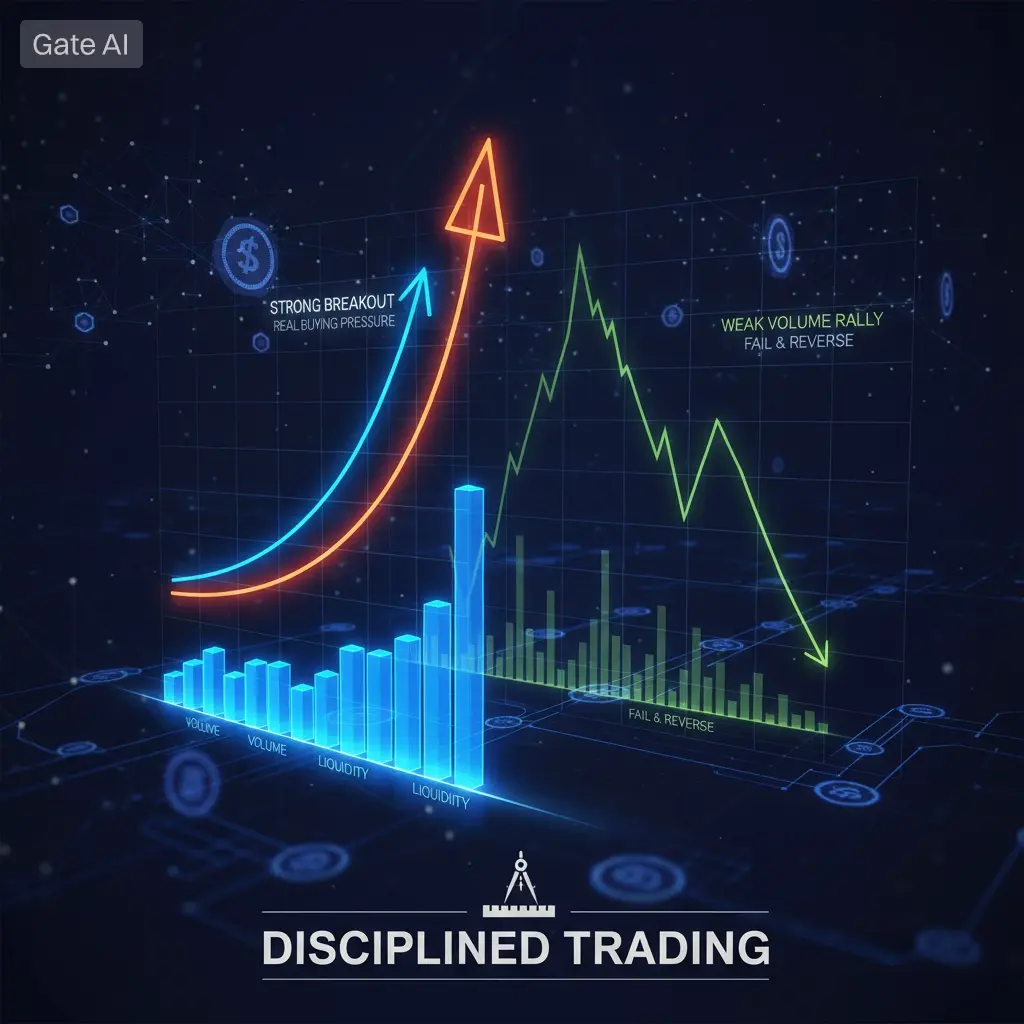
High volume flush + quick recovery around $68K–$69K = strong dip candidate.
Low volume grind downward = caution.
Also monitor:
• Order book depth
• Spot vs derivatives dominance
• Funding rates
If funding remains positive and elevated during a dip to $69K, further downside toward $65K becomes more likely.
5) Percentage Move Scenarios
Let’s model three possibilities from $69,000:
Scenario 1 — Healthy Pullback
BTC corrects 8–12%
Holds $67K–$65K support
Recovers toward $74K–$78K
Outcome: Dip buyers win.
Scenario 2 — Extended Correction
BTC drops 18–25%
Moves toward $58K–$60K
Consolidates for weeks
Outcome: Early buyers face drawdown but long-term holders benefit.
Scenario 3 — Macro Breakdown
BTC drops 30%+
Revisits $50K–$52K zone
Structure shifts bearish
Outcome: Waiting was safer.
Probability assessment depends on macro environment and liquidity conditions.
6) Derivatives & Liquidation Data
Watch carefully:
• Open interest trends
• Long/short ratio
• Liquidation clusters
If longs remain overcrowded near $69K, dip may extend.
If large long liquidations already occurred and funding turns neutral or negative, that improves dip-buying probability.
Often the best entries occur after:
Large long liquidations
Funding normalization
Extreme bearish sentiment
7) Strategic Approaches
There is no single correct answer. Strategy depends on risk tolerance.
Strategy 1: Dollar-Cost Averaging
Buy partial position near $69K.
Add more at deeper supports if price dips.
Reduces timing risk.
Strategy 2: Confirmation Entry
Wait for:
Break above $71K–$72K
Higher low formation
Bullish volume divergence
Safer but may miss the exact bottom.
Strategy 3: Aggressive Dip Buy
Enter full position near current support.
Place invalidation below structural level.
Higher reward, higher risk.
8) Market Sentiment & Crowd Behavior
When everyone screams “buy the dip,” risk increases.
When fear dominates and dip buying disappears, opportunity increases.
At $69K, sentiment is cautious — not extreme panic yet.
True bottoms usually form when confidence disappears completely.
9) Short-Term vs Long-Term Perspective
Short-term traders focus on:
5–10% swings
Technical triggers
Intraday volatility
Long-term investors focus on:
Cycle structure
Macro liquidity
Adoption growth
If you believe in Bitcoin’s multi-year thesis, a move from $74K to $69K is minor.
If you are trading leverage, timing is critical.
Final Debate Conclusion — Buy or Wait?
Buying the dip works best when:
• Macro trend remains supportive
• Liquidations occurred
• Structure holds above key support
• Funding resets
Waiting works best when:
• $65K breaks decisively
• Macro risk increases
• Liquidity below remains untapped
• Derivatives remain overheated
The smartest approach for most traders:
Scale in gradually rather than choose extreme positions.
Strategic Summary
Bitcoin at $69,000 is not collapsing — but it is at a decision zone.
This is not blind dip-buy territory.
And it is not confirmed breakdown either.
The key is distinguishing between:
Healthy correction
and
Structural shift lower
Buy with plan.
Wait with discipline.
Manage risk strictly.
The market does not reward speed.
It rewards structure, patience, and probability management.
repost-content-media
  • Reward
  • Comment
  • Repost
  • Share
#AnthropicTopsAIProductRankings
🌐 Anthropic Tops AI Product Rankings — The Complete Story
Recently, the AI world has witnessed an unexpected and striking shift: Anthropic’s Claude AI has risen to the top of major AI product rankings, overtaking some of the biggest names in artificial intelligence. This isn’t just a momentary spike in popularity — it reflects deeper shifts in market dynamics, user sentiment, ethical debates, and the competitive landscape of generative AI.
Here’s the full, in‑depth breakdown of what’s happened, why it matters, and what it means for the future of AI.
📌 What th
HighAmbitionvip
#AnthropicTopsAIProductRankings
🌐 Anthropic Tops AI Product Rankings — The Complete Story
Recently, the AI world has witnessed an unexpected and striking shift: Anthropic’s Claude AI has risen to the top of major AI product rankings, overtaking some of the biggest names in artificial intelligence. This isn’t just a momentary spike in popularity — it reflects deeper shifts in market dynamics, user sentiment, ethical debates, and the competitive landscape of generative AI.
Here’s the full, in‑depth breakdown of what’s happened, why it matters, and what it means for the future of AI.
📌 What the Ranking Means
When we say “Anthropic tops AI product rankings,” we’re referring to several measurable outcomes that show Claude AI leading in prominence, downloads, and public attention:
Apple App Store Rankings: Claude reached the #1 spot on the Apple App Store free apps chart in the U.S., surpassing competitors including ChatGPT (by OpenAI) and Google’s Gemini. For a model that was not in the top charts just weeks earlier, this rapid rise is remarkable and signals strong user adoption.
Independent Performance Leaderboards: Third‑party AI ranking platforms place Claude highly across multiple performance metrics — reasoning, logic, language understanding, creativity, and coding tasks.
📈 How Claude Climbed the Charts
Claude’s rise was not gradual — it was sharp and unexpected. Several key factors contributed:
Rapid Growth in Downloads: Data shows Claude’s user installs jumped dramatically over a short period. Downloads and sign-ups surpassed competitors’ numbers, leading to the #1 ranking on major app charts.
Strong Consumer Interest: Public curiosity about Anthropic and Claude increased dramatically after news broke about government disputes and policy decisions.
Abrupt Momentum Shift: Claude went from being mostly outside the top‑100 to breaking into the top 10, then hitting #1 in a matter of weeks — an exceptionally fast climb.
🧠 The Government and Public Controversy That Sparked Attention
A central reason behind Claude’s sudden popularity was a high-profile dispute involving Anthropic and U.S. government authorities:
Ethical AI and Government Pushback: Anthropic refused to remove certain safety safeguards from Claude, even when pressured by government agencies for defense applications, surveillance use cases, and military contracts.
Federal Ban and Backlash: Following Anthropic’s refusal to remove safeguards, the U.S. government reportedly banned federal agencies from using Claude. Several government departments ceased use of Anthropic products under these new directives.
Public Reaction: Many users interpreted the ban as unfair or politically motivated, leading to social media outcries. Supporters rallied behind Anthropic, viewing its stance as principled and ethically grounded.
🧠 Why This Controversy Boosted Claude
Instead of harming Claude’s reputation, the government dispute fueled its visibility:
User Support Turned Into Usage: People who disagreed with the ban began downloading Claude in solidarity.
Viral Conversations: The topic trended heavily on platforms like Twitter, Reddit, LinkedIn, and tech communities. Debates around AI ethics and responsible AI became linked with Claude’s public image.
Media Amplification: Major tech news outlets and blogs covered the story extensively, exposing Claude to new audiences.
🤖 What the Top Rankings Really Reflect
It’s important to clarify that “top ranking” encompasses multiple dimensions, not just a marketing headline:
Usage Metrics: Install volume, daily active users, and user engagement.
Public Perception: Sentiment in online communities, social media buzz, and media coverage.
Ethical Positioning: Debate around safe AI usage and user preference for AI with ethical control measures.
This means Claude’s high ranking isn’t just a reflection of performance — it’s also a reflection of public reaction, values, and online sentiment.
📊 How Claude Compares Technically
In addition to reaching top charts, Claude also scores competitively on technical performance:
Natural Language Understanding: Claude is known for producing coherent, context-aware responses across a wide range of queries.
Safety and Guardrails: The model incorporates comprehensive safety layers designed to reduce harmful outputs.
Task Versatility: Claude handles reasoning tasks, brainstorming, content creation, and logic problems at levels comparable with other leading AI models.
Independent benchmarks frequently rank Claude among the top models available today — not just in popularity, but in core language performance.
🌍 Broader Industry Context
Competition in AI Has Intensified: AI leadership is no longer dominated by a few established players. Newer companies like Anthropic are actively reshaping the rankings with compelling products and strategies.
User Values Are Influential: The AI landscape is shifting from purely technical evaluation to include ethical and social considerations. Users increasingly care about responsible AI behavior, transparency, safety standards, and alignment with personal values.
The Role of Policy in Tech Popularity: Public debate over AI regulation, military use, and ethical compliance now influences consumer behavior and product adoption.
📌 Implications for the AI Ecosystem
For Anthropic: The ranking boost enhances brand recognition and credibility. Claude’s wider adoption could accelerate enterprise and developer interest. User trust in the product could translate to stronger community loyalty.
For Competitors: Other AI companies may face pressure to address ethical concerns more visibly. Market leaders may need to re-evaluate strategies to maintain relevance.
For Users: Users now have more choice and influence in selecting AI products based on values, privacy, and safety, not only performance.
For AI Governance: The controversy has sparked a wider public conversation about how AI should be regulated, who gets to decide safety standards, and how governments interact with AI developers.
📌 Key Takeaways
Anthropic’s rise to the top of AI product rankings is not just about downloads — it’s a cultural and ethical moment.
Claude’s success reflects consumer sentiment, ethical positioning, and public discourse, not only technical merit.
Technical performance, safety orientation, and values-based adoption are becoming core drivers in AI popularity.
AI is increasingly a technology, values, and governance battleground, not just a race for features.
🧠 Conclusion
The rise of Claude to the top of AI rankings demonstrates how public opinion, ethical standards, and societal values are now shaping the AI industry alongside technical performance. Anthropic’s achievement signals a new era where consumer trust, ethical alignment, and social impact are central to the success of AI products.
repost-content-media
  • Reward
  • Comment
  • Repost
  • Share
#NonfarmPayrollsPreview
Nonfarm Payrolls (NFP) remains the single most consequential monthly macroeconomic indicator, serving as the bridge between the U.S. labor market, Federal Reserve policy expectations, and global risk sentiment. Published by the U.S. Bureau of Labor Statistics (BLS) at 8:30 AM ET on the first Friday of each month, the report measures total employment excluding farm workers, private household staff, and select nonprofit employees. Its comprehensive scope makes it the most reliable real-time gauge of economic momentum, consumer spending power, inflation pressures, and the
BTC-0,76%
ETH-1,89%
SOL-3,13%
XRP-1,96%
HighAmbitionvip
#NonfarmPayrollsPreview
Nonfarm Payrolls (NFP) remains the single most consequential monthly macroeconomic indicator, serving as the bridge between the U.S. labor market, Federal Reserve policy expectations, and global risk sentiment. Published by the U.S. Bureau of Labor Statistics (BLS) at 8:30 AM ET on the first Friday of each month, the report measures total employment excluding farm workers, private household staff, and select nonprofit employees. Its comprehensive scope makes it the most reliable real-time gauge of economic momentum, consumer spending power, inflation pressures, and the likely direction of interest rates.
For March 2026, the February NFP release scheduled on March 6 is highly anticipated. Consensus forecasts indicate roughly +60K jobs added (range 50K–80K), with unemployment steady at 4.3–4.4% and modest wage growth in average hourly earnings. This follows a strong +130K beat in January 2026, alongside significant historical downward benchmark revisions totaling nearly 898K jobs since March 2025, emphasizing a soft underlying labor trend. For crypto markets, NFP is far more than a labor report — it functions as a macro-volatility engine, triggering price swings, volume surges, derivatives positioning, liquidation cascades, and shifts in risk sentiment in real time.
Decomposing NFP — Key Drivers for Crypto Markets:
Headline Nonfarm Payrolls: The core job additions for February 2026 are estimated at ~60K, compared to January’s actual +130K. Historically, deviations of ±50K from consensus often result in amplified crypto reactions: BTC typically moves 3–8% intraday, while altcoins such as ETH, SOL, and XRP can swing 5–15%.
Unemployment Rate (U‑3): Expected around 4.3%, unemployment provides critical insight into labor force participation. Crossings of the 4.1–4.5% threshold often trigger notable USD strength or weakness, with corresponding risk-on or risk-off flows in crypto markets.
Average Hourly Earnings (MoM/YoY): Wage surprises of ±0.1–0.2% tend to influence Fed repricing, shaping risk appetite and liquidity flows across BTC, ETH, and other high-beta cryptocurrencies.
Revisions to Prior Months: Market reaction often hinges more on historical revisions than headline data. January 2026’s significant downward revision created lingering USD strength, pressuring BTC despite a headline beat.
Sector-Level Insights:
Healthcare & social assistance: consistent job gains support steady economic consumption.
Manufacturing & construction: cyclical signals provide early insight into broader economic momentum.
Government payrolls: often act as a fiscal drag.
Private Payrolls & Participation Rate: Excluding government distortions, these metrics provide a more “organic” reading of labor market dynamics, guiding expectations for risk assets, including crypto.
Macro Transmission Into Crypto — 2026 Context:
Strong NFP: A robust labor report generally indicates a resilient economy, potentially delaying Fed cuts or sustaining higher yields. This supports USD appreciation, risk-off sentiment, and temporary crypto outflows, causing BTC and ETH to retrace.
Weak NFP: Conversely, cooling labor conditions may accelerate easing expectations, weakening the USD and triggering risk-on flows, which typically drive BTC, ETH, and high-beta altcoins higher.
Amplifiers in 2026: Post-2025 economic slowdown, tariffs, and fiscal debates have heightened sensitivity. Crypto markets, with beta 2–3× that of equities, magnify deviations, underscoring the importance of macro alignment in trading strategies.
Preview Phase Mechanics — Positioning, Open Interest, and Sentiment:
3–10 days before release, consensus builds around a ~60K headline and 4.3% unemployment. Traders pre-position using Treasury yields, DXY futures, crypto funding rate shifts, and options skew toward downside protection. Deviations of ±50K often ignite intraday BTC/ETH volatility, while prior month revisions can override expectations. Behavioral patterns indicate pre-release momentum may fade, followed by exaggerated post-release reversals due to gamma hedging and liquidations.
Traditional Market Patterns — NFP as a Risk Proxy:
Beat: 10-year Treasury yields typically rise 5–15 bps, DXY strengthens 0.3–0.8%, equities may dip or remain mixed.
Miss: Yields fall, USD softens, equities rally, and crypto often leads the risk-on wave. Historically, crypto can act as a leading risk gauge, reflecting immediate liquidity flows before traditional markets stabilize.
Crypto Market Impact — Granular Breakdown:
Price Reactions & Percentage Moves: BTC and ETH amplify surprises 2–3× relative to equities. For instance, January 2026’s +130K report initially spiked BTC before a 3–4% intraday retrace, stabilizing near $66–67K. Altcoins may move 5–12%, while hot beats often trigger USD-driven retracements and cold misses drive risk-on liquidity inflows.
Volume & Open Interest: BTC spot/futures volumes surge 10–40% post-release; perpetual OI fluctuates $1–4B within the first hour. Altcoins see 20–50% jumps from retail and algorithmic flows.
Liquidity, Slippage, Depth: Pre-release spreads widen 3–6× and depth thins 40–70%. Initial 5–15 minutes post-release experience slippage of 0.4–2%+ on BTC, worse for alts. Liquidations of $100M–$600M+ are routine during significant surprises.
Volatility Metrics: Realized volatility rises 1.8–2.5× baseline on NFP days; implied volatility jumps 15–30 pts pre-release. BTC/ETH maintains strong inverse correlation with DXY (0.75–0.9) during the event.
Risk Sentiment & Flow: Strong NFP drives risk-off, causing crypto underperformance relative to Nasdaq or rising VIX. Weak NFP encourages risk-on flows, fueling altcoin rallies and liquidity-driven BTC/ETH appreciation.
Trader Toolkit — NFP for Crypto Markets:
Key tools include ADP reports for early labor clues, CME FedWatch for repricing probability of Fed actions, gamma exposure analysis to manage options pinning risk, and liquidity management to define maximum slippage thresholds. Historical revisions often act as the true catalyst, making pre-positioning essential.
Must-Watch Metrics for March 6, 2026:
Headline deviation from ~60K (±50K = high volatility).
Unemployment crossing 4.1–4.5%.
Wage surprises ±0.1–0.2%.
Prior month revisions and sector splits.
Crypto-specific expectations: BTC 3–10% intraday swings, altcoins 5–15%, volume +10–50%, rapid liquidity shifts.
Historical Context & Lessons:
Hot beats historically trigger USD strength and BTC retracements, liquidating leveraged long positions.
Cold misses generate risk-on liquidity, driving altcoin rallies.
Benchmark revisions can override headlines, creating multi-day crypto trends.
Crypto amplifies macro shocks, requiring dynamic sizing, pre-set stops, and proactive flow anticipation across spot, futures, perpetuals, and options markets.
Ultimate Summary — NFP as a Crypto Volatility Engine:
In March 2026, amidst post-2025 slowdown echoes, tariffs, and fiscal uncertainty, NFP drives USD trajectories, liquidity repricing, and risk appetite. Direct crypto impacts include price momentum, volume surges, percentage swings, slippage, depth shifts, and liquidation risk. Expected ranges are BTC 3–10% intraday, altcoins 5–15%, volume +10–50%, with realized volatility 1.8–2.5× baseline. Weak NFP = tailwind, strong NFP = headwind. Strategic pre-positioning, scenario planning, and leverage control separate winners from losers on NFP Fridays.
Next Steps — Advanced Crypto NFP Preparation:
Printable one-page crypto NFP checklist covering spot, futures, options, flow, and risk management.
Historical reaction tables of BTC %, volume, and liquidations from the last 12–18 reports.
Pre-release hedging playbook including futures and options scenarios.
Liquidity & slippage pre-planning for institutional-sized entries.
repost-content-media
  • Reward
  • Comment
  • Repost
  • Share
#BitmineAdds50,900ETHLastWeek
Bitmine Immersion Technologies (NASDAQ: BMNR), the aggressive Ethereum treasury company chaired by well-known crypto strategist Tom Lee (Fundstrat), has once again made headlines. On March 2, 2026, Bitmine disclosed it purchased 50,928 ETH over the previous week. This pushes its total holdings to 4,473,587 ETH, worth roughly $8.84 billion at the time of the purchase (~$1,976 per ETH). The acquisition alone was valued at approximately $100.6 million.
Notably, 68% of Bitmine’s ETH is already staked — generating yield through Ethereum’s proof-of-stake network. Combi
ETH-1,89%
BTC-0,76%
HighAmbitionvip
#BitmineAdds50,900ETHLastWeek
Bitmine Immersion Technologies (NASDAQ: BMNR), the aggressive Ethereum treasury company chaired by well-known crypto strategist Tom Lee (Fundstrat), has once again made headlines. On March 2, 2026, Bitmine disclosed it purchased 50,928 ETH over the previous week. This pushes its total holdings to 4,473,587 ETH, worth roughly $8.84 billion at the time of the purchase (~$1,976 per ETH). The acquisition alone was valued at approximately $100.6 million.
Notably, 68% of Bitmine’s ETH is already staked — generating yield through Ethereum’s proof-of-stake network. Combined with other crypto, cash, and high-risk “moonshot” allocations, Bitmine’s total portfolio now sits at $9.9 billion, including $868 million in cash ready for opportunistic buys. With this accumulation, Bitmine controls 3.71% of Ethereum’s circulating supply (~120.7 million ETH), moving steadily toward its ambitious 5% supply ownership goal, dubbed the “Alchemy of 5%” strategy.
Here is a comprehensive, fully extended analysis of what this means for Ethereum, the market, and the broader crypto ecosystem. Every angle covered.
1️⃣ Immediate Market Reaction — Price & Sentiment Surge
ETH was trading near $1,900–$1,976 during a weekend dip, which Lee referred to as a “mini crypto winter,” influenced by geopolitical tensions (e.g., U.S. sanctions on Iran) and general market weakness.
The announcement of Bitmine’s purchase immediately triggered:
ETH rally: +5% in 24 hours, breaking the $2,000 mark to reach $2,027–$2,038 within a day.
BMNR stock surge: ~9–10% jump, reflecting market enthusiasm for corporate Ethereum accumulation.
The market’s reaction underscores a key pattern: corporate accumulation signals bullish momentum. Bitmine’s behavior mirrors MicroStrategy’s Bitcoin accumulation strategy, where institutional buys significantly boosted both BTC price and investor sentiment.
2️⃣ Supply & Demand Dynamics — The “Shock” Effect
🔹 Direct Buy Pressure
50,900 ETH removed from the open market in just one week represents a sustained demand signal, particularly during weak price phases.
At Ethereum’s daily trading volume of $10–25 billion, this single-week purchase accounts for 0.4–1% of daily volume. While modest in isolation, cumulative weekly buys have a strong scarcity effect over months.
🔹 Staking Lock-up
3,040,483 ETH (68%) is staked, permanently reducing liquid supply available for sale.
Bitmine plans to stake the remaining ETH via its MAVAN (Made in America Validator Network), launching Q1 2026, potentially generating $253 million in annual staking rewards at current yields (~2.86%).
This strategy creates a long-term supply squeeze, similar to a buy-and-lock “corporate treasury” approach.
🔹 Long-Term Supply Implications
If Bitmine continues 40k–100k ETH purchases weekly, liquid supply will shrink rapidly.
Less circulating ETH + ongoing staking = higher scarcity, a fundamental driver for upward price pressure.
3️⃣ Market Sentiment & Institutional Signaling
Tom Lee publicly described the dip as “attractive”, citing Ethereum’s strengthening fundamentals. This is more than a bullish tweet — it is a strong institutional signal:
Other corporates and ETFs see Bitmine’s strategy as validation that ETH is undervalued at current levels.
Positive feedback loop: institutional buying → price appreciation → increased visibility → more institutional buying.
Lee also predicts broader market recovery in tech and digital assets, which reinforces ETH’s upside potential.
In essence, Bitmine’s move is not speculative hype — it is strategic accumulation, signaling confidence in ETH as a long-term corporate reserve asset.
4️⃣ ETH Price Outlook — Multi-Timeline Scenarios
🔹 Short-Term (1–4 weeks)
Strong support: $1,900–$2,000, where Bitmine executed purchases.
Upside potential: $2,200–$2,500, fueled by short squeezes and renewed buying momentum.
Technicals: ETH broke the recent downtrend, and order book analysis shows buy-side depth increasing near $2,000.
🔹 Medium-Term (1–6 months)
Continued weekly accumulation + potential new corporate/ETF inflows = upward bias.
Limited new ETH supply (thanks to staking + burn mechanisms) could push ETH to $3,000–$4,000+ by mid-late 2026.
Bitmine’s 5% supply goal alone may remove millions of ETH from liquid circulation over time.
🔹 Long-Term (2026–2027+)
Bullish base case: ETH becomes Wall Street’s settlement layer for tokenized assets.
Bitmine’s staked holdings + reward compounding = massive treasury growth, reinforcing market confidence.
Price targets among bulls (including Tom Lee’s circle): $5,000–$12,000+ in a full cycle.
Bear case (low probability): geopolitical crises, macro crashes, or Bitcoin dominance shifts. Bitmine’s $868M cash reserve mitigates this, acting as a “buyer of last resort”.
5️⃣ Risks & Counterpoints — Balanced View
⚠️ Concentration Risk
One company holding 3.71% of ETH supply, heading to 5%, raises centralization concerns.
⚠️ Selling Risk
Bitmine’s strategy is long-term hold + staking, making a sudden liquidation unlikely.
However, a forced sale could temporarily impact market price.
⚠️ Execution Risk
MAVAN validator network must launch smoothly; any delays could impact staking yield and market perception.
⚠️ Broader Market Risks
Geopolitics, interest rate shifts, or macroeconomic turbulence could temporarily override bullish ETH fundamentals.
⚠️ Dilution Risk
Funding purchases via stock issuance could pressure BMNR equity price, though portfolio value remains massive.
6️⃣ Historical Comparison — Lessons from Bitcoin
Mirrors MicroStrategy’s Bitcoin accumulation strategy: buy consistently through dips → stock + crypto gains.
Key difference: ETH yields real staking rewards, unlike BTC, providing cashflow benefits to Bitmine.
No other public company holds near this magnitude of ETH — Bitmine is now the #1 corporate ETH holder, far ahead of peers.
7️⃣ Final Verdict — ETH Market Is Headed Higher
Bitmine adding 50,900 ETH is unequivocally bullish:
Immediate price support: ETH jumped above $2,000 instantly.
Scarcity creation: staking reduces liquid supply.
Institutional confidence: corporate buy signals attract more buyers.
Long-term strategic accumulation: multi-year “corporate treasury” trend is in motion.
Next realistic price targets: $2,200–$2,500 in the short term, with $3,000–$4,000+ medium-term and potential $5,000–$12,000+ long-term upside.
Bottom line: Big money is buying the dip aggressively. History shows these strategic accumulation patterns usually end with higher prices, not one-week spikes.
💎 ETH isn’t just bouncing back — it’s being strategically accumulated at scale, staked for yield, and positioned as a corporate digital reserve asset. Every weekly purchase by Bitmine reinforces the bullish narrative.
repost-content-media
  • Reward
  • Comment
  • Repost
  • Share
#FirstTradeOfTheWeek
First Trade of the Week – GOLD (XAU/USD) 💎🔥
Monday, 2 March 2026 | Live Update (7:30 PM PKT)
Gold is not just rallying — it is in full crisis-driven momentum mode.
We’re seeing a powerful +2% to +3% single-session surge, aggressive gap-up open, and price pushing back toward all-time highs. This type of move only happens during major global uncertainty.
Let’s break this down step-by-step so even new traders understand what is happening and how to trade it smartly.
1️⃣ Live Market Snapshot
Current Price: $5,380 – $5,410 (hovering in volatility)
Today’s High: $5,419 – $5,4
HighAmbitionvip
#FirstTradeOfTheWeek
First Trade of the Week – GOLD (XAU/USD) 💎🔥
Monday, 2 March 2026 | Live Update (7:30 PM PKT)
Gold is not just rallying — it is in full crisis-driven momentum mode.
We’re seeing a powerful +2% to +3% single-session surge, aggressive gap-up open, and price pushing back toward all-time highs. This type of move only happens during major global uncertainty.
Let’s break this down step-by-step so even new traders understand what is happening and how to trade it smartly.
1️⃣ Live Market Snapshot
Current Price: $5,380 – $5,410 (hovering in volatility)
Today’s High: $5,419 – $5,425 (platform dependent)
Today’s Open: Around $5,278 – $5,300 (clear gap-up)
Last Friday Close: ~$5,278
Single-Day Gain: +2.0% to +2.9%
2026 YTD Performance: +85–87%
All-Time High: ~$5,608 (January 2026)
This is not normal movement. This is crisis premium being priced in aggressively.
2️⃣ Why Is Gold Exploding? (Simple Explanation)
When the world feels unstable, big money runs to safety.
Gold = Global Financial Insurance.
Current Core Drivers:
🔥 1. Middle East Escalation
Reports indicate direct military confrontation involving the US, Israel, and Iran.
Retaliation risk + Strait of Hormuz threat = massive oil volatility.
If the Strait closes:
20% of global oil supply disrupted
Oil spikes
Inflation fears surge
Investors rush to gold
🛢 2. Oil Surge = Inflation Fear
Oil jumped sharply intraday. Higher oil increases production and transport costs worldwide. That means inflation pressure returns — and gold historically performs strongly during inflation spikes.
💰 3. Central Bank Accumulation
Central banks globally continue heavy gold buying in 2026. This creates structural demand underneath price.
📉 4. US Dollar Weakness
Risk-off sentiment reduces appetite for dollar assets. When the dollar softens, gold becomes more attractive.
3️⃣ Market Psychology (Very Important)
This is how institutional money thinks:
Step 1: Sell risk (stocks/crypto)
Step 2: Buy insurance (gold, oil, safe bonds)
Step 3: Hedge against currency instability
Gold is currently absorbing global fear capital.
But remember: Sharp vertical moves often come with pullbacks.
4️⃣ Technical Structure (Beginner Friendly)
Trend Structure:
Higher Highs ✅
Higher Lows ✅
Price above 50/100/200 EMA ✅
RSI around 65–70 (bullish, not extreme yet)
This confirms strong trend continuation bias.
Key Levels:
Immediate Support: $5,350
Breakout Flip Zone: $5,430
Major Resistance: $5,600
Critical Breakdown Level: $5,100
As long as price holds above $5,300–$5,350, bulls remain in control.
5️⃣ My Full Trading Plan (Structured & Disciplined)
Overall Bias: Strongly Bullish
Strategy: Buy Pullbacks, Do NOT chase green candles blindly.
🟢 Primary Buy Zone (High Probability Area)
$5,300 – $5,340
(Previous breakout + Fibonacci retracement zone)
🟢 Aggressive Entry
$5,250 – $5,280
(Previous weekly close + psychological support)
🟢 Deep Swing Entry
$5,200 – $5,225
(EMA confluence + deeper retracement)
Stop Loss Rules
Conservative SL: Below $5,250
Tight scalp SL: $5,180
Invalidation level: Sustained break below $5,100
Never risk more than 1–1.5% per trade. Volatility is extremes
Take Profit Strategy
Example Trade: Entry: $5,320
SL: $5,250
TP1: $5,500
TP2: $5,600
Risk:Reward ≈ 1:3 minimum
After TP1:
Move SL to breakeven
Trail under higher lows
Let winners run in strong trends.
6️⃣ Weekly Scenario Mapping
🟢 Bullish Continuation (70–75%)
Price holds above $5,350 → retest $5,600 → possible new ATH.
🟡 Healthy Pullback (20–25%)
Dip to $5,250–$5,300 → becomes strong re-entry zone.
🔴 Bearish Reversal (10–15%)
Only if sudden diplomatic breakthrough.
Daily close below $5,100 → opens room toward $4,900–$5,000.
Currently, market structure favors continuation.
7️⃣ What Can Change Everything?
De-escalation headlines
Strait of Hormuz reopening guarantees
Sudden ceasefire confirmation
Unexpected central bank intervention
Gold is now headline-sensitive. News = volatility spikes.
8️⃣ Risk Management Reminder
This is a fast-moving geopolitical market.
Do NOT:
Overleverage
Revenge trade
Chase breakouts emotionally
Do:
Wait for structure
Reduce lot size
Lock profits
Professional traders survive first — profit second.
9️⃣ Bigger Picture Outlook (2026 View)
If tensions persist:
$6,000 becomes realistic medium-term target
Extreme conflict scenario could extend further
But remember: Parabolic markets eventually cool down. Patience wins.
Final Verdict
Gold is in crisis-driven bullish momentum.
The trend is strong. The structure is clean. The catalyst is active. Volatility is elevated.
My plan: Wait for dip into $5,300–$5,340. Tight stop below $5,250. Target minimum $5,600 this week. Trail profits aggressively.
repost-content-media
  • Reward
  • Comment
  • Repost
  • Share
#FirstTradeOfTheWeek
🥈 #FirstTradeOfTheWeek
Gate Square Community Weekly Column Is Live!
The weekly trading discussion is back — and this time we focus on Silver (XAG/USD).
Silver is currently trading around $91, sitting near a key technical zone. This makes it a high-interest setup for both swing traders and intraday participants.
📊 Asset Focus: XAG/USD
Silver is more volatile than gold. It reacts strongly to:
USD strength/weakness
US bond yields
Inflation expectations
Industrial demand outlook
Geopolitical risk
Because of this, XAG often gives bigger percentage moves than gold — but risk
HighAmbitionvip
#FirstTradeOfTheWeek
🥈 #FirstTradeOfTheWeek
Gate Square Community Weekly Column Is Live!
The weekly trading discussion is back — and this time we focus on Silver (XAG/USD).
Silver is currently trading around $91, sitting near a key technical zone. This makes it a high-interest setup for both swing traders and intraday participants.
📊 Asset Focus: XAG/USD
Silver is more volatile than gold. It reacts strongly to:
USD strength/weakness
US bond yields
Inflation expectations
Industrial demand outlook
Geopolitical risk
Because of this, XAG often gives bigger percentage moves than gold — but risk management becomes critical.
🔎 Market Structure Analysis
1️⃣ Trend Context (Higher Timeframes – H4 / Daily)
Price is trading near a psychological round level ($90–$91 zone).
Market is respecting higher-low structure (if holding above $88).
Momentum remains bullish unless $85 breaks decisively.
2️⃣ Key Levels to Watch
Major Support Zones
$88.00 – Strong structural support
$85.00–$85.50 – Breakdown confirmation zone
Major Resistance Zones
$92.50–$93.00 – Immediate supply area
$95.80 – Swing target
$100.00 – Psychological expansion level
📈 Public Trading Plan (Structured & Professional)
✅ Scenario 1: Bullish Continuation Plan (Primary Bias)
If price holds above $88 and shows bullish confirmation:
Entry Zone:
$88.50–$89.50 (Buy the dip area)
Stop Loss:
Below $86.50
Take Profit Targets:
TP1 – $92.50
TP2 – $95.80
TP3 – $100.00 (runner position)
Risk–Reward: Minimum 1:2
Ideal structure: Scale out partial profits at TP1.
📌 Logic:
As long as higher-low structure remains intact, dip buying favors trend continuation.
🔻 Scenario 2: Resistance Rejection Plan (Counter Move)
If price rejects $92.50–$93.00 strongly:
Entry:
Sell after bearish rejection candle
Stop Loss:
Above $94.00
Targets:
TP1 – $89.00
TP2 – $88.00
TP3 – $85.50
📌 Logic:
Resistance rejection + overextended short-term momentum can trigger correction.
🚨 Scenario 3: Breakdown Plan
If price closes below $85 on strong volume:
Bias shifts bearish.
Sell Retest Strategy
Entry on retest of $85 (now resistance)
SL above $86.50
Target $82 → $78 expansion zone
📉 Intraday Strategy (Day Traders)
✔ Mark Asian session high/low
✔ Trade London breakout
✔ Use 1:1.5 or 1:2 RR
✔ Avoid trading during major US news volatility spikes
💰 Risk Management Rules (Non-Negotiable)
Risk only 1–2% of capital per trade
Never move stop loss emotionally
Partial profit booking reduces stress
Avoid revenge trading
Stick to pre-defined levels
Discipline > Prediction.
📊 Fundamental Catalysts This Week
Watch:
US CPI / inflation data
Federal Reserve commentary
USD Index (DXY)
Treasury yield movement
Silver reacts aggressively to macro surprises.
🧠 Psychology Reminder
Silver moves fast.
Don’t chase candles.
Let price come to your level.
Plan the trade → Trade the plan.
📢 Community Engagement Call
Post your version of the XAG First Trade of the Week plan in the Gate Square Community:
Are you bullish above $88?
Or selling resistance at $93?
What is your RR ratio?
Swing or intraday?
One post. Multiple rewards.
Red Packet eligible.
Content Mining rewards stacking.
Up to 60% trading fee commission.
The next amplified trader could be you.
repost-content-media
  • Reward
  • Comment
  • Repost
  • Share
#贵金原油价格飙升🚨
#贵金原油价格飙升
🚨 Gate Plaza|March 3, 2026 Today's Topic:
1. The Middle East situation has suddenly changed!
In just four days, the entire region has flipped from tense standoff to active multi-front war. On February 28, the US and Israel launched coordinated large-scale airstrikes (hundreds of sorties with F-35s, B-2 bombers, and precision missiles) targeting Iranian leadership in Tehran, nuclear facilities, ballistic missile sites, IRGC command centers, and state media outlets. Iran’s Supreme Leader Ayatollah Ali Khamenei was killed in the opening wave, along with key generals and of
HighAmbitionvip
#贵金原油价格飙升🚨
#贵金原油价格飙升
🚨 Gate Plaza|March 3, 2026 Today's Topic:
1. The Middle East situation has suddenly changed!
In just four days, the entire region has flipped from tense standoff to active multi-front war. On February 28, the US and Israel launched coordinated large-scale airstrikes (hundreds of sorties with F-35s, B-2 bombers, and precision missiles) targeting Iranian leadership in Tehran, nuclear facilities, ballistic missile sites, IRGC command centers, and state media outlets. Iran’s Supreme Leader Ayatollah Ali Khamenei was killed in the opening wave, along with key generals and officials. Iran hit back immediately with over 400 ballistic missiles and 1,000+ drones aimed at Israel, US bases across the Gulf (Qatar, UAE, Kuwait), and energy infrastructure. Hezbollah joined from Lebanon, firing rockets and drawing Israeli counter-strikes on Beirut. Casualties have climbed past 600, with confirmed US service member deaths. Trump stated the campaign “could last four to five weeks or far longer” and warned of even bigger strikes ahead. UN appeals for restraint have gone nowhere. Debate among analysts is heated: some call this a decisive blow that could topple the regime quickly (optimistic US/Israeli view), while others warn it risks a prolonged regional war drawing in more actors and spiking global instability for months. Either way, the old status quo is gone — this is now a hot war with direct oil and safe-haven consequences.
2. The US and Israel jointly launched airstrikes, Iran retaliated and blocked the Strait of Hormuz.
The strikes began Saturday night and continued nonstop. US-Israeli forces achieved air dominance over Tehran and hit more than 2,000 targets in the first 72 hours. Iran’s retaliation was swift and massive: missile barrages on Israeli cities (dozens reported dead), direct hits on US bases, and attacks on Gulf energy sites. On March 2, IRGC senior adviser Ebrahim Jabari declared on state TV: “The Strait of Hormuz is closed. Any ship trying to pass will be set ablaze by Revolutionary Guards and the navy.” VHF radio warnings went out to all vessels, GPS jamming started, and at least three commercial ships were damaged or set on fire near the strait. Shipping giants like Maersk and Hapag-Lloyd immediately suspended transits. While not a physical naval blockade (US Navy is present), the threat plus attacks have caused an effective shutdown — tanker traffic down 70%+, 150-200 vessels anchored or diverted, and war-risk insurance withdrawn. Debate here: Can Iran really enforce a long-term closure? Many analysts say no — their navy is being degraded fast, and the US could reopen the strait militarily within days. Others argue even a few weeks of disruption is enough to create chaos. The move was Iran’s classic “asymmetric” response: hurt the world’s oil flow to force a ceasefire.
3. Shipping disruptions caused crude oil prices to surge, and risk aversion drove funds into gold, causing precious metals to soar.
The link is direct and powerful. With 20-30% of global oil and major LNG volumes normally passing through Hormuz now at risk, the market added a huge “fear premium.” Brent crude has surged to $78.56 per barrel (up over 13% in recent sessions, with intra-day spikes to $82). WTI is following at around $71-72. Shipping delays and attacks have already tightened physical supply. At the same time, pure risk-off panic sent investors fleeing stocks and risky assets straight into safe-havens. Gold hit a new record high of $5,417/oz and is now trading around $5,349-$5,408/oz (up nearly 1% today and over 80-100% in the past year). Silver is outperforming at $90-92/oz (some days +5%, gold/silver ratio compressing to ~58-59 — a classic bullish signal). Platinum and palladium are also higher but gold leads. Debate among experts: Is this surge sustainable or just panic? Bulls say central bank buying (850+ tonnes expected in 2026) plus inflation from higher oil creates a structural bull market. Bears argue once Hormuz reopens or diplomacy starts, prices will correct 10-15% fast. Right now, fear is winning.
4. Amidst the turmoil, where are the wealth opportunities?
This environment creates clear winners for those positioned correctly. Safe-haven assets (physical gold, silver bars/coins, gold ETFs, gold mining stocks) are the top play — money is pouring in as uncertainty rises. Energy sector opportunities include oil producers, tanker companies, and defense contractors benefiting from higher crude and military spending. USD strength is another safe play as the world’s reserve currency. In trading terms, leveraged instruments on oil futures, gold spot, and energy CFDs have delivered strong short-term gains. Debate: Some strategists say buy gold/oil aggressively now because the conflict could drag (JPMorgan sees gold to $6,300 by year-end). Others recommend waiting for any de-escalation dip to enter, warning that surges like this often overshoot then reverse sharply. The smartest approach seems to be diversified exposure to both energy upside and precious metals protection, while staying out of pure risk assets until the fog clears. Opportunities exist, but only for those who manage volatility well.
5. How much further can crude oil and precious metals rise? What are the key levels?
Short-term targets are being revised upward daily. For Brent crude: Analysts see $85-90 if the strait stays disrupted 1-2 weeks; $100+ in a worst-case prolonged closure (echoing 1970s shocks). Key resistance levels: $82, then $90 psychological. Support on any calm: quick drop back to $70-72. Long-term consensus (JPMorgan, Trading Economics): $80-88 by end-2026. For gold: Already at records — next stops $5,500-$5,600 short-term, with some (like Midas Funds’ Thomas Winmill) calling for $5,500+ in the next 1-2 months and JPMorgan at $6,300 by year-end. Silver could push to $100-120 if the ratio keeps falling. Debate is intense: Optimists say geopolitics + inflation + central bank demand = multi-year bull run with limited downside. Skeptics point out that every past war premium eventually fades once supply fears ease, and a sudden truce could trigger a 10-20% sell-off. Watch Hormuz news, Trump statements, and any US Navy action as immediate triggers for the next big move.
6. Have you made your moves in Gate TradFi this wave? Feel free to share your gains.
Gate TradFi members have had a perfect setup for this volatility — oil futures, gold spot contracts, silver futures, and energy CFDs have moved fast. Many caught Brent’s jump from the $70s to $78+ or gold’s run from $5,100 levels to $5,417 record. Leveraged positions have delivered 10-30%+ gains in days for those who went long early on the escalation news. Whether you scaled in on the first strikes, added on the Hormuz announcement, or are still sitting in cash — share your entries, exits, or current P&L below. Wins, lessons, or even small losses — the community learns from all of it. (Always remember: not financial advice — just real trader talk.)
7. What’s next for US-Iran relations? How will it impact crude oil, metals, and the crypto markets?
US-Iran relations are at their lowest point in decades. Trump and Rubio have signaled more strikes possible, with the campaign potentially lasting weeks. Iran is weakened but still launching missiles and using proxies. No immediate diplomacy window unless Iran shows major concessions. Impacts:
Crude oil: Stays elevated or climbs further while Hormuz is disrupted; any forced reopening by US Navy could cause violent swings. Prolonged conflict raises recession risk for oil importers.
Precious metals: Strongly bullish as long as uncertainty and inflation fears persist — gold especially benefits from every new headline.
Crypto markets: Short-term pain — Bitcoin, Ethereum, and altcoins are down in the risk-off move as money flows to traditional safe-havens like gold instead of “digital gold.” However, if the war drags and inflation spikes, crypto could later rebound as an alternative hedge. Debate:
Traditional investors say crypto fails in real crises (correlation with stocks rises); crypto bulls argue it’s still early and will decouple once fear peaks. Expect continued volatility and negative pressure on risk assets until clearer war outcomes emerge.
8. Share your views
The floor is open — what’s your read on this fast-moving situation?
Do you see the conflict ending in weeks or dragging into months?
Bullish on oil and gold for the next 2-4 weeks, or expecting a sharp correction on any truce news?
repost-content-media
  • Reward
  • Comment
  • Repost
  • Share
#DeepCreationCamp
🚨 #DeepCreationCamp | BTC, Crude Oil & Gold – (BTC $69,000)
Friends, traders, and analysts, the Israel-Iran conflict continues to shape global markets dramatically. With BTC now at $69,000, Brent crude at ~$78–79/barrel, and Gold around $5,380/oz, the interplay between geopolitical risk, safe-havens, and risk assets is clearer than ever. Let’s dive fully, answering all the community questions, and exploring every angle.
🌍 Geopolitical Catalyst
The Middle East has shifted from tension to active conflict. US-Israel airstrikes targeted Tehran, nuclear and missile sites, and
HighAmbitionvip
#DeepCreationCamp
🚨 #DeepCreationCamp | BTC, Crude Oil & Gold – (BTC $69,000)
Friends, traders, and analysts, the Israel-Iran conflict continues to shape global markets dramatically. With BTC now at $69,000, Brent crude at ~$78–79/barrel, and Gold around $5,380/oz, the interplay between geopolitical risk, safe-havens, and risk assets is clearer than ever. Let’s dive fully, answering all the community questions, and exploring every angle.
🌍 Geopolitical Catalyst
The Middle East has shifted from tension to active conflict. US-Israel airstrikes targeted Tehran, nuclear and missile sites, and IRGC leadership. Iran retaliated with 400+ ballistic missiles, 1,000+ drones, and asymmetric attacks on shipping. Hezbollah’s involvement escalated the situation further.
The Strait of Hormuz remains effectively closed — tanker traffic is down 70%, insurance withdrawn, and GPS interference reported. Debate: can Iran sustain this closure? Bulls say even a few days create massive market uncertainty; skeptics argue US military intervention would reopen it. Either way, this geopolitical risk drives market behavior in BTC, oil, and gold.
🛢 Crude Oil
Price: Brent ~$78–79, WTI ~$71–72
Analysis:
Fear premium remains high due to Hormuz disruption and Gulf instability.
Technical: Support at $72–75, resistance $82–90, extreme $100+ if blockade persists.
Debates:
Bulls: Supply disruption + geopolitical risk keeps oil elevated for weeks.
Bears: Fear premium may reverse quickly once military intervention or diplomacy emerges.
Sector impact:
Winners: Oil producers, tankers, defense contractors
Losers: Energy importers, airlines, logistics-heavy businesses
Strategy: Buy on dips near $72–75, scale out near $82–90. Hedging is recommended due to extreme volatility.
💰 Gold
Price: ~$5,380/oz (ATH $5,417)
Analysis:
Gold remains the ultimate safe haven amid risk-off flows and inflation fears from oil.
Technical: Support $5,350–5,370, resistance $5,500–5,600, long-term potential $6,000–6,300
Debates:
Bulls: Geopolitical risk + central bank buying = multi-month bull trend
Bears: Any de-escalation could trigger a 5–10% pullback
Strategy: Buy dips near support, scale into trends, avoid chasing ATH spikes.
₿ Bitcoin
Price: $69,000
Analysis:
BTC is behaving as a risk asset, sensitive to global uncertainty.
Support levels: $66,000–$67,500 critical, lower cluster $64,000–$65,000
Resistance: $70,500–$72,000 short-term, $75,000+ if risk appetite returns
Debates:
Traditional view: BTC underperforms during crises, correlations with equities rise
Crypto bulls: BTC may decouple as inflation fears grow and fiat weakens
Strategy: Maintain partial exposure, consider scaling into dips near $66,000–$67,500, monitor macro developments for breakout above $70K
1️⃣ How long will the Israel-Iran conflict last? Weeks or months?
Most analysts expect 4–6 weeks minimum for active escalation, with high volatility in oil, metals, and risk assets. If proxy involvement increases, it could extend several months. Immediate military interventions or diplomacy could shorten the duration, but not eliminate uncertainty.
2️⃣ Bullish on oil and gold for 2–4 weeks, or expect corrections on peace news?
Oil: Likely to remain elevated for 2–4 weeks unless Hormuz reopens. Short-term surges are possible.
Gold: Bullish as long as geopolitical uncertainty persists; even brief ceasefire news may trigger minor pullbacks, but overall trend remains upward.
3️⃣ BTC – accumulate on dips or remain on sidelines?
With BTC at $69,000, partial accumulation on support near $66,000–$67,500 is prudent. BTC may dip further if risk-off intensifies, but it also has short-term upside if risk appetite returns. Treat it as a volatile risk asset, not a safe haven.
4️⃣ How are rising oil prices affecting local economies, rupee, and gold jewelry markets?
Rupee & local currency: Pressure increases as import bills rise, especially for Pakistan and India. Expect depreciation risk.
Petrol and energy prices: Retail fuel costs spike, transportation and logistics costs rise.
Gold jewelry: Prices surge in line with spot; buyers may delay purchases or hedge with physical holdings.
5️⃣ Are current surges fear-driven, structural, or both?
Both: Short-term surges are clearly fear-driven due to Hormuz disruption and war risk. Structural factors like central bank demand, inflation hedging, and physical supply shortages support a longer-term bull trend in gold and oil. BTC remains largely fear-sensitive, with potential for structural decoupling if fiat weakness grows.
🔮 Full Scenario Outlook
Bullish Scenario (Conflict Dragging)
Oil: $90–100+
Gold: $5,600–6,000+
BTC: Range-bound, bottoming near support
Neutral Scenario (Partial De-escalation)
Oil: $72–75
Gold: Sideways consolidation
BTC: Recovery toward $70–71K
Bearish Scenario (Quick Peace)
Oil: Sharp correction to $72–75
Gold: 5–10% pullback
BTC: Recovers quickly as risk appetite returns
Conclusion:
Markets are at a historically rare point. Gold dominates as safe haven, oil surges from supply disruption, and BTC awaits clarity. Traders and investors must manage risk, diversify across assets, monitor geopolitical updates, and use disciplined entries and exits.
Volatility is high, opportunities are significant, but caution is essential. Those who can blend macro insight with tactical trading will find this environment extremely profitable.
repost-content-media
  • Reward
  • Comment
  • Repost
  • Share
#IranTensionsEscalate
The recent escalation between Iran, Israel, and the broader Middle East has fundamentally altered global financial markets. What started as targeted airstrikes by the US and Israel against Tehran’s nuclear and missile sites rapidly escalated into a full-scale conflict involving multiple actors, including Hezbollah. Iran responded with hundreds of missiles and drones targeting Israel, US military bases in the Gulf, and critical energy infrastructure, while regional powers like Lebanon were drawn into retaliatory strikes. The effective closure of the Strait of Hormuz has c
HighAmbitionvip
#IranTensionsEscalate
The recent escalation between Iran, Israel, and the broader Middle East has fundamentally altered global financial markets. What started as targeted airstrikes by the US and Israel against Tehran’s nuclear and missile sites rapidly escalated into a full-scale conflict involving multiple actors, including Hezbollah. Iran responded with hundreds of missiles and drones targeting Israel, US military bases in the Gulf, and critical energy infrastructure, while regional powers like Lebanon were drawn into retaliatory strikes. The effective closure of the Strait of Hormuz has compounded the uncertainty, halting around 70% of tanker traffic, disrupting LNG shipments, and creating massive spikes in insurance premiums for vessels operating in the region. Analysts remain divided: some argue the conflict could be short-lived if swift military action or diplomacy occurs, while others warn of a prolonged multi-front war that could last months, creating sustained volatility across multiple markets.
The immediate impact on crude oil has been dramatic. Brent crude has surged to around $78–79 per barrel, with intra-day spikes above $82, while WTI is trading near $71–72. The closure of Hormuz has added a significant “fear premium” to prices, reflecting both the real threat of supply disruption and investor panic. Short-term support is found near $72–75, while resistance exists around $82–90, with extreme cases potentially exceeding $100 if the strait remains blocked. Debates among strategists are intense: bulls argue that even temporary disruptions will sustain elevated prices, favoring energy producers, tankers, and defense sectors, while bears warn that any military intervention or diplomatic breakthrough could trigger sharp corrections. Importing countries face higher energy costs and potential inflation spikes, while exporters gain short-term fiscal advantages, creating complex macroeconomic effects worldwide.
Gold and silver have surged as investors seek safe-haven assets amidst the turmoil. Gold is trading around $5,380 per ounce, with recent all-time highs of $5,417, while silver is around $90–92 per ounce. This surge is fueled by risk-off flows, inflation expectations from rising energy prices, and ongoing central bank purchases. Analysts debate the sustainability of these levels: bulls highlight structural demand and geopolitical risk as support for continued growth, targeting $5,500–5,600 in the short term and $6,000–6,300 by the end of the year, while bears caution that any signs of de-escalation could trigger a sharp 5–10% correction.
Platinum and palladium are also benefiting from safe-haven demand, though gold clearly leads the trend. The smart strategy for traders involves buying on dips near key support levels, scaling into upward trends, and avoiding chasing parabolic spikes.
Cryptocurrencies, particularly Bitcoin, are reacting differently from traditional safe-havens. With BTC at $69,000, it currently behaves more like a risk asset, showing strong correlation with equities and other volatile markets. Support lies near $66,000–67,500, while resistance exists around $70,500–72,000, with the possibility of exceeding $75,000 if risk appetite returns.
Ethereum and most altcoins are under pressure as risk-off flows dominate, and speculative coins experience heavier losses due to higher correlation with equities and BTC. Analysts debate whether cryptocurrencies can act as a hedge in this environment: traditional investors see them failing as safe havens during crises, while crypto proponents argue that over the medium term, Bitcoin could decouple from equities and serve as digital gold, particularly if inflation spikes and fiat currencies weaken. Traders are advised to accumulate cautiously on dips, prioritize BTC over altcoins, and monitor macro news closely.
Overall, the interplay between crude oil, gold, and cryptocurrencies highlights a complex risk environment. Oil reflects real supply risk plus fear premiums, gold captures the safe-haven flow amplified by geopolitical uncertainty, and crypto remains sensitive to risk-on/risk-off cycles but may gain as a hedge if monetary pressures intensify. Traders and investors must adopt a multi-asset perspective, balancing exposure to energy gains, precious metal safety, and selective crypto positions, while maintaining strict risk management. Immediate opportunities exist for those who can navigate volatility, monitor developments in the Strait of Hormuz, and react strategically to ongoing conflict updates, central bank actions, and market sentiment.
repost-content-media
  • Reward
  • Comment
  • Repost
  • Share
#Bitcoin’sSafeHavenAppeal
1. What Does “Safe Haven” Mean in Finance?
A safe-haven asset is an investment that tends to hold its value — or even appreciate — during times of economic turmoil, market crashes, geopolitical conflicts, inflation spikes, or systemic financial instability. Investors turn to these assets to preserve capital when riskier investments like stocks, real estate, or high-yield bonds suffer sharp declines.
Classic examples include physical gold (which has served this role for centuries due to its scarcity and universal acceptance), U.S. Treasury bonds (backed by the full fa
HighAmbitionvip
#Bitcoin’sSafeHavenAppeal
1. What Does “Safe Haven” Mean in Finance?
A safe-haven asset is an investment that tends to hold its value — or even appreciate — during times of economic turmoil, market crashes, geopolitical conflicts, inflation spikes, or systemic financial instability. Investors turn to these assets to preserve capital when riskier investments like stocks, real estate, or high-yield bonds suffer sharp declines.
Classic examples include physical gold (which has served this role for centuries due to its scarcity and universal acceptance), U.S. Treasury bonds (backed by the full faith and credit of the U.S. government, often seen as the world's safest debt), the Swiss Franc (a currency from a politically neutral country with strong banking secrecy), and sometimes the Japanese Yen during global risk-off periods. These assets typically exhibit low or negative correlation with equities during crises, low volatility in relative terms, and intrinsic qualities that make them resilient to inflationary or deflationary pressures.
Bitcoin's emerging "digital gold" narrative positions it as a modern contender in this category. Unlike fiat currencies controlled by central banks, Bitcoin is not subject to quantitative easing, interest rate manipulation, or government debt monetization. Its decentralized nature means no single authority can inflate the supply or seize funds easily (short of broad network attacks, which are improbable). In theory, this makes Bitcoin a non-sovereign store of value that could protect wealth amid fiat devaluation, banking crises, or capital controls — scenarios increasingly relevant in emerging markets, hyperinflationary environments, or during prolonged global uncertainty like post-pandemic recovery or ongoing geopolitical tensions.
2. Bitcoin’s Core Safe-Haven Attributes
Bitcoin’s case as a potential safe-haven asset rests on a combination of protocol fundamentals, network properties, and evolving market dynamics. Here’s a deeper breakdown of the seven key attributes in paragraph form:
Bitcoin’s scarcity and hard-capped supply is central to its value proposition. The protocol limits total issuance to 21 million coins, enforced since Bitcoin’s genesis block in 2009. New coins are issued through mining rewards, which halve roughly every four years, creating a predictable and deflationary monetary schedule. This contrasts sharply with fiat currencies, which can be expanded at will by central banks. Over time, as mining rewards approach zero (expected around 2140), the supply becomes effectively fixed, reinforcing Bitcoin’s anti-inflationary appeal.
The network’s decentralization and censorship resistance add another layer of protection. Thousands of independent nodes maintain consensus through proof-of-work, making it extremely difficult for any government, corporation, or group to alter the protocol, freeze accounts, or censor transactions. Past events, like China’s 2021 mining crackdown, highlighted the network’s resilience as hash rate and operations quickly migrated to other regions. Unlike centralized assets vulnerable to sanctions or policy shifts, Bitcoin offers true financial sovereignty.
Borderless and permissionless access further differentiates Bitcoin. It can be sent peer-to-peer across borders in minutes, stored in self-custodied wallets, and accessed globally via smartphones. This makes it highly practical in countries with unstable currencies, strict capital controls, or limited banking infrastructure. Unlike gold or Treasuries, Bitcoin provides instant liquidity and portability, creating a unique store-of-value option for individuals and institutions alike.
Bitcoin is often considered a hedge against inflation. Its limited supply theoretically protects against the loss of purchasing power caused by excessive fiat printing. Historical periods of loose monetary policy, such as post-2008 QE or 2020–2022 stimulus programs, saw Bitcoin outperform traditional hedges in nominal terms. While short-term correlations with inflation metrics like CPI can fluctuate, long-term holders view Bitcoin as "hard money" capable of preserving wealth during persistent low real yield environments.
Its correlation with traditional markets is variable, which enhances diversification potential. Bitcoin may decouple from equities during extreme stress, outperforming stocks in certain risk-off phases, though it can also correlate with tech or growth assets in bullish periods. This partial independence makes it useful for portfolio hedging, reducing overall volatility when combined with traditional assets.
Growing institutional adoption and legitimacy further solidify Bitcoin’s profile. Companies like MicroStrategy, BlackRock’s spot ETFs, pension funds, and sovereign wealth funds have added BTC to portfolios. Such participation deepens liquidity, enhances price stability, and shifts perception from speculative gamble to credible asset class. ETF approvals and regulated access have democratized ownership while stabilizing inflows.
Finally, market implications and behavioral dynamics reinforce Bitcoin’s potential safe-haven role. During macro shocks or geopolitical flare-ups, capital often flows into Bitcoin, driving short-term rallies and attracting crypto-native or risk-off fiat holders. However, regulatory risks, energy concerns, and market immaturity remain tail risks that must be considered when evaluating Bitcoin’s protective function.
3. Bitcoin’s Current Price — Real-Time Context (March 3, 2026)
As of early March 2026, Bitcoin trades in the $68,000–$69,500 USD range, reflecting modest recovery amid positive sentiment. Market cap hovers near $1.35–$1.37 trillion USD. The all-time high was approximately $126,000–$126,300 in October 2025, implying a ~45% drawdown from peak — typical post-halving consolidation in historical cycles. On-chain metrics indicate strong holder accumulation and reduced selling pressure, showing resilience despite market pullbacks.
4. Why Some Investors Treat Bitcoin as a Safe Haven
Investors often turn to Bitcoin during periods of economic or geopolitical uncertainty, including softer inflation, rising tensions, or banking sector stress. Early 2026 saw BTC near $95,000 USD amid global risk-off sentiment, illustrating its “digital gold 2.0” appeal. Institutions leverage it for diversification, tail-risk hedging, and macro volatility plays, highlighting its evolving role beyond speculation.
5. Major Challenges to Bitcoin’s Safe-Haven Label
Bitcoin’s extreme volatility remains a critical drawback, with past drawdowns of 30–80% dwarfing traditional safe havens. It can correlate with equities during liquidity crunches, and the market is still young, with thinner order books susceptible to large trades and leverage unwinds. Regulatory uncertainty and environmental concerns also weigh on sentiment, meaning Bitcoin cannot be treated as a “set-and-forget” safe haven like Treasuries.
6. Macro Forces That Influence Bitcoin Price
Bitcoin responds to monetary policy, interest rates, risk appetite, liquidity conditions, and geopolitics. Dovish central bank actions or global uncertainty tend to attract inflows, while hawkish tightening or excessive market euphoria can trigger outflows. Its hybrid nature — combining speculative and store-of-value traits — creates complex interactions with macro forces.
7. Safe Haven vs. Diversification Tool
While Bitcoin outperforms gold in accessibility, divisibility, and portability, it lags in proven stability and inverse correlation. It is more aptly described as a high-beta diversification asset — capable of enhancing returns in certain regimes while introducing volatility. Evolving liquidity, institutional participation, and regulation will determine whether it can mature into a true safe-haven asset over time.
8. What This Means for Crypto Investors
Bitcoin offers compelling long-term attributes: scarcity, decentralization, and macro utility. Investors should allocate modestly (1–10% of portfolio), use dollar-cost averaging, leverage self-custody when feasible, and remain informed about regulations and macroeconomic shifts. BTC is best as a complementary asset, not the sole safe-haven play.
9. Final Thought
Bitcoin’s safe-haven appeal persists due to its unique properties in a fiat-dominated world, yet it remains regime-dependent and inconsistent compared to gold or bonds. Current levels (~$68K–$69K) reflect a balance between adoption growth and post-peak consolidation. As institutional integration deepens and market cycles mature, Bitcoin may solidify its hybrid role — part speculative engine, part modern reserve asset — rewarding patient, informed holders in an uncertain global landscape.
repost-content-media
  • Reward
  • Comment
  • Repost
  • Share
#GateSurpasses50MGlobalRegisteredUsers
#GateSurpasses50MGlobalRegisteredUsers 🌍🚀
Gate.io has officially surpassed 50 million registered users globally, a historic milestone that not only reflects tremendous user adoption but also highlights the platform’s strategic maturity, operational resilience, and readiness to lead the next era of cryptocurrency and digital finance.
Crossing the 50 million mark represents more than just a statistic—it demonstrates Gate.io’s ability to evolve from a fast-growing exchange into a systematically structured, sustainable, and globally trusted platform. For m
HighAmbitionvip
#GateSurpasses50MGlobalRegisteredUsers
#GateSurpasses50MGlobalRegisteredUsers 🌍🚀
Gate.io has officially surpassed 50 million registered users globally, a historic milestone that not only reflects tremendous user adoption but also highlights the platform’s strategic maturity, operational resilience, and readiness to lead the next era of cryptocurrency and digital finance.
Crossing the 50 million mark represents more than just a statistic—it demonstrates Gate.io’s ability to evolve from a fast-growing exchange into a systematically structured, sustainable, and globally trusted platform. For millions of users worldwide, Gate.io has become the gateway to the digital asset ecosystem, providing tools, security, and services that meet both retail and institutional needs.
🌐 Global Market Leadership and Liquidity
Gate.io consistently ranks among the top three cryptocurrency exchanges worldwide in terms of trading volume and liquidity, a position earned through years of innovation and commitment to user experience. With millions of active traders across spot, derivatives, and multi-asset products, Gate.io operates one of the deepest and most liquid markets in the industry, ensuring efficiency and reliability for users globally.
Key highlights of Gate’s market leadership include:
High liquidity and rapid order execution, reducing slippage even for high-volume transactions.
Professional-grade trading infrastructure, including advanced charting, algorithmic trading support, and risk management tools.
Global accessibility, enabling seamless participation through multi-language support, localized interfaces, and region-specific services.
By maintaining this level of market depth, Gate.io ensures that both beginners and seasoned traders can execute strategies effectively and efficiently.
💹 Comprehensive Asset Coverage
Gate.io is recognized as one of the most diverse cryptocurrency platforms in the world, supporting over 4,400 cryptocurrencies. Beyond traditional assets, Gate.io offers:
Derivatives and Futures – perpetual contracts, options, and leverage tokens for sophisticated trading strategies.
Staking, Yield, and Investment Products – enabling users to earn passive income on holdings.
Bridging Traditional Finance with Crypto – offering fiat gateways, structured products, and hybrid solutions that integrate conventional financial instruments with digital assets.
This comprehensive coverage allows users to access multiple investment opportunities within a single platform, reducing friction and enabling portfolio diversification.
🛡 Financial Strength and Security
Financial robustness and security are central to Gate.io’s mission. The platform currently maintains total reserves of $9.478 billion, with 125% coverage, demonstrating that user assets are safeguarded even under extreme market conditions.
Security highlights include:
Cold storage for the majority of assets, preventing unauthorized access and hacks.
Multi-layer encryption and real-time monitoring, ensuring transaction safety.
Independent audits of reserves, guaranteeing transparency and financial accountability.
This combination of strong reserves and top-tier security systems ensures that Gate.io users can trade and invest with confidence.
✅ Regulatory Compliance and Global Standards
Gate.io continues to advance global compliance initiatives, obtaining approvals across multiple jurisdictions. This demonstrates a proactive approach to legal, transparent, and regulated operations, which includes:
Anti-Money Laundering (AML) and Know Your Customer (KYC) protocols, protecting users and meeting international standards.
Sustainable operational growth, ensuring long-term stability without compromising compliance.
Global regulatory alignment, setting an example for responsible cryptocurrency platforms.
By prioritizing regulatory compliance alongside innovation, Gate.io positions itself as a trusted and forward-thinking exchange in the evolving global crypto landscape.
💡 Strategic Vision and Industry Leadership
The milestone of 50 million users represents Gate.io’s strategic foresight and commitment to long-term growth:
Transitioning from rapid growth to systematic maturity, with infrastructure designed for sustainable expansion.
Driving the next phase of global crypto adoption, integrating multi-asset services, financial products, and user education.
Community-first focus, empowering users through educational resources, trading tools, and global engagement.
Gate.io is not merely a trading platform—it is a resilient ecosystem capable of supporting millions of users worldwide, providing stability, innovation, and trust at every level.
📊 Key Milestone Metrics
Gate.io’s success can be illustrated through a series of industry-leading metrics, demonstrating both scale and operational excellence:
50M+ registered users globally, showcasing massive adoption and trust.
Top 3 in global trading volume and liquidity, ensuring market efficiency for users of all sizes.
4,400+ cryptocurrencies supported, offering unmatched asset diversity.
Multi-asset offerings, including spot, derivatives, staking, and fiat integration.
$9.478B in total reserves with 125% coverage, providing financial security and peace of mind.
Regulatory approvals across multiple regions, reflecting adherence to international compliance standards.
These metrics collectively illustrate Gate.io’s systemic maturity, user-focused approach, and readiness to lead the global cryptocurrency market.
🌱 Community and Ecosystem Impact
Gate.io’s growth is deeply tied to its global user community, emphasizing:
User-driven innovation, where new features are informed by real user feedback and trading needs.
Education and empowerment, offering tutorials, market insights, and analytical tools to support informed decision-making.
Global accessibility, with multiple language support, fiat on/off ramps, and regionally tailored services.
This community-first approach strengthens Gate.io’s ecosystem while driving broader global adoption of cryptocurrencies.
🚀 Future Outlook and Strategic Roadmap
Looking ahead, Gate.io is focused on:
Expanding global reach, entering new markets while ensuring regulatory compliance.
Innovating financial products, including DeFi integration, NFT marketplaces, and advanced derivatives.
Enhancing user experience, with mobile-first tools, AI-driven trading insights, and personalized portfolio management.
Strengthening security and infrastructure, maintaining its position as one of the safest exchanges worldwide.
These initiatives ensure that Gate.io continues to lead the industry while supporting its growing global community.
📝 Summary
Gate.io surpassing 50 million registered users is a landmark achievement in cryptocurrency history. This milestone demonstrates market leadership, extensive asset coverage, unmatched security, global regulatory compliance, and strategic readiness. Beyond numbers, it reflects systemic maturity, sustainable growth, and a commitment to empowering users worldwide, cementing Gate.io as a trusted global leader in digital finance.
👉 Learn more: https://www.gate.com/announcements/article/50006
‍#Gate全球注册用户突破5000万
repost-content-media
  • Reward
  • Comment
  • Repost
  • Share
#VitalikOutlinesEthereumScalingPlan
#VitalikOutlinesEthereumScalingPlan 🚀
Ethereum co‑founder Vitalik Buterin has outlined a deep, evolving roadmap for scaling the Ethereum blockchain, addressing both immediate performance limitations and long‑term architectural evolution. His vision reflects a balance between decentralization, security, and usability, aiming to prepare Ethereum for mass adoption and future growth as a global digital settlement layer.
🔍 Why Ethereum Needs Scaling
Ethereum’s original protocol was designed as a decentralized world computer, but its base layer can only process
HighAmbitionvip
#VitalikOutlinesEthereumScalingPlan
#VitalikOutlinesEthereumScalingPlan 🚀
Ethereum co‑founder Vitalik Buterin has outlined a deep, evolving roadmap for scaling the Ethereum blockchain, addressing both immediate performance limitations and long‑term architectural evolution. His vision reflects a balance between decentralization, security, and usability, aiming to prepare Ethereum for mass adoption and future growth as a global digital settlement layer.
🔍 Why Ethereum Needs Scaling
Ethereum’s original protocol was designed as a decentralized world computer, but its base layer can only process a limited number of transactions per second under current parameters — typically a few dozen on‑chain — creating bottlenecks as DeFi, NFTs, and application activity grow. Scaling strategies focus on removing these throughput limitations while preserving Ethereum’s core values of security and decentralization.
At the same time, Ethereum’s broader market performance remains closely watched: ETH’s price has traded around key institutional demand levels near roughly $1,900–$2,300 as upgrades and institutional products influence sentiment. Daily trading volume on major venues has remained significant — often exceeding $18 billion, reflecting steady liquidity even amid price fluctuations.
🧠 Multi‑Layer, Evolutionary Scaling Strategy
Vitalik’s scaling plan is multi‑layered and phased, incorporating short‑term gas and block optimizations alongside ambitious long‑term structural changes. The roadmap includes several major components:
🪄 Short‑Term Enhancements: Parallel Execution & Gas Pricing
Near‑term upgrades — such as the Glamsterdam protocol improvements — will introduce:
Block‑level access lists enabling parallel transaction verification
Extended proposer/builder separation (ePBS) to optimize block construction
A multi‑dimensional gas model that separates state creation from execution limits, allowing more efficient processing of complex operations
These changes mean larger contracts and use cases can be supported without hitting existing gas limits, lowering fees and improving throughput for users and developers.
🌀 Recalibration of Layer‑2 (L2) Scaling
A central part of the scaling narrative has been Layer‑2 solutions — rollups that bundle transactions off the base layer and post compressed data back to Ethereum. While rollups remain important, Vitalik has recently reassessed their role, arguing that the original “rollup‑centric” vision may no longer fully describe Ethereum’s trajectory: as L1’s own capabilities improve, some L2s may no longer serve as direct branded extensions of Ethereum and instead must evolve toward specialized or unique models.
This does not diminish rollups’ value — instead, it shifts the perspective: L2s now compete and innovate in areas like privacy, specialized execution environments, or niche functionality beyond pure cost scaling.
💹 Long‑Term Architectural Shifts
Vitalik’s roadmap goes far beyond simple throughput increases. Several long‑term innovations include:
🧱 Binary Tree Storage Model
Replacing the existing Merkle Patricia structure with a binary proof tree can dramatically reduce proof sizes and verification costs, boosting liquidity for applications like ZK rollups and privacy‑enabled dApps because proofs become cheaper and faster to compute.
📦 ZK‑EVM and Blobs
Longer‑term scaling incorporates two major pillars:
Zero‑Knowledge EVMs (ZK‑EVMs) — cryptographic systems allowing efficient validity proofs while retaining Ethereum’s security model
Blobs & Enhanced Data Availability (PeerDAS) — mechanisms to increase raw data throughput so that L2s can process far more transactions per second without congesting the base layer
These will help push effective throughput and execution capabilities well beyond today’s levels.
🧩 Beyond Scaling: Consensus & Finality
Vitalik has also signaled future work to reduce finality times — the duration before a transaction becomes irreversible — from minutes to near‑seconds through phased improvements and efficiency gains in consensus, which can enhance Ethereum’s competitiveness as a settlement layer for high‑frequency use cases.
📊 Broader Market and Liquidity Context
Ethereum’s price and liquidity environment provides context for why scaling matters:
ETH’s trading price has hovered near important technical and institutional demand levels, influenced by scaling optimism and macro sentiment.
Active daily trading volume remains robust, supporting deep liquidity despite periodic price volatility.
On‑chain fundamentals show mature network activity, with millions of transactions daily and low average gas fees, leaving ample unused capacity on base layer blocks for scaling innovations to absorb growth.
Effective scaling enhances ETH utility, potentially strengthening demand if throughput increases and fees stay low — which historically have been positive signals for valuation over medium to long timelines.
🌐 Ecosystem Impact
Vitalik’s vision isn’t just about raw numbers; it’s about ecosystem harmony: ensuring rollups, base layer improvements, and developer tooling work together so users can move seamlessly between execution environments and applications. Interoperability standards and composability remain essential for unlocking full network value.
🧠 Visionary Timeline
Vitalik’s roadmap spans multiple phases:
Short‑term gas & block improvements (parallel execution, ePBS, multidimensional gas)
Data scalability (blobs & ZK enhancements)
Architectural transformation (state tree, advanced proof systems)
Consensus & finality reductions
This layered strategy enables Ethereum to grow sustainably while preserving decentralization.
📝 Summary
Vitalik’s Ethereum scaling plan is a holistic evolution of how the network will handle performance, utility, and long‑term growth. It blends short‑term protocol tweaks that improve efficiency with bold concepts like ZK‑EVM, structural storage changes, and broader data capacity frameworks.
Importantly, market context — including ETH price levels, liquidity metrics, and trading volume — interacts with these technical changes, because improvements in throughput and cost efficiency often correlate with increased network activity, deeper liquidity, and stronger market confidence.
Overall, the plan positions Ethereum to remain a secure, decentralized, and high‑throughput global settlement layer capable of accommodating growth for decades to come.
repost-content-media
  • Reward
  • Comment
  • Repost
  • Share
#GateLanternFestivalRedPacketGiveaway
The Gate Lantern Festival Red Packet Giveaway is a seasonal, limited-time event hosted by Gate.io in celebration of the Lantern Festival, part of the traditional Lunar New Year festivities. The campaign merges cultural heritage with digital finance, offering users worldwide the chance to participate in interactive rewards, share red envelopes, and earn crypto incentives, creating a festive and engaging community experience.
🎉 Event Purpose and Theme
The event celebrates the Lantern Festival, traditionally a time of family reunion, prosperity, and luck, w
HighAmbitionvip
#GateLanternFestivalRedPacketGiveaway
The Gate Lantern Festival Red Packet Giveaway is a seasonal, limited-time event hosted by Gate.io in celebration of the Lantern Festival, part of the traditional Lunar New Year festivities. The campaign merges cultural heritage with digital finance, offering users worldwide the chance to participate in interactive rewards, share red envelopes, and earn crypto incentives, creating a festive and engaging community experience.
🎉 Event Purpose and Theme
The event celebrates the Lantern Festival, traditionally a time of family reunion, prosperity, and luck, while translating these customs into the digital crypto world. Gate.io enables users to pass on good fortune to friends and community members via its Red Envelope system, connecting cultural tradition with blockchain-based incentives.
The overarching goals include:
Strengthening user engagement on Gate.io
Encouraging community interaction and social sharing
Rewarding users with GT tokens, gift cards, and experience vouchers
Promoting festive participation globally, not limited to one region
🧧 Mechanics of the Red Packet Giveaway
The campaign incorporates multiple participation channels:
1. Log In Rewards
Users who log in during the event period automatically receive a Moon Festival Red Envelope, which may include GT tokens, gift cards, or other rewards.
This encourages consistent user interaction and increases platform activity during the festival period.
2. Red Envelope Sharing
Using the Gate Red Envelope feature, users can send red envelopes to friends or community members, unlocking mutual rewards.
This creates a network effect: the more participants share and engage, the greater the chance for everyone to earn rewards.
3. Transaction Check-In
Users who perform transactions on the platform can check in to receive up to 150 USDT experience vouchers, usable for trading, futures, or other platform services.
This gamifies normal trading activity and encourages platform usage during the festival period.
4. Leaderboard and Bonus Challenges
Active participation in posting, sharing, or engaging in campaigns may qualify users for extra rewards, such as gift boxes, limited edition merchandise, or additional GT tokens.
This adds a competitive and fun element to the festival celebration.
📦 Rewards and Incentives
The giveaway is designed to be inclusive and engaging, offering multiple types of rewards:
GT Tokens — Gate’s native token, directly usable on the platform.
Experience Vouchers (up to 150 USDT) — for trading or educational use.
Gift Cards and Festive Bonuses — celebrate the Lantern Festival with extra perks.
Leaderboard & Special Rewards — exclusive prizes for the most active or creative users.
By combining these rewards, Gate.io incentivizes both new and existing users to participate actively in the festival event.
🌏 Community and Cultural Significance
Gate.io leverages the Lantern Festival, a globally recognized cultural event, to:
Foster community engagement across all geographies
Merge traditional festive customs with modern crypto culture
Promote goodwill, social sharing, and festive participation among users
Strengthen the Gate.io ecosystem by making participation rewarding, entertaining, and educational
The event is a unique combination of culture, finance, and technology, offering global users an opportunity to connect with both Gate.io and each other in a festive context.
📅 Event Timeline
The current 2026 Lantern Festival Red Packet Event runs:
Start: March 2, 2026, 16:00 (UTC+8)
End: March 10, 2026, 16:00 (UTC+8)
During this period, users can log in daily, share red envelopes, check in for rewards, and participate in bonus activities.
📝 Strategic and Platform Benefits
From a platform perspective, this event provides multiple benefits:
Increased User Retention: Users log in regularly to claim red envelopes and participate in activities.
Enhanced Platform Activity: Transaction check-ins and trading activity rise due to incentive structures.
Community Growth: Social sharing features foster a stronger, interactive user base.
Marketing and Branding: Seasonal campaigns improve Gate.io’s global visibility and highlight cultural awareness.
📝 Summary
The #GateLanternFestivalRedPacketGiveaway is more than a simple crypto giveaway. It combines:
Cultural celebration of the Lantern Festival
Engaging reward mechanics: red envelopes, mutual sharing, experience vouchers, and gift cards
Community and platform growth
Global inclusivity and festive interaction
By joining the event, Gate.io users can share good luck, receive rewards, participate in fun challenges, and strengthen their connection to the Gate.io ecosystem.
Join now: https://www.gate.com/campaigns/lantern-festival
Event details: https://www.gate.com/announcements/article/50012
repost-content-media
  • Reward
  • Comment
  • Repost
  • Share
#GateSquare$50KRedPacketGiveaway
Gate Square $50K Red Packet Giveaway: A Comprehensive Overview
The Gate Square $50K Red Packet Giveaway is one of the most ambitious, innovative, and community-centric campaigns ever launched by Gate.io, designed to celebrate creativity, foster engagement, and reward participation on its social platform, Gate Square. With a total prize pool of $50,000 distributed across GT tokens, trading vouchers, exclusive merchandise, and premium gifts, this event is much more than a simple giveaway. It is a strategic initiative that highlights Gate Square’s position as a l
HighAmbitionvip
#GateSquare$50KRedPacketGiveaway
Gate Square $50K Red Packet Giveaway: A Comprehensive Overview
The Gate Square $50K Red Packet Giveaway is one of the most ambitious, innovative, and community-centric campaigns ever launched by Gate.io, designed to celebrate creativity, foster engagement, and reward participation on its social platform, Gate Square. With a total prize pool of $50,000 distributed across GT tokens, trading vouchers, exclusive merchandise, and premium gifts, this event is much more than a simple giveaway. It is a strategic initiative that highlights Gate Square’s position as a leading social and community ecosystem within the cryptocurrency space, blending content creation, interactive social features, and real-world rewards in a seamless, gamified environment.
Event Purpose and Philosophy
Unlike traditional cryptocurrency campaigns that focus solely on trading volumes or deposit-based incentives, the Gate Square $50K Red Packet Giveaway emphasizes user engagement, content creation, and social interaction. It is designed to:
Encourage original content creation, such as market analysis, trading insights, and crypto commentary.
Reward active participation and community contribution rather than capital investment alone.
Foster global interaction, allowing users from different countries to connect and share ideas.
Blend cultural celebration with digital incentives, creating a festive and immersive user experience.
This approach reflects Gate Square’s philosophy of community-first growth, ensuring that users feel valued, empowered, and integral to the platform’s ecosystem.
Mechanics of Participation
The giveaway operates through a multi-layered reward system, making it accessible, inclusive, and engaging for both new and existing users:
1. Red Packet Rewards through Posting
Users who create original posts on Gate Square automatically qualify for red packet rewards, which may include GT tokens, trading vouchers, or limited-edition prizes. New users are guaranteed a reward on their first qualifying post, ensuring early engagement, while experienced users benefit from randomized rewards scaled by content quality and community engagement. This system motivates users to produce high-quality, insightful content, while also rewarding consistency and creativity.
2. Leaderboards and Lucky Draws
The campaign incorporates leaderboards and lucky draws to recognize the most active and creative users. Leaderboards track metrics such as:
Frequency and originality of posts
Engagement levels (likes, comments, and shares)
Community influence and interaction
Top-ranking users are rewarded with premium prizes, including VIP merchandise, branded gear, exclusive collectibles, and additional GT token packages. This gamification layer transforms content creation into a competitive yet rewarding experience, adding excitement and prestige to the event.
3. Experience Vouchers and Incentives
Beyond tokens and merchandise, participants can earn experience or trading vouchers, often valued up to 150 USDT, which can be used for futures trading, margin accounts, or other platform features. This approach encourages users to explore Gate.io’s trading environment, bridging the gap between social engagement and active participation in the platform’s financial services.
4. Sharing and Community Rewards
Gate Square allows users to share red packets with friends and community members, unlocking mutual rewards. This feature not only incentivizes collaboration and interaction but also fosters a network effect, where the more users engage and share, the greater the benefits for the community as a whole.
Rewards Structure
The giveaway offers a diverse and multi-dimensional reward system:
GT Tokens: Directly usable on the platform for trading and investments.
Experience Vouchers (up to 150 USDT): For practicing trading strategies or exploring new financial instruments.
Exclusive Merchandise: Limited edition items and VIP gifts to reward top creators and community contributors.
Leaderboard Bonuses: Special prizes for the most active and engaging participants.
By providing both digital and physical rewards, Gate Square ensures that participants of all types — from casual users to professional content creators — are incentivized to engage meaningfully.
Gate Square as a Social Ecosystem
The $50K Red Packet Giveaway highlights Gate Square’s evolution into a dynamic social ecosystem within the crypto industry:
Content-Centric Rewards: Users are recognized for insights, creativity, and knowledge-sharing rather than purely trading activity.
Global Engagement: Open to users worldwide, enabling cross-border interactions, knowledge exchange, and collaboration.
Gamification and Social Incentives: Combining leaderboards, random rewards, and bonus draws encourages consistent and meaningful participation.
Inclusivity and Accessibility: New users can participate without high capital requirements, while experienced users can compete for higher rewards.
Integration of Real-World Prizes: Physical merchandise and VIP gifts complement digital rewards, creating a multi-layered incentive structure.
Gate Square demonstrates how a crypto social platform can merge social media dynamics, gamification, and blockchain incentives to foster community growth and user retention.
Strategic Significance for Gate.io
The giveaway serves as more than just a community event — it is a strategic engine for growth within the Gate.io ecosystem:
User Retention: By rewarding daily activity and participation, the campaign keeps users consistently engaged.
Community Expansion: Social sharing and content creation attract new users organically, enhancing the platform’s global footprint.
Platform Utility Adoption: Experience vouchers and trading incentives encourage users to explore Gate.io’s products and services.
Brand Strengthening: Highlighting innovative social features positions Gate Square as a leading crypto community platform with global reach.
Key Metrics and Impact
The $50K Red Packet Giveaway demonstrates Gate Square’s operational and strategic strengths:
$50,000 total reward pool — significant investment in user engagement.
Guaranteed rewards for new users, lowering the barrier to entry.
Rewarding content creation over trading volume, fostering meaningful interaction.
Leaderboard challenges and premium prizes to motivate sustained participation.
Global participation and inclusive design, strengthening community loyalty.
This campaign underscores how Gate Square leverages social engagement as a growth driver, turning ordinary posting into a rewarding, interactive, and globally recognized experience.
Conclusion
The Gate Square $50K Red Packet Giveaway is a landmark initiative demonstrating how cryptocurrency platforms can merge social interaction, community engagement, and digital incentives effectively. By rewarding creativity, fostering global participation, and offering both digital and real-world prizes, Gate Square positions itself as a leading social ecosystem in the crypto space, where users are not merely participants but active contributors, creators, and influencers within a thriving digital economy.
This event sets a new standard for community-driven campaigns in the blockchain world, reflecting Gate.io’s vision of inclusive, engaging, and rewarding experiences for all users.
repost-content-media
  • Reward
  • Comment
  • Repost
  • Share
#BTCMarketAnalysis
🚀 #BTCMarketAnalysis
Current Market Overview
Bitcoin is trading around $68,333, remaining in a volatile but consolidating phase. Despite intraday swings, the market shows signs of accumulation near key support levels ($63K–$65K), indicating that institutional investors are stepping in at lower ranges.
Volatility: BTC is experiencing daily swings of $2K–$5K triggered by macro news and geopolitical events, rather than purely crypto-specific catalysts.
Market Sentiment: Neutral‑bearish short-term sentiment, with potential bullish medium-term pressure from institutional accu
HighAmbitionvip
#BTCMarketAnalysis
🚀 #BTCMarketAnalysis
Current Market Overview
Bitcoin is trading around $68,333, remaining in a volatile but consolidating phase. Despite intraday swings, the market shows signs of accumulation near key support levels ($63K–$65K), indicating that institutional investors are stepping in at lower ranges.
Volatility: BTC is experiencing daily swings of $2K–$5K triggered by macro news and geopolitical events, rather than purely crypto-specific catalysts.
Market Sentiment: Neutral‑bearish short-term sentiment, with potential bullish medium-term pressure from institutional accumulation.
Geopolitical Context & Impact on BTC
The ongoing U.S.–Israel–Iran tensions are driving risk‑off sentiment globally:
Global Risk-Off Reaction: BTC currently behaves as a risk-sensitive asset, moving in tandem with equities and commodities, rather than as a traditional safe haven.
Oil & Energy Correlation: Surges in oil and energy prices, caused by Middle East instability, affect global liquidity and indirectly impact BTC.
Short-Term Volatility Expectation: Any escalation can trigger $3K–$7K intraday swings. Traders must monitor news flows carefully.
Implication: BTC is heavily influenced by macro-risk appetite, highlighting the need for dynamic trading strategies.
Technical Structure & Key Levels
Support Levels
$65,000: near-term technical support
$63,000: strong psychological level
$60,000: deep support, potential retracement floor
Resistance Levels
$70,000: immediate resistance
$72,000–$75,000: major consolidation ceiling
$80,000+: breakout target if bullish momentum sustains
Technical Indicators
RSI: Neutral, suggesting a balance between buying and selling pressure.
MACD: Slightly bearish short-term but poised for potential crossover on upward momentum.
Bollinger Bands: Tightening, signaling an imminent breakout or breakdown phase.
On-Chain & Market Signals
Exchange Flows
Increased BTC inflows to exchanges signal short-term selling pressure, while outflows to cold wallets indicate long-term accumulation.
Whale Activity
Large BTC holders (“whales”) are accumulating around $63K–$67K, which supports medium-term price stability.
Futures & Derivatives
Open interest on BTC futures remains high, indicating leveraged positioning, which can amplify volatility.
Short-term price spikes may trigger liquidations during sudden geopolitical or macro news releases.
Macro & Institutional Drivers
ETF inflows: Large-scale institutional investments are supporting BTC, particularly through spot ETFs and treasury allocations.
Global Liquidity: Fed policies, interest rates, and monetary easing remain crucial for BTC’s trend.
Inflation Hedge Narrative: In the medium term, BTC continues to be seen as a store of value against fiat devaluation.
Conclusion: Macro drivers currently support cautious accumulation, but price remains sensitive to risk-on/off swings.
Multi-Scenario Forecast
Bullish Scenario
BTC breaks above $75K with strong volume.
Targets: $80K → $90K → $100K+.
Drivers: Macro stability, easing geopolitical risk, institutional inflows, positive derivatives positioning.
Neutral Scenario
BTC remains range-bound between $63K–$72K.
Consolidation reflects market indecision and prepares for next trend.
Bearish Scenario
BTC breaks below $63K support → potential fall to $60K–$58K.
Extreme bearish events could trigger lower levels near $50K–$55K.
Trading Strategies – Extended
Short-Term Traders
Buy dips at $63K–$65K
Sell near resistance $70K–$75K
Monitor intraday volatility and news flow
Swing Traders
Exploit the $63K–$72K consolidation range
Prepare for breakouts above $72K or breakdowns below $63K
Use tight stop losses (~$61K) to manage risk
Long-Term Investors
Hold core positions through market cycles
Accumulate during dips at $63K–$65K
Focus on structural adoption, halving cycles, and macro fundamentals
Sentiment & Behavioral Insights
Fear & Greed Index: Leaning toward caution; traders are reluctant to enter at highs.
Retail Behavior: Retail often reacts late to macro news, contributing to volatility spikes.
Institutional Psychology: Institutions accumulate during dips, acting as a stabilizing force.
Derivatives & Leverage Implications
High open interest in BTC futures can accelerate price swings.
Liquidation cascades occur when macro events or geopolitical surprises hit leveraged positions.
Traders should avoid excessive leverage in current volatile conditions.
Bitcoin, trading near $68,333, remains highly volatile due to geopolitical uncertainty, macro liquidity shifts, and institutional flows. Price action is consolidating in a range between $63K and $75K, with near-term support preventing deeper retracements and resistance capping upside. Short-term sentiment is cautious, reflected in neutral RSI and MACD indicators, while on-chain activity shows accumulation by large holders and exchanges. Multi-scenario analysis suggests BTC could either break higher toward $80K–$100K if macro conditions stabilize, remain range-bound for several weeks, or test lower support near $60K if geopolitical or macro risks escalate. Traders are advised to adopt disciplined risk management, strategic dip-buying, and defined exit points, while long-term investors focus on structural adoption trends, halving cycles, and institutional accumulation. BTC continues to operate at the intersection of macro risk, geopolitical news, and long-term structural drivers, presenting both high volatility and opportunity for informed participants.
repost-content-media
  • Reward
  • Comment
  • Repost
  • Share
#CryptoMarketBouncesBack
📌 #CryptoMarketBouncesBack
📈 1) The Bounce Back
The cryptocurrency market has demonstrated a significant rebound after a period of weakness, with major digital assets climbing from recent lows. Bitcoin has reclaimed levels near $68,333, marking a gain of roughly 2–3% from the recent bottom around $66,000–$67,000. Ethereum similarly recovered about 4%, pushing back above the $2,000 mark, while altcoins like Solana and XRP posted even stronger rebounds of 6–10%, reflecting broader market participation. The total crypto market capitalization rose above $2.3 trillion,
HighAmbitionvip
#CryptoMarketBouncesBack
📌 #CryptoMarketBouncesBack
📈 1) The Bounce Back
The cryptocurrency market has demonstrated a significant rebound after a period of weakness, with major digital assets climbing from recent lows. Bitcoin has reclaimed levels near $68,333, marking a gain of roughly 2–3% from the recent bottom around $66,000–$67,000. Ethereum similarly recovered about 4%, pushing back above the $2,000 mark, while altcoins like Solana and XRP posted even stronger rebounds of 6–10%, reflecting broader market participation. The total crypto market capitalization rose above $2.3 trillion, driven by increased demand and renewed risk appetite among traders. Importantly, this bounce was accompanied by high trading volume, with BTC 24-hour volumes reaching approximately $43–45 billion — roughly 3.3% of market capitalization — confirming that this rebound is supported by active buying rather than a shallow, low-volume correction.
📉 2) Why the Market Fell Before the Bounce
Before the recovery, the market experienced a notable downturn due to a combination of macro pressures, geopolitical uncertainty, and technical corrections. Tightening monetary conditions and rising interest rates reduced liquidity for risk assets, including crypto, while institutional outflows in the first part of 2026 added selling pressure. Additionally, escalating geopolitical tensions in the Middle East caused risk-off sentiment to dominate, leading traders to temporarily reduce exposure to cryptocurrencies. Technical indicators also showed that BTC and major altcoins were overextended, triggering profit-taking and short-term sell-offs. These combined factors created oversold conditions across multiple assets, which ultimately set the stage for the subsequent bounce.
📊 3) Price & Percentage Moves Across Assets
The recent rebound in the crypto market saw BTC, ETH, and major altcoins regain significant ground, highlighting a broader participation in the recovery. Bitcoin surged by roughly 2–3%, regaining the $68,000–$69,000 range after bouncing from lows around $66,000. Ethereum recovered about 4%, pushing above $2,000 and reclaiming key technical levels that had been tested during the correction. Altcoins like Solana and XRP led the pack with gains ranging from 6% to 10%, showing that the market breadth was strong and not limited to just BTC and ETH. The total crypto market capitalization increased by approximately 4%, surpassing $2.3 trillion, signaling that the rebound involved multiple assets across the market. Volume played a critical role, with high trading activity across exchanges confirming that these gains were backed by genuine buy interest rather than low-volume speculative moves. The combination of price recovery, percentage gains, and volume support indicates a meaningful rebound with potential to evolve into a broader stabilization or early recovery phase.
🤝 4) Key Drivers of the Crypto Market Recovery
The market recovery was fueled by several interlinked factors. Institutional inflows, particularly into BTC and ETH ETFs, provided structural support, ensuring that buyers were active even during periods of volatility. Technical oversold conditions created opportunities for relief rallies, with RSI, Bollinger Bands, and moving averages indicating attractive entry points. Macro conditions, including stabilization in risk sentiment and speculation around potential interest rate pauses or easing, allowed traders to reallocate capital back into cryptocurrencies. Altcoin rotation, where traders shifted capital into SOL, XRP, and Cardano, added depth to the recovery, expanding the bounce beyond Bitcoin alone. Moreover, key technical support zones, including BTC at $63,000–$65,000 and ETH at $2,000, acted as strong buying areas, allowing the market to regain momentum after the previous dip.
🔍 5) Market Reaction & Sentiment Trends
Even amid the bounce, market sentiment remains cautious, with Fear & Greed indices still signaling “Extreme Fear,” indicating traders are hesitant to fully commit to long positions. Correlations with traditional equities remain high, meaning crypto is still influenced by macro risk appetite. Derivatives metrics, including futures open interest and funding rates, show that leveraged long positions have not yet returned to peak levels, suggesting that while the recovery is real, it is not yet fueled by excessive speculative leverage. This indicates a healthy, measured rebound that could provide a foundation for further stabilization.
🧩 6) Possible Next Phases for the Market
The crypto market could evolve in three primary ways:
Continued Recovery: If institutional inflows remain strong and macro conditions stabilize, BTC and major altcoins could resume upward trends, testing key resistance levels like $70K–$72K for BTC and $2,050–$2,100 for ETH.
Sideways Consolidation: The market may remain range-bound around support and resistance zones, consolidating gains while building confidence among traders.
Correction Resumes: Should macro or geopolitical shocks emerge, the rebound could stall or reverse, leading prices to retest previous supports near $63K–$65K for BTC or even $60K if risk-off sentiment intensifies.
🧩
The cryptocurrency market’s recent rebound represents a meaningful recovery from prior corrections, supported by institutional inflows, technical relief buying, and renewed altcoin strength. Bitcoin has recovered by roughly 2–3% to ~$68,333, Ethereum gained ~4% to surpass $2,000, and altcoins such as Solana and XRP surged 6–10%, lifting total market capitalization above $2.3 trillion. Volume levels were significant, with BTC 24-hour trading reaching $43–45 billion, confirming genuine participation behind the price moves. While sentiment remains cautious with Fear & Greed indices in “Extreme Fear,” key support zones held firm, facilitating the rebound. The combination of price recovery, volume support, and broad market participation suggests that the bounce could mark the start of stabilization or the early phase of a broader recovery cycle. Macro conditions, institutional flows, and derivatives positioning will dictate whether this rebound evolves into sustained growth or consolidates within the current range.
repost-content-media
  • Reward
  • Comment
  • Repost
  • Share
#BuyTheDipOrWaitNow?
🚨 Bitcoin Market Deep Dive – Buy the Dip or Wait? Full Analysis (March 2, 2026)
Bitcoin has been on a volatile ride over the past week. After geopolitical tensions between the U.S., Israel, and Iran triggered a flash crash to ~$63,000, BTC rebounded sharply toward $68,000. As of March 2, 2026, Bitcoin trades around $66,400 USDT, reflecting ongoing short-term volatility.
The central question for traders and investors: Is this the dip to buy aggressively, or should you wait for confirmation above key resistance?
1️⃣ Current Market Overview
Price: ~$66,400
24h Movement: ~-
BTC-0,76%
ETH-1,89%
HighAmbitionvip
#BuyTheDipOrWaitNow?
🚨 Bitcoin Market Deep Dive – Buy the Dip or Wait? Full Analysis (March 2, 2026)
Bitcoin has been on a volatile ride over the past week. After geopolitical tensions between the U.S., Israel, and Iran triggered a flash crash to ~$63,000, BTC rebounded sharply toward $68,000. As of March 2, 2026, Bitcoin trades around $66,400 USDT, reflecting ongoing short-term volatility.
The central question for traders and investors: Is this the dip to buy aggressively, or should you wait for confirmation above key resistance?
1️⃣ Current Market Overview
Price: ~$66,400
24h Movement: ~-0.8%
Market Cap: ~$1.32–1.33T
24h Volume: $38–44B (elevated)
Trend: Post-dip relief rally, short-term momentum bullish, but daily/weekly trend still cautious.
Macro & Geopolitical Context:
Iran conflict caused panic sell-off, recovered quickly.
Fed policy and equity rotations keep BTC correlated to risk sentiment.
High volatility persists → sudden dips or spikes remain possible.
2️⃣ Technical Landscape
Support Levels:
$66,000 → recent bounce
$63,000–$64,000 → flash low + psychological
$60,000 → major bear target if broken
Resistance Levels:
$68,200–$68,500 → recent highs + short squeeze trigger
$70,000 → psychological/prior distribution zone
Trend Observations:
Short-term (15-min/1h charts): higher lows forming → bullish relief rally.
Daily/Weekly: downtrend channel from $79K persists → caution for traders.
Volatility: Bollinger Bands compressed → breakout imminent (up or down).
3️⃣ Institutional Flows & Whale Activity
ETF Inflows:
Positive reversal after 5 weeks of outflows (~$3.8B total loss).
Week ending March 2: ~$787M–$875M inflows.
Leaders: BlackRock IBIT ($297–$503M), Fidelity, Bitwise, Grayscale ($89M).
Impact: ETF inflows translate to real spot BTC buying → supports price.
Derivatives & Leverage:
Heavy short stacking vs tiny long positions near $66K.
$42M+ 40x longs → potential short squeeze if price rises.
Whale & On-Chain Behavior:
Long-term holders quietly accumulating.
Exchange reserves declining → accumulation.
Social sentiment moderately bullish (~64%).
4️⃣ Buy the Dip vs Wait – Clear Rules
Here’s when you should buy vs wait, explained simply:
🔹 Buy the Dip Now
Condition: BTC is near strong support, oversold RSI, ETF inflows active.
Current Scenario:
Price ~$66,400, just above $66,000 support.
Momentum is rebounding from flash low $63K.
Institutional flows are positive → real buying pressure.
Why Buy:
Relief rallies post-capitulation historically strong.
Early accumulation reduces average cost.
Short-term momentum favors upside if support holds.
Risk:
Price can still fake out → retest $63K–$64K if macro/geopolitics worsen.
High leverage → volatile swings possible.
🔹 Wait for Confirmation
Condition: BTC needs to break and hold key resistance with strong volume.
Current Scenario:
Resistance $68,200–$68,500.
Confirmation above this range signals potential short squeeze and trend reversal.
Why Wait:
Avoid FOMO or “catching a falling knife”.
Protects against deeper macro-driven dips.
Entry after confirmation usually safer with lower risk of immediate loss.
Risk:
May miss bottom → price could surge 5–10% quickly before breakout.
Entry point may be higher.
🔹 Balanced Approach – Dollar-Cost Averaging (DCA)
Buy in tranches: 25% now (~$66,400), 25% if dips $65–66K, 25% on breakout $68K, remaining after confirmation.
Smooths volatility and reduces emotional decisions.
Most suitable for long-term holders: dip is noise in the broader bull cycle.
5️⃣ Risk Management Essentials
Stops & Position Sizing: 1–2% per trade; stop below $66,000 for long positions.
Leverage: Avoid high leverage in volatile periods.
Diversification: Keep stablecoins as dry powder.
Monitor Triggers: ETF flows, open interest, funding rates, macro headlines.
Psychology: Patience beats FOMO. Market can stay irrational short-term.
6️⃣ Key Observations & Market Movers
ETF inflows + whale accumulation → underlying strength.
Short squeeze possible above $68,200.
Broader crypto (ETH, major alts) generally follows BTC’s relief rally.
Macro/geopolitical developments will dictate next big move.
Historical analogs: Relief rallies after deep dips often mark accumulation phases, not final bottoms.
7️⃣ Scenario Planning
Scenario
Trigger
BTC Price Outcome
Notes
Bullish Breakout
Close > $68,500
$70–73K
Short squeeze + ETF inflows
Moderate Recovery
Hold $66–68K
$68–69K
Consolidation, accumulation
Bearish Retest
Breakdown < $66K
$63–60K
Macro/geopolitical shock
Extreme Sell-off
Multi-factor cascade
$58–55K
High leverage liquidation
8️⃣ Bottom Line – Buy the Dip or Wait?
Aggressive traders: Buy now near $66,400 with DCA-style risk management → support holds, momentum favors upside.
Conservative traders: Wait for $68,200+ confirmation with strong volume → safer entry.
Long-term holders: Use dips to gradually accumulate.
All traders: Monitor macro, ETF flows, derivatives, and whale activity. Protect capital first.
BTC could dip further on negative news or explode on inflows and short covering. Strategic planning is essential — don’t chase, don’t overleverage.
repost-content-media
  • Reward
  • Comment
  • Repost
  • Share
#USOCCIssuesNewStablecoinRules
The U.S. Office of the Comptroller of the Currency (OCC) has published a landmark draft rule clarifying how national banks, subsidiaries, and large non-bank issuers can issue and manage payment stablecoins under federal supervision. This is a pivotal moment for the crypto ecosystem in the U.S., following the GENIUS Act of July 2025, the first federal law providing a clear, structured legal framework for U.S. dollar-backed digital assets.
Contrary to alarmist headlines about a “crackdown,” this move is about integration, standardization, and safety, not prohibiti
BTC-0,76%
ETH-1,89%
USDC-0,01%
HighAmbitionvip
#USOCCIssuesNewStablecoinRules
The U.S. Office of the Comptroller of the Currency (OCC) has published a landmark draft rule clarifying how national banks, subsidiaries, and large non-bank issuers can issue and manage payment stablecoins under federal supervision. This is a pivotal moment for the crypto ecosystem in the U.S., following the GENIUS Act of July 2025, the first federal law providing a clear, structured legal framework for U.S. dollar-backed digital assets.
Contrary to alarmist headlines about a “crackdown,” this move is about integration, standardization, and safety, not prohibition. Stablecoins are now formally recognized as regulated digital dollars, bridging traditional banking with crypto infrastructure.
1️⃣ Stablecoins — A Quick Recap
Stablecoins are crypto tokens pegged 1:1 to a fiat currency, mostly the U.S. dollar. Unlike speculative cryptocurrencies like Bitcoin or Ethereum, stablecoins are designed for stability, liquidity, and payments.
Key Uses:
Trading and hedging on centralized exchanges
DeFi lending, borrowing, and liquidity provision
Low-cost, fast cross-border payments
Remittances and digital cash alternatives
Market Examples:
USDC (Circle) — highly audited, transparent reserves, fully regulatory-compliant
USDT (Tether) — largest circulation, historically scrutinized for reserve transparency
BUSD, DAI, FRAX — other notable players, varying degrees of compliance
Historical Context:
Before federal guidance, stablecoins operated in a regulatory gray zone. Past failures like Terra/Luna (2022) and issuer reserve collapses highlighted systemic risks, leaving users and institutions exposed to liquidity shocks. The OCC’s proposal is designed to eliminate these risks.
2️⃣ What the OCC Draft Rule Covers
The OCC draft spans ~376 pages under 12 CFR Part 15, creating a framework for “Permitted Payment Stablecoin Issuers (PPSIs).” It regulates both bank-affiliated and non-bank issuers, and establishes capital, reserve, liquidity, and compliance requirements.
Covered Entities:
National banks and their subsidiaries issuing stablecoins
Federal qualified non-bank issuers
Large state-licensed issuers (>$10B in circulation) — must notify OCC and comply or halt issuance
Key Requirements:
Full 1:1 reserves in safe, liquid assets (cash, U.S. Treasuries)
Immediate redeemability — holders can cash out at $1 anytime
Robust liquidity management to handle large-scale redemptions
Capital buffers to absorb operational shocks
Risk management & cybersecurity protocols
AML/KYC compliance — anti-money laundering and fraud prevention
No passive yields — ensures stablecoins remain cash-like, not investments
Enforcement:
Large state non-bank issuers failing to comply risk federal oversight and market exclusion
Regulators gain authority to monitor reserves, stress-test liquidity, and enforce operational standards
Why It Matters:
This framework directly addresses systemic vulnerabilities that caused previous stablecoin disruptions. By requiring full reserves, liquidity planning, and federal oversight, stablecoins become institutionally safe and integrate seamlessly into the U.S. financial system.
3️⃣ Structural & Market Implications
✅ Banks & Institutional Players
Can issue stablecoins backed by high-quality reserves, reducing operational and systemic risks
Removes regulatory ambiguity for banks, encouraging adoption of digital payment rails
Supports DeFi custody solutions and payment integration within traditional financial institutions
📊 Stablecoin Market Effects
USDC: Clear winner — fully compliant, audited, ready for adoption
USDT: Faces pressure to improve transparency; non-compliance may reduce market share
Smaller or non-compliant stablecoins may struggle to survive under federal rules
🌐 DeFi & Crypto Ecosystem
Safer stablecoins = more liquidity, stronger collateral for lending, and higher confidence in yield farming and other DeFi protocols
Bitcoin and other cryptocurrencies benefit indirectly through improved on/off ramps and dollar liquidity
Supports dollar dominance in global crypto payments
📈 Long-Term Macro Implications
Regulated stablecoins may serve as a new backbone for digital commerce
Institutional adoption strengthens US-linked crypto pairs
Federal clarity reduces volatility and contagion risk in broader crypto markets
4️⃣ Strategic Takeaways for Traders & Investors
Risk Reduction: Regulated stablecoins reduce volatility, safer for institutional flows
Market Confidence: Clear rules attract inflows and encourage cross-border transactions
Innovation: Regulated frameworks allow new payment apps, micropayments, and remittance solutions
Competition Pressure: Non-compliant issuers risk market exclusion or value loss
Macro Alignment: Ties crypto more closely to U.S. dollar policy, increasing investor trust
5️⃣ Regulatory & Strategic Broader Implications
Creates a bridge between traditional finance and crypto, reducing adoption barriers
Signals that the U.S. values innovation + systemic safety, balancing growth with risk management
Encourages other jurisdictions to adopt clear, structured stablecoin regulations
May accelerate mainstream adoption of crypto payments, digital cash, and DeFi solutions
6️⃣ Scenario Outlook — What Traders Should Watch
Best-Case Scenario:
USDC adoption surges as institutions onboard regulated stablecoins
DeFi ecosystem stabilizes, liquidity improves
Dollar-linked crypto markets become less volatile, attracting institutional capital
Medium-Case Scenario:
Compliance costs challenge smaller issuers
Market consolidates around top-tier stablecoins (USDC, compliant USDT)
Some innovation may shift offshore to more permissive jurisdictions
Worst-Case Scenario:
Non-compliant issuers fail or are forced out
Temporary liquidity gaps may appear in DeFi markets
Cross-border stablecoin adoption slows until regulators harmonize rules internationally
7️⃣ Bottom Line
The OCC’s message is clear and historic:
“Stablecoins are welcome — as long as they follow federal rules, maintain full reserves, and operate transparently.”
This regulatory clarity transforms stablecoins from experimental crypto tokens into regulated financial infrastructure, paving the way for:
Institutional adoption
Higher trust and transparency
Scalable innovation in payments, DeFi, and cross-border finance
The move is likely to accelerate USDC growth, pressure Tether to upgrade compliance, and create a stronger, safer foundation for the U.S. crypto ecosystem.
repost-content-media
  • Reward
  • Comment
  • Repost
  • Share
#JaneStreet10AMSellOff
The narrative refused to fade quietly. In late February 2026, crypto social media erupted with claims that Jane Street, one of the world’s largest quantitative trading firms and a key Authorized Participant (AP) in spot Bitcoin ETFs (notably BlackRock’s IBIT), was allegedly executing a systematic "10 AM ET dump". The claim: Each U.S. market open (~10:00 AM Eastern), Jane Street sold BTC programmatically across spot and futures markets to suppress price, trigger liquidations, and exploit ETF creation/redemption arbitrage — a pattern purportedly repeated for months, trace
BTC-0,76%
HighAmbitionvip
#JaneStreet10AMSellOff
The narrative refused to fade quietly. In late February 2026, crypto social media erupted with claims that Jane Street, one of the world’s largest quantitative trading firms and a key Authorized Participant (AP) in spot Bitcoin ETFs (notably BlackRock’s IBIT), was allegedly executing a systematic "10 AM ET dump". The claim: Each U.S. market open (~10:00 AM Eastern), Jane Street sold BTC programmatically across spot and futures markets to suppress price, trigger liquidations, and exploit ETF creation/redemption arbitrage — a pattern purportedly repeated for months, traced as far back as late 2025.
Why Timing Amplified the Narrative
The story gained traction due to coinciding events: Terraform Labs’ court-appointed administrator filed a lawsuit against Jane Street (and others), alleging connections to insider trading in the 2022 Terra/UST collapse. Overnight, observers noted that the “10 AM slam” seemed to vanish — Bitcoin briefly tagged near $70,000 before settling back around $66,000–$67,000 amid broader macro turbulence, including geopolitical risk and tariff headlines.
1️⃣ Separating Signal from Noise: What Actually Happened
Alleged Pattern vs Reality
Charts shared by traders highlighted minor weakness around 10–10:30 AM ET, coinciding with thin liquidity windows between the Asia session close and the full U.S. session ramp-up. After the lawsuit filings, analysts claimed the pattern “disappeared,” observing green weekly candles and billions in market cap recovery. Reflexive narratives surged: “See? The lawsuit scared them off — suppression ended — price freedom.”
Analyst Reality Check
Minute-level analysis by K33 Research, Dragonfly Capital, Alex Krüger, Justin Bechler, Glassnode found no consistent daily bearish bias at 10 AM ET. Some days were green, others red — volatility exists but no structured dumping.
On-chain activity: Long-term holders (>1 year) distributed ~143,000 BTC in recent months, the fastest pace since mid-2025. Retail wallets also sold heavily.
ETF flows fluctuated: Outflows in early Feb flipped to inflows by late Feb/early March. No evidence links sustained market pressure to a single AP.
Bitcoin trades across hundreds of venues globally with deep liquidity. Systematic suppression by one firm would leave detectable order-book footprints, unusual basis distortions, or regulatory red flags — none were reported publicly.
2️⃣ Understanding the Real Mechanics
The apparent “10 AM volatility” isn’t a conspiracy — it’s structural. Jane Street and other APs (Cumberland, Jump, etc.) are ETF arbitrage facilitators, not manipulators:
When ETFs trade at a premium or discount to NAV, APs create/redeem baskets to hedge exposure.
Hedging often occurs in futures first for speed, then spot/OTC for execution.
These flows naturally concentrate around U.S. market open, when liquidity is thinner, producing intraday 2–3% swings.
In short, microstructure volatility around 10 AM is normal ETF arbitrage activity, not manipulation. Correlation with timing does not imply causation by a single firm.
3️⃣ Why the Conspiracy Took Off
Crypto culture favors single-actor villains during corrections.
Lawsuit timing + visible intraday weakness = perfect social media amplification.
Viral charts, unverified “deleted posts,” and simplified logic (“pattern stopped = proof”) created a self-reinforcing narrative.
Experts consistently noted: The theory was overhyped; market structure explains observed swings far better than speculation.
4️⃣ Current Market Snapshot (Early March 2026)
BTC Price: ~$66,000–$67,000, up from ~$63,000 lows during geopolitical sell-offs.
Short-term: The “10 AM narrative” fades → perceived headwind removed, aiding organic recovery.
Macro Factors: Dollar moves, risk sentiment, and geopolitical headlines dominate price action.
Long-term Targets: Analysts still eye $80,000–$100,000+ for 2026 if cycle resumes, factoring in halving absorption, institutional adoption, and weaker dollar trends. Bear case: Extended correction into late 2026, following historical 12–13 month bear cycles from Oct 2025 peak (~$126k).
Key Market Watches:
ETF net flows
On-chain distribution trends
Futures funding rates & CFTC positioning reports
5️⃣ Key Takeaways for Traders & Analysts
Real edge isn’t chasing rumors — focus on market structure.
Understand ETF creation/redemption mechanics and intraday hedging flows.
Monitor derivatives positioning and funding rates.
Time liquidity windows — US open is a high-variance zone.
Track on-chain holder behavior and macro capital flows for meaningful signals.
Lesson: Structure > rumor. Always.
6️⃣ The Broader Context
Bitcoin is maturing. Institutional flows, ETF arbitrage, and global liquidity provide tighter spreads and deeper depth, but introduce intraday noise.
Intraday swings like the “10 AM dump” are largely amplified noise, not coordinated suppression.
Traders and institutions should leverage data-driven insights instead of social media speculation.
7️⃣ Bottom Line
The saga exemplifies how real market microstructure can be misinterpreted as manipulation:
Short-term swings? Amplified by institutional ETF flows.
Sustained single-firm suppression? Improbable in Bitcoin’s global, deep market.
Real opportunity lies in analyzing structure, liquidity, flows, and derivatives, not chasing conspiracy narratives.
Bitcoin is evolving: More tradfi integration → tighter spreads → more liquidity → more intraday complexity. The “10 AM dump” is mostly timing noise amplified by social reflexivity, not a coordinated attack.
repost-content-media
  • Reward
  • Comment
  • Repost
  • Share
#DeepCreationCamp
#DeepCreationCamp
GT Token Deep Dive: Tokenomics & Ecosystem Analysis
In the increasingly mature crypto environment of 2026, exchange ecosystem tokens are no longer evaluated based on hype cycles or temporary volume spikes. They are assessed based on structural alignment, capital efficiency, deflation mechanics, sustainability, and integration depth within their native ecosystems.
GateToken (GT), the native token of Gate.io and its public blockchain GateChain, represents a case study in how an exchange token can evolve from a simple fee-discount instrument into a multi-laye
GT-1,14%
HighAmbitionvip
#DeepCreationCamp
#DeepCreationCamp
GT Token Deep Dive: Tokenomics & Ecosystem Analysis
In the increasingly mature crypto environment of 2026, exchange ecosystem tokens are no longer evaluated based on hype cycles or temporary volume spikes. They are assessed based on structural alignment, capital efficiency, deflation mechanics, sustainability, and integration depth within their native ecosystems.
GateToken (GT), the native token of Gate.io and its public blockchain GateChain, represents a case study in how an exchange token can evolve from a simple fee-discount instrument into a multi-layered economic asset embedded across centralized and decentralized infrastructure.
Unlike many tokens launched through aggressive fundraising events, GT entered the market in 2019 without an ICO, private placement, or institutional pre-sale structure. This origin point significantly shaped its long-term tokenomics because there was no early venture overhang or large insider allocation pressure dominating future supply dynamics.
Over multiple market cycles—including the 2022–2023 contraction phase, the 2024–2025 recovery expansion, and the active 2026 bullish environment—GT has gradually transitioned into a structurally deflationary ecosystem token aligned with platform growth.
As of early 2026, GT trades around the mid-single-digit dollar range, maintains a circulating supply near 115 million tokens, and operates under a maximum supply cap of 300 million following large foundational burns.
The token’s economic structure can be fully understood through five interdependent pillars:
• Supply Model
• Burn Mechanism
• Staking Incentives
• Utility Alignment
• Emission Structure
Each pillar reinforces the others, creating a closed-loop ecosystem model rather than a speculative standalone asset.
1️⃣ Supply Model – Scarcity Architecture and Structural Integrity
The supply model forms the economic backbone of any token system.
GT originally launched with an issuance of one billion tokens; however, 700 million were permanently burned shortly after launch, reducing the maximum supply to 300 million. This foundational burn was not symbolic; it immediately shifted the asset into a scarcity-oriented framework and demonstrated an early commitment to supply discipline.
Over time, the supply structure evolved into a hybrid fixed-cap, deflation-leaning design.
• Maximum supply permanently capped at 300 million
• Circulating supply steadily declining through systematic burns
• No perpetual inflation model
• Transparent vesting tied to ecosystem growth
There is no mechanism for supply expansion beyond the fixed cap.
The result is a predictable supply curve rather than an inflationary slope. In a 2026 environment increasingly influenced by institutional capital, supply predictability strengthens credibility and long-term confidence.
2️⃣ Burn Mechanism – Activity-Linked Deflation Engine
Burn mechanisms are only meaningful when they are economically sustainable.
GT’s burn framework is deeply integrated with ecosystem performance.
Gate.io allocates a defined portion of platform revenue to buy back and burn GT tokens on the open market.
This creates structural alignment:
More trading activity → Higher revenue → More buybacks → Reduced supply.
In addition, GateChain embeds protocol-level burning via transaction fee mechanics, integrating deflation directly into blockchain usage.
Cumulative burns exceeding 184 million tokens demonstrate long-term execution consistency.
This is not a marketing burn.
It is a revenue-linked deflation system.
3️⃣ Staking Incentives – Liquidity Compression and Ecosystem Commitment
Staking transforms passive holders into active ecosystem participants.
GT staking operates on two layers:
Exchange Layer
• Trading fee reductions
• VIP tier upgrades
• Launchpad eligibility
• Yield opportunities
• Enhanced participation rights
Blockchain Layer
• Network security participation
• Validator and delegator rewards
• On-chain governance alignment
When tokens are staked, they exit liquid circulation. This reduces immediate sell pressure and increases stability.
Staking builds long-term alignment across traders, validators, and ecosystem supporters.
4️⃣ Utility Alignment – Integrated Ecosystem Demand
Utility determines sustainability.
GT integrates across both centralized and decentralized environments.
On the exchange side:
• Trading fee discounts
• VIP access
• Launchpad participation
• Campaign eligibility
• Service benefits
On the blockchain side:
• Gas token usage
• Staking collateral
• Governance participation
• dApp interaction fuel
This integration creates organic demand.
As exchange activity grows, GT usage grows.
As blockchain usage expands, GT demand increases.
Demand is activity-driven, not purely narrative-driven.
5️⃣ Emission Structure – Inflation Avoidance and Controlled Distribution
GT operates under a non-inflationary model post-initial allocation.
• No new minting beyond maximum supply
• Transparent vesting
• Historically burn rates exceeding token releases
This structure avoids inflationary dilution and strengthens long-term predictability.
Inflationary tokens require constant demand growth to offset supply expansion.
GT avoids that structural vulnerability.
🔷 Gate.io’s Role – The Structural Engine Behind GT
GT’s strength cannot be analyzed independently of Gate.io itself.
The exchange plays a direct and continuous role in reinforcing GT’s value proposition:
• Revenue-linked buyback and burn execution
• Deep spot and derivatives liquidity expansion
• High-frequency Launchpad events
• Early-stage token listings
• Infrastructure scaling
• GateChain ecosystem integration
Gate.io’s operational consistency across bear and bull cycles strengthens GT’s structural credibility.
The exchange is not reactive; it has maintained infrastructure expansion regardless of short-term market conditions.
GT benefits directly from this disciplined execution.
Platform growth → Revenue growth → Burn growth → Utility growth.
This closed economic loop is the backbone of GT’s structural resilience.
🔷 Personal Experience Perspective
From my personal experience, the ecosystem engagement has been strong and practical.
Trading performance has felt smooth and reliable.
Liquidity depth has improved noticeably over time.
Launchpad participation has shown real demand.
GT staking benefits feel functional rather than cosmetic.
What stands out most is alignment.
When platform activity increases, burn updates follow.
When ecosystem participation grows, utility expands.
That visible connection builds confidence.
My experience has been positive because GT feels integrated into daily platform activity—not positioned as a passive decorative token.
The ecosystem execution feels structured, not temporary.
Strategic Synthesis – Why GT Stands Out in 2026
When analyzed holistically:
• Fixed maximum supply establishes scarcity boundaries.
• Revenue-linked burns create sustained deflation.
• Staking compresses liquidity and builds loyalty.
• Integrated utility generates organic demand.
• Zero-emission structure prevents inflationary dilution.
• Exchange growth reinforces token relevance.
GT is not structured as a temporary incentive mechanism.
It operates as economic infrastructure supporting both centralized exchange activity and decentralized blockchain expansion within the Gate ecosystem.
In the 2026 crypto landscape—where sustainability, predictability, and structural alignment matter more than hype cycles—GT demonstrates a mature, disciplined, ecosystem-integrated token model backed by consistent platform execution.
repost-content-media
  • Reward
  • Comment
  • Repost
  • Share
  • Pin

Trade Crypto Anywhere Anytime
qrCode
Scan to download Gate App
Community
  • 简体中文
  • English
  • Tiếng Việt
  • 繁體中文
  • Español
  • Русский
  • Français (Afrique)
  • Português (Portugal)
  • Bahasa Indonesia
  • 日本語
  • بالعربية
  • Українська
  • Português (Brasil)