GateUser-4bd1cc87

vip
Age 0.1 Yıl
Peak Tier 0
No content yet
Lately, I'm a bit tired of DAO voting proposals: on the surface, it's "community co-creation," but in reality, the incentives are just directing votes into the hands of specific groups, with a package of voting rights + subsidies + role appointments, clearly outlining the power structure. Frankly, many proposals are not about debating "whether to do it," but about arranging "who will do it, how much they get, and whether they can interfere later." What I care more about now is: after the proposal passes, who has the keys, who can change parameters, and whether there are exit mechanisms; otherw
View Original
  • Reward
  • Comment
  • Repost
  • Share
It's not surprising that platform tokens can go up in value; what's worth serious research is when they are "the only ones increasing."
View Original
Original content no longer visible
  • Reward
  • Comment
  • Repost
  • Share
STRAIN this wave seems to be a meme driven by "spread," and once it gains popularity, it's easy to skyrocket.
View Original
Original content no longer visible
  • Reward
  • Comment
  • Repost
  • Share
Recently, I've seen a lot of hype around re-staking and shared security, with yields stacking layer upon layer, looking very attractive. But honestly, don't let the illusion pile up along with it: what you get might not be "more security," but rather "more correlation risk." When something goes wrong, everyone panics together, and the drops are more synchronized.
The drama of cross-chain bridges being hacked hasn't died down yet, oracles occasionally glitch and report errors, and on-chain everyone immediately switches to "waiting for confirmation" mode... At this point, trusting "automatic com
View Original
  • Reward
  • Comment
  • Repost
  • Share
Recently, I've been seeing a bunch of AI Agents talking about "fully automated on-chain interactions." My first reaction isn't excitement; it's more like, who will cover the losses if something goes wrong? The step of placing an order is indeed fast with machines, but things like authorization, contract address verification, what's embedded in the routing, slippage/MEV being easily snatched—if these are handed over to it to do blindly, I can't sleep. Especially with unlimited authorization and cross-chain signatures, a single misclick could mean more than just losing a small fee.
On the macro
View Original
  • Reward
  • Comment
  • Repost
  • Share
Really giving away just makes the rules transparent; otherwise, it's just clickbait.
View Original
CryptoSat
GET 10USDT now ❤️
  • Reward
  • Comment
  • Repost
  • Share
If this level of 680 yuan persists, many industries will have to renegotiate prices or even pass the costs on to the end consumers.
View Original
CryptoFrontier
Guangdong Electricity Prices Double as Iran War Chokes LNG Supply
China's Guangdong province, an industrial hub comparable in size to South Korea, has experienced electricity spot prices nearly double due to constrained natural gas supply from the Middle East, according to Bloomberg. Spot rates climbed to nearly 680 yuan (S$112) per megawatt-hour on April 14 – a t
  • Reward
  • Comment
  • Repost
  • Share
The Federal Reserve's independence + data standards = credit anchor. Don't move it easily, or else dollar assets will have to be revalued.
View Original
CryptoFrontier
Warsh's Fed Inflation Plan Faces Wall Street Skepticism
Kevin Warsh, President Donald Trump's pick for Federal Reserve chair, told the Senate he wants to change how the Fed measures inflation by using "trimmed averages" instead of the core PCE index, but economists warn the shift could create the opposite problem it aims to solve. At his Senate hearing o
  • Reward
  • Comment
  • Repost
  • Share
It's a bit like connecting an encrypted highway to city side roads; ordinary people can finally use it.
View Original
CryptoSat
MoneyGram and Stellar have extended their collaboration to push real-world stablecoin utility on a global scale.
With MoneyGram’s massive network of nearly 500,000 retail locations worldwide, this partnership aims to make stablecoins more accessible for everyday remittances and payments.
A big step toward bridging crypto with traditional finance.
repost-content-media
  • Reward
  • Comment
  • Repost
  • Share
I find that my tolerance for floating losses is far lower than for floating gains… When I’m making money, it’s like, “Mm, not bad.” But when I’m losing, my mind starts to replay everything: did I enter too late, should I trim my position, is there still a chance it’ll bounce again? To put it simply, floating losses are like someone knocking on your door in the middle of the night—if you ignore it, it keeps knocking. Floating gains, on the other hand, are like a red envelope someone passes by; if you miss it, that’s that.
Recently, I’ve been getting a lot more of that feeling from the whole pla
View Original
  • Reward
  • Comment
  • Repost
  • Share
Recently, someone urged me to participate in interactive airdrops, but honestly, I prefer to take it slow now. Airdrops are very easy to be exploited: signing a bunch of messy authorizations, wallets becoming more like trash dumps, and in the end, they give you a few cents while risking your security. My approach is simple: use only a small, dedicated wallet, keep the limits low, and after interaction, conveniently revoke the permissions; if the project is opaque or the documentation is like a riddle, I won't chase it even if I'm a bit late.
FOMO has come before, but looking at blockchain game
View Original
  • Reward
  • Comment
  • Repost
  • Share
Recently, the L2 teams have been competing to compare TPS, costs, and subsidies, and it's been quite lively, but I'm more concerned about how to explain things at the end of the year... Even with not many transactions, I can still mess things up myself, especially when transferring on-chain back and forth, crossing multiple bridges and starting to lose track of "what exactly does this transaction count as." My current makeshift method: every time I switch wallets / cross chains / deposit or withdraw from contracts, I casually note a line of remarks (time, chain, counterparty address, what I di
View Original
  • Reward
  • Comment
  • Repost
  • Share
The third time someone asked, "It's all written on the chain, how can there still be errors," I just want to laugh... What you see as "on-chain" is often just the perspective from the node/RPC you're connected to. Nodes sync slowly, RPC rate limits act up, indexers are still filling in historical data, so the same transaction might be seen early by some and late by others, even appearing inconsistent in status. This is even more obvious when monitoring the mempool, like waiting for a bus: you think the bus hasn't arrived, but actually the bus stop screen is frozen.
Recently, comparing RWA and
View Original
  • Reward
  • Comment
  • Repost
  • Share
Recently, I’ve seen a bunch of people spamming an “unlock calendar,” acting like the market is going to get dumped tomorrow… Anyway, I’ll hold my emotions in check for now. With LST, to put it plainly, the returns mainly still come from that bit of “normal interest” from the underlying staking, plus a little extra incentive. If you restake again, it’s even more straightforward: you’re selling the same piece of security again—where does the money come from? Either the protocol subsidizes it, or someone genuinely is willing to pay for that security; the former burns through quickly, while the la
View Original
  • Reward
  • Comment
  • Repost
  • Share
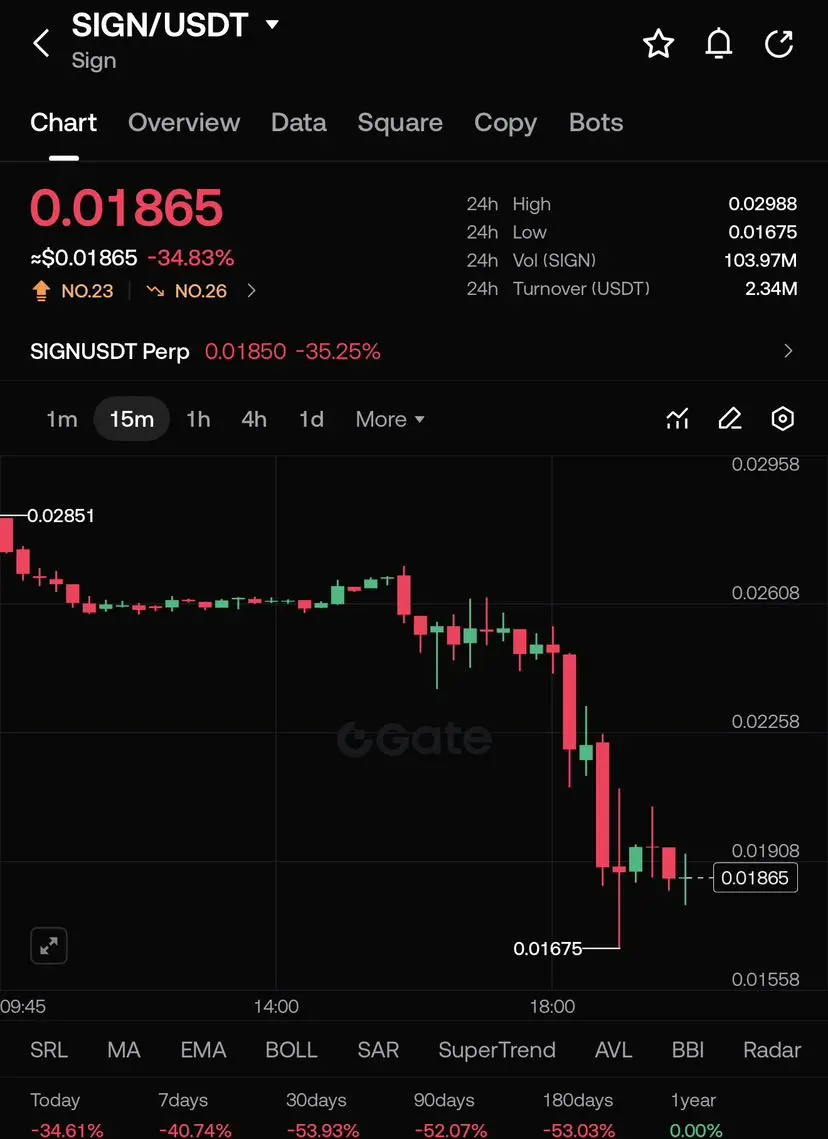
The rebound is ridiculously weak; don't expect a reversal until the breakdown level is recovered.
View Original
LedgerBull
$SIGN showing strong downside pressure after aggressive breakdown.
Sellers in full control with structure clearly trending bearish.
EP
0.0185 - 0.0200
TP
TP1 0.0170
TP2 0.0155
TP3 0.0140
SL
0.0225
Liquidity was swept on the upside before a heavy sell-off, confirming distribution. Weak bounce and lack of bullish structure suggest continuation lower unless price reclaims the breakdown level.
Let’s go $SIGN ‌
repost-content-media
  • Reward
  • Comment
  • Repost
  • Share
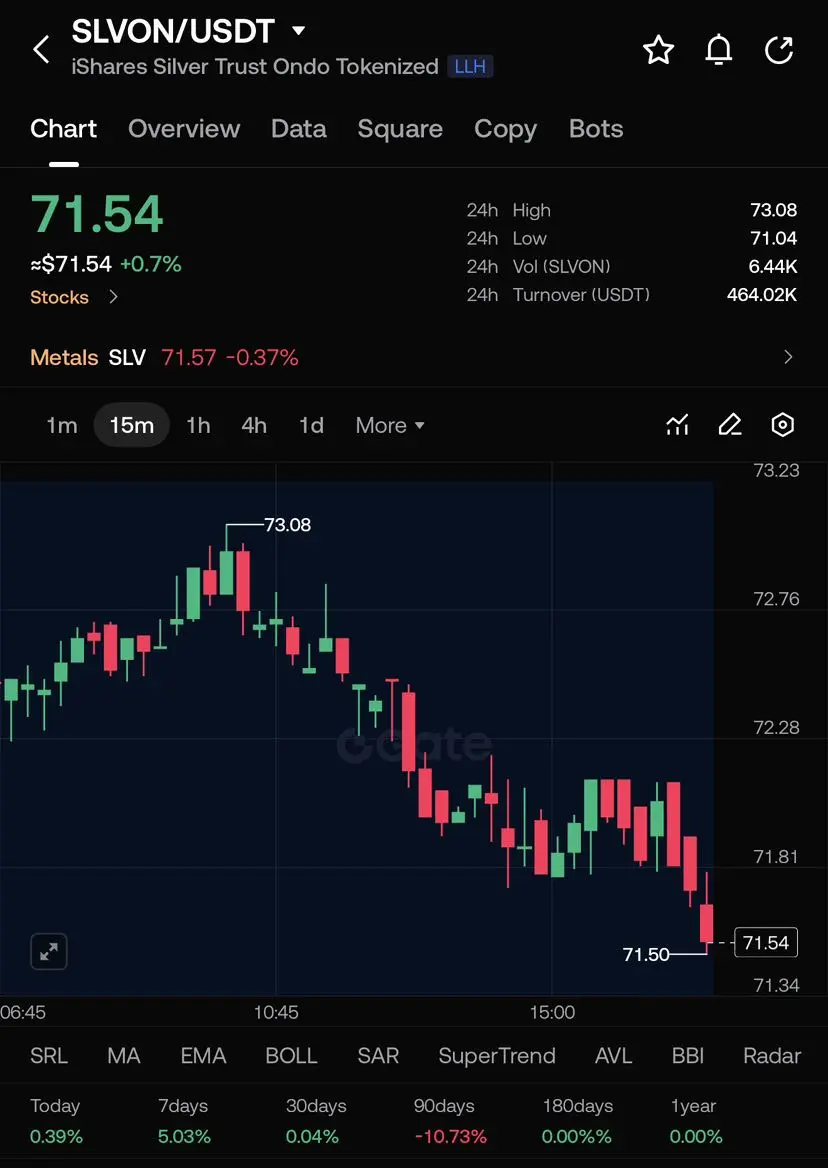
It looks like a typical downward trend, and following the trend feels more comfortable.
View Original
LedgerBull
$SLVON showing steady downside pressure with lower highs forming.
Structure remains bearish with sellers in control.
EP
71.80 - 72.40
TP
TP1
71.00
TP2
70.20
TP3
69.00
SL
73.20
Recent move cleared liquidity below and price is failing to reclaim prior levels. Any bounce into the entry zone looks like a reaction into supply, with structure favoring continuation as long as lower highs persist.
Let’s go $SLVON ‌
repost-content-media
  • Reward
  • Comment
  • Repost
  • Share
Oil prices, the US dollar, and inflation expectations are moving together; watching them is more useful than following trending searches.
View Original
Furan86999
What does this situation between Iran and the U.S. look most like right now? It’s like one side is talking about “reconciling today,” while the other raises their fists even higher. Diplomats shuttle back and forth and try to mediate in Tehran, but the Pentagon reports actions of troop increases and redeployments. As the April 21 “ceasefire deadline” gets closer, the market feels more like it’s playing an emotional betting game: the S&P hits new highs, risk assets rebound, and even crypto gets excited along with it. The problem is— is this dawn, or a lure to buy before the storm?
First, lay out the core contradiction clearly: whether the so-called talks can succeed is not about whether people are willing to shake hands, but whether both sides can find a plan that they can both explain to their people internally on hard conditions such as uranium enrichment timeframes, restrictions on nuclear activities, and the easing of sanctions. Economic interests are naturally the catalyst—everyone wants oil prices not to run wild, inflation not to come back, and capital not to flee. But don’t ignore the other side: troop increases, deterrence, and red-line statements are also bargaining chips on the negotiation table. In many cases, the closer you get to the deadline, the bigger the moves become— which actually shows that both sides are stepping up and probing by adding more.
The logic behind the market’s preemptive celebration isn’t complicated: it’s betting on “the most comfortable script”—talks succeed, oil prices fall, inflation pressure eases, rate-cut expectations become more stable, and risk assets keep rising. But the point at which the market is most likely to lose money is exactly this: expectations are running ahead of reality. When everyone is talking about talks, and the price has already priced in “successful negotiations,” at the moment it truly lands, a typical “good-news realization” may occur— it may not be a trend reversal, but short-term pullbacks and taking profits are almost certain events. Conversely, if negotiations don’t advance as expected, or sudden breaking news sparks a close call, the market will instantly switch to another script: oil prices jump, the dollar strengthens, and risk assets retreat collectively— you’ll see “the same group of people shift from optimism to panic at the same speed.”
How should you allocate during that period of turbulence? I’ll give you a more practical “three-tier approach”—not aiming for a single decisive answer, only for something steadier:
First tier: keep cash/keep rounds.
The most valuable thing in a volatile period is liquidity. Don’t put all your positions in at once; leave room to respond to unexpected volatility, so you won’t be forced to cut losses due to emotion.
Second tier: separate a core position from a satellite position.
The core position is more defensive: large-cap assets, cash-like allocations, and low-volatility positioning, with the goal of withstanding volatility. The satellite position is more offensive: thematic assets and flexible assets, using smaller positions to chase expectations. Separating “wanting to make more” from “not being allowed to lose big” makes your mindset much more comfortable.
#美伊局势和谈与增兵博弈 #美股创下历史新高
repost-content-media
  • Reward
  • Comment
  • Repost
  • Share
The stablecoin issuer holding 97,141 BTC, some traditional institutions are still debating whether they can touch BTC, full of a sense of the times.
BTC1,46%
View Original
TheBuzzingBee
💢✨️💥 Tether has recently acquired an additional 951 BTC, valued at $70.47 million.
#news
This brings their total Bitcoin holdings to 97,141 BTC (approximately $7.28 billion), placing them as the fifth-largest Bitcoin wallet on the blockchain.
$BTC $XRP $ETH
  • Reward
  • Comment
  • Repost
  • Share
Pull back, but strategies are still necessary: staggered positions, stop-loss, don't go all-in.
View Original
Original content no longer visible
  • Reward
  • Comment
  • Repost
  • Share
  • Pin