BreadthHunter

vip
Age 0.1 Yıl
Peak Tier 0
No content yet
SAGA and similar new assets are highly volatile; it is recommended to buy in batches, keep some bullets, and avoid going all-in at once. Wait for a pullback to make the opportunity more attractive.
SAGA2,85%
View Original
CryptoManMab
Adding $SAGA in spot buy if you can .
{spot}(SAGAUSDT)
  • Reward
  • Comment
  • Repost
  • Share
Recently, I saw a bunch of PFPs talking about "community identity" and "member rights," essentially packaging attention and selling it.
In the short term, it does work: changing the avatar, pulling the group together, and emotions rise;
but I care more about market breadth—whether the number of people willing to spend continuous time participating has increased, and whether discussions have shifted from "floor price" to "proposals/products/profit sharing."
Relevance is also honest: once everyone only focuses on one narrative, PFPs tend to rise and fall together, and the brand is never tr
View Original
  • Reward
  • Comment
  • Repost
  • Share
Regulatory maturity is very practical: it won't eliminate you, only incorporate you into the system, and compliance ability will determine who survives until the end.
View Original
BraveBullsAreNotAfra
Over the next 13 years, the cryptocurrency space may evolve from a speculative market into a deeply integrated financial and technological layer within the global economy. Starting with Bitcoin, a bold but realistic prediction is that its price will reach the range of $500k to $1 million. Such growth will be driven by institutional dominance, limited supply, and its role as "digital gold" in an increasingly volatile macro environment. For Ethereum, the focus will shift from price speculation to infrastructure dominance. It could become the backbone for decentralized finance, tokenized assets, as well as real-world applications like digital identity and smart contracts.
Major trend expectations
Asset tokenization: Real estate, stocks, and even commodities will be traded on-chain.
AI + blockchain integration: AI-driven autonomous trading systems and smart contracts will redefine execution and strategy.
Regulatory maturity: Governments will no longer resist cryptocurrencies—they will integrate and regulate parts of them.
CBDC expansion: Central bank digital currencies will coexist with decentralized assets rather than replace them.
User experience revolution: Wallets and platforms will become as simple to use as banking apps.
The future of Gate
Gate.io has the potential to develop into more than just an exchange. Over 13 years, it could become a complete financial ecosystem—combining trading, asset management, AI tools, and even decentralized services on one platform. If it continues to innovate, it is poised to stand shoulder to shoulder with the world’s largest financial institutions.
#Next13YearsPrediction #Gate13thAnniversary
  • Reward
  • Comment
  • Repost
  • Share
Don’t forget the “dog庄” has 50+; with this level of capital concentration, any retail investors who go in are just fuel.
View Original
SituLieqiMarketTrend
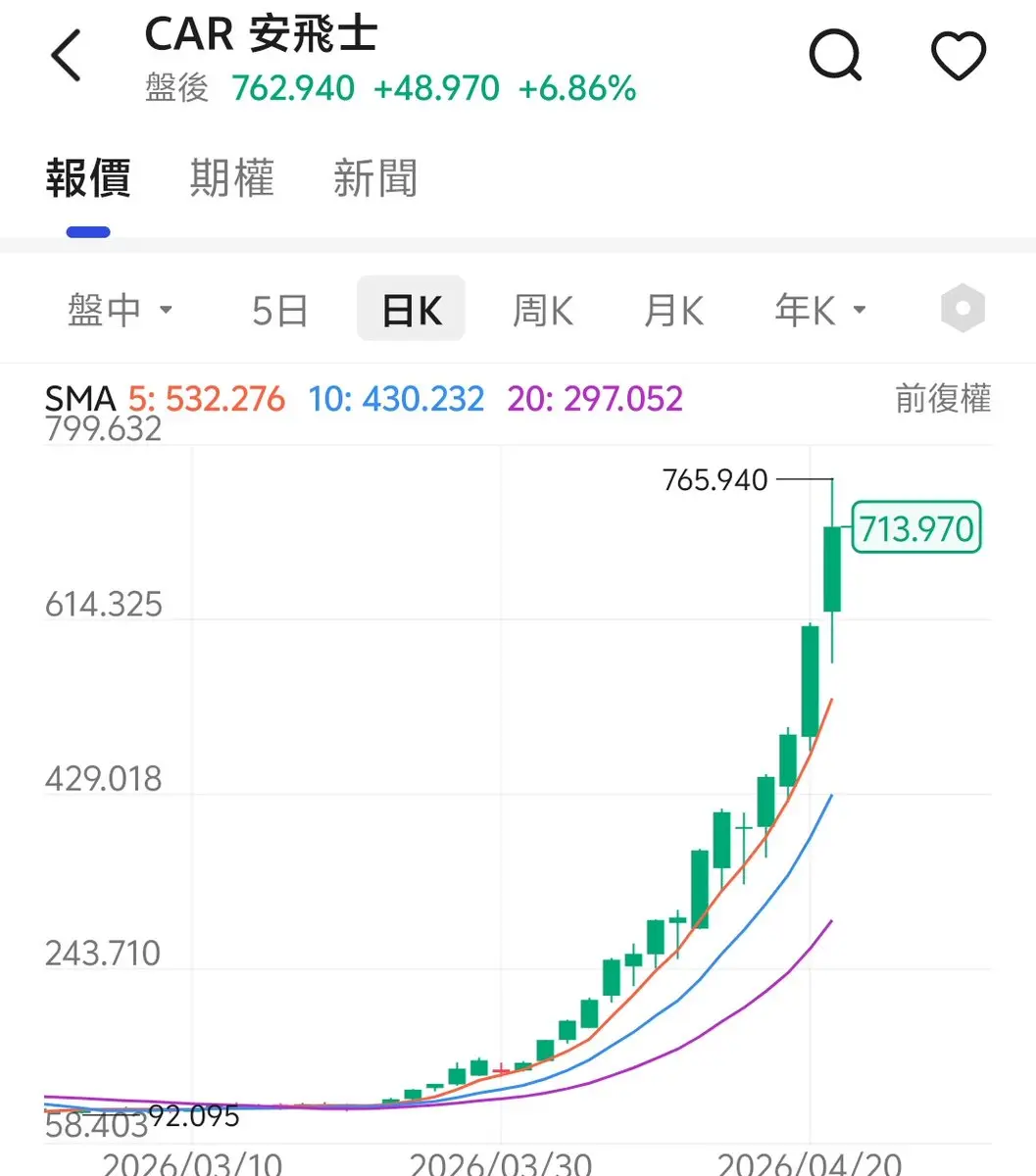
The US stock CAR is currently staging an epic short squeeze battle, with institutions secretly buying 22% of the shares, the market maker holding over 50, and institutional short positions owing 100% of the shares. Currently, it's still at a high level. As a short seller, I definitely plan to short and support the institutions.
repost-content-media
  • Reward
  • Comment
  • Repost
  • Share
Hybrid vehicles continue to be popular, indicating that users still want "fuel efficiency + peace of mind."
View Original
CryptoFrontier
Renault Korea Launches Philante Hybrid Ahead of 2028 EV Debut
Renault Korea is positioning its Philante hybrid model as a bridge to full electrification in Korea ahead of its first battery electric vehicle launch by 2028, according to The Korea Herald.
Philante Hybrid Specifications
The Philante uses Renault's E-Tech system, which pairs a 1.5-liter
  • Reward
  • Comment
  • Repost
  • Share
We hope the private RPC / MEV protection channels are more transparent; otherwise, they will become "black box advantages."
View Original
CarpenterLabs
As Web3 steps into 2026, the nature of on-chain trading has undergone a fundamental transformation. If two or three years ago we were still discussing how to manually snatch a popular project's public sale or racing against others in liquidity pools by boosting our network speed, now trading has completely become a game of algorithms versus algorithms, proxies versus proxies. Against this backdrop, the emergence of @StrikeRobot_ai is not just an upgrade of tools; it signifies a deep shift in trading logic from "execution-driven" to "intelligence-driven."
Early trading bots were essentially scripts with preset logic. They executed the simplest "If-Then" logic: if a certain contract is detected to be released, then buy; if the price reaches a certain threshold, then sell. This logic might have been effective during early liquidity explosions, but in the highly complex market environment of 2026, such single scripts are no longer viable. Today’s market is filled with sophisticated MEV strategies, false social media hype, and rapidly shifting liquidity frontiers.
The core competitiveness of @StrikeRobot_ai lies in its introduction of a genuine AI decision layer. It is no longer merely passively waiting for instructions but actively modeling real-time on-chain data to understand the "intent" behind trades. This means users no longer need to study complex contract parameters or manually adjust gas fees; AI agents will automatically find the optimal execution path based on the user’s risk preferences and target returns. This transition from "manual control" to "autonomous driving" marks a milestone in the maturity of Web3 infrastructure.
For seasoned traders, the most challenging aspect is often not technical operation but filtering out massive noise. On social media (especially X), information overload results in a very high noise ratio. When a project is heavily discussed, is it genuine community enthusiasm or organized bot-driven hype?
@StrikeRobot_ai’s deep value lies in its quantification and analysis of social sentiment. By integrating large language models to process real-time social media data, it can identify which projects have true community consensus and which are just fleeting bubbles. Coupled with on-chain fund flows—especially the movements of wallets known as "smart money"—it can provide users with relatively objective investment advice. The ability to combine social signals with on-chain data is highly lethal in today’s PvP market.
The security risks of on-chain trading did not disappear in 2026; they have become more covert. Rug pulls have evolved to include extremely complex exit logic embedded in smart contracts. Traditional anti-rug pull bots often only react when project teams initiate withdrawal transactions, but in high-frequency trading environments, such reaction speeds are often insufficient.
@StrikeRobot_ai demonstrates its infrastructure-level depth in this area. Its security module not only scans for common backdoors in contract code but, more importantly, monitors liquidity pool depth and buy-sell ratios at millisecond intervals to preempt potential sell-offs. When danger is imminent, AI can send withdrawal commands via private RPC nodes (such as Jito or similar MEV protection channels). This "predictive defense" greatly enhances retail traders’ survival rate during extreme market volatility.
The future under intent-centric architecture
We often discuss the mass adoption of Web3, but if the barrier to on-chain interaction remains so high, that day will never arrive. The significance of @StrikeRobot_ai is not just in helping people make money but in greatly simplifying user interaction through an intent-centric design.
The future trading scenario should be: you only need to tell AI your target asset range and risk tolerance, and everything else—from discovering targets, auditing security, configuring positions, to automatic take-profit and stop-loss—will be handled by AI agents. @StrikeRobot_ai has deeply explored this direction. It makes trading no longer a tedious technical task but a strategic intellectual game.
In summary, @StrikeRobot_ai’s positioning is very clear: it is an integrated platform combining AI intelligence with ultra-fast execution. As decentralized finance shifts from floating interest rate models to more complex term structures, and as RWA (real-world assets) become highly integrated with on-chain assets, this kind of "deep thinking" trading robot will become an indispensable right-hand for every serious trader.
For anyone trying to seize opportunities in this rapidly evolving market, understanding and leveraging such tools may be more important than studying projects themselves. Because in 2026, winners are not just those who understand the trends but those who master the most powerful tools capable of instantly turning trends into profits.
repost-content-media
  • Reward
  • Comment
  • Repost
  • Share
Pricing at 199/299 is very typical, hitting the psychological price point.
View Original
God-givenTeam
Why are 🦶 treatment 💆🏻‍♂️ priced at 199, 299
Is it really just that one dollar difference?
  • Reward
  • Comment
  • Repost
  • Share
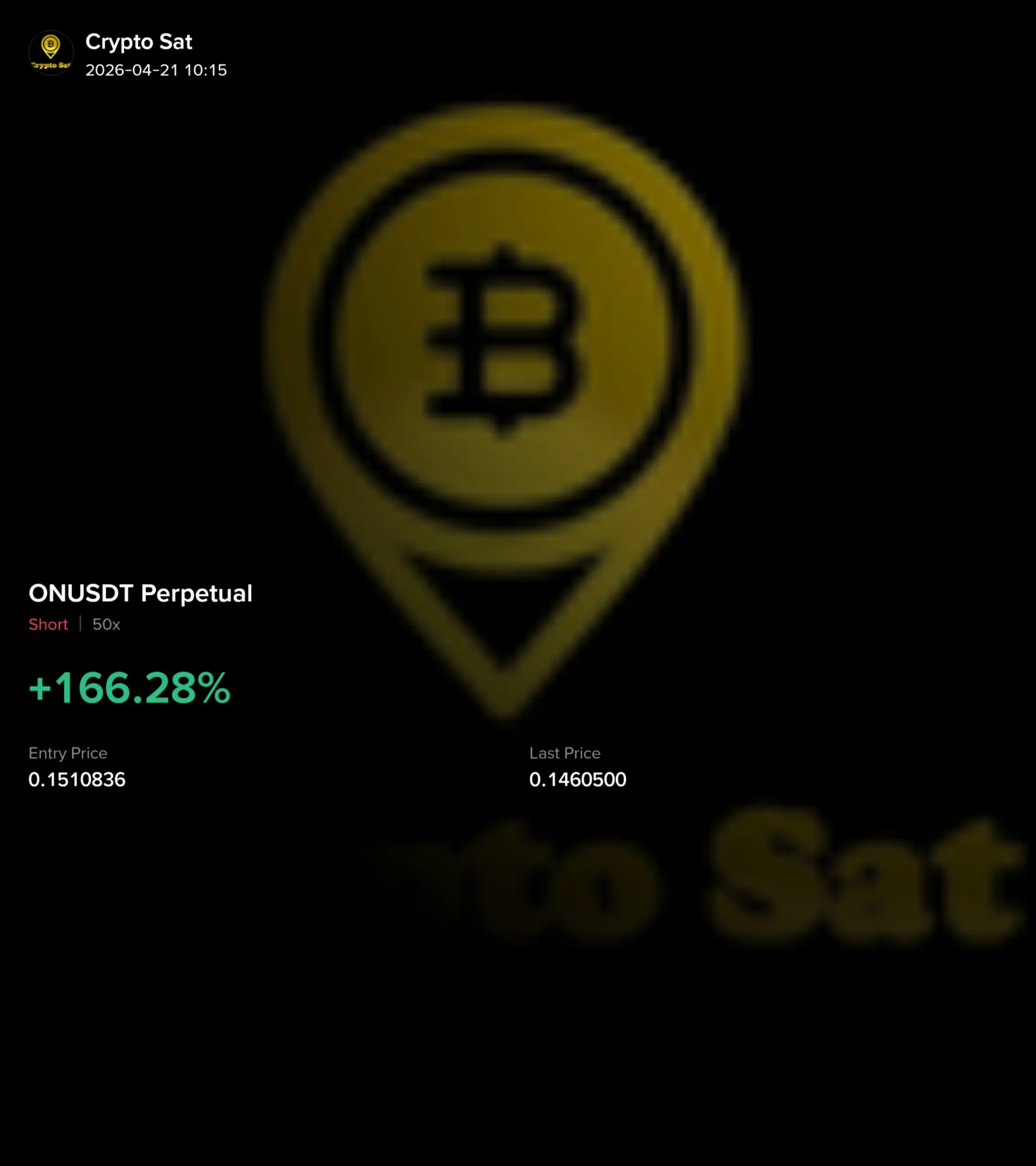
Two-thirds completed, don't be greedy next, raise SL according to the rules.
View Original
CryptoSat
$ON 2ND TARGET COMPLETED 🎯
Stoploss to entry once 3rd Target hits 👍
repost-content-media
  • Reward
  • Comment
  • Repost
  • Share
Lately, I've been looking at the APY of yield aggregators again. When the number gets high, I also get tempted, but then I calm down and think: this thing isn't "falling from the sky." Behind it is a series of contract layers, along with routing, lending pools, market-making positions, and in some places, it's actually a gamble on the counterparty not messing up. To put it simply, APY shows the result, but the risk is hidden in the process: who holds the permissions, how the emergency switch is set, whether the source of income relies on subsidies, whether liquidation and slippage can withstan
View Original
  • Reward
  • Comment
  • Repost
  • Share
Last night, I made a bad trade. After reviewing, it wasn't that I misjudged the direction, but that I underestimated slippage and depth. Thinking "it's just this amount," I found the order book was as thin as paper. I placed the order in two parts, and on the second attempt, I directly pushed my price up too high... To put it simply, my order placement was too hasty, I didn't wait for the order book to replenish, nor did I test the market with a small order first.
Now I set a small rule for myself: for pools with poor liquidity, I’d rather wait a little longer, first use small orders to observ
View Original
  • Reward
  • Comment
  • Repost
  • Share
Recently, I've seen a bunch of people watching whale addresses and copying trades. I get tempted myself, but before taking action, I need to think clearly: Are they building a position or hedging? Many "large buy-ins" are accompanied by futures shorts/loans, so the net exposure isn't as much as you think. If you follow in, you're just riding the wave for others... Honestly, understanding the position structure is more important than looking at transfer screenshots.
These days, hardware wallets are out of stock, phishing links are everywhere. I almost clicked on one, and suddenly I had the ur
View Original
  • Reward
  • Comment
  • Repost
  • Share
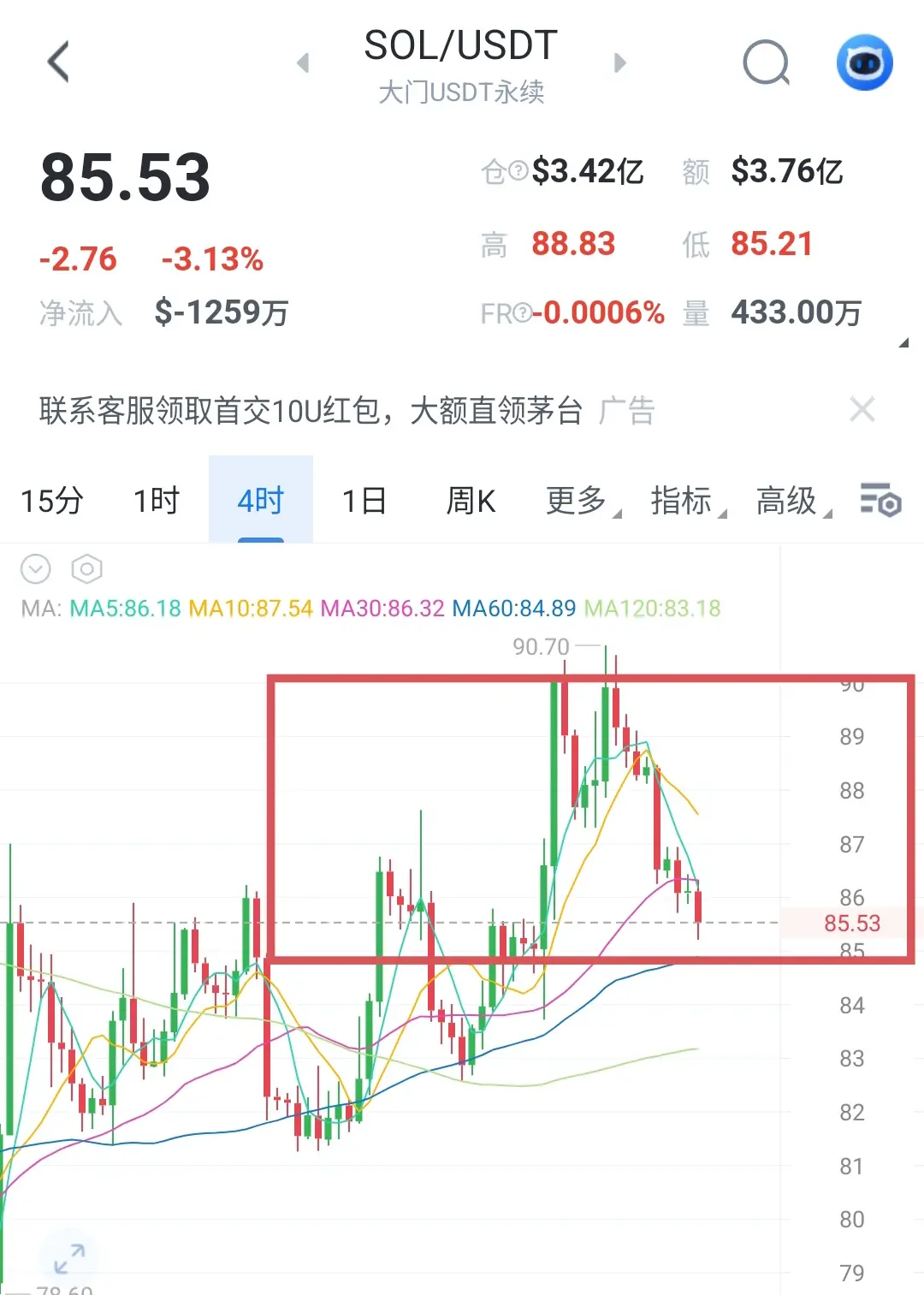
Thanks for organizing. Looking at 4H, there are indeed no unilateral positions; let's treat it as a box.
View Original
AlleyLittleOverlord
SOL 4-hour trend analysis, sharing trading ideas for high sell and low buy within the range
Friends following $SOL should pay close attention to the current 4-hour level trend. The market is currently forming an expanding wedge pattern, with a clear overall oscillating structure. Short-term trading opportunities are straightforward, and here is a precise set of trading reference levels.
First, look at the core support, focusing on the 86-85 range. This position is a key point where previous highs and lows switch, and it also coincides with short-term moving averages, forming a confluence of technical support. It is a strong support zone with multiple technical resonances. If the market retraces to this range later, it is an excellent bullish trading point. Once stabilized, traders can seize short-term bullish opportunities with clear risk control, making operations safer.
Next, look at the resistance above. Short-term resistance is concentrated around the 90-91 range. This is the current stage resistance zone. When the market rebounds to this level, it is likely to face selling pressure and pull back, making it suitable to take profits and exit promptly.
Overall, SOL has not yet formed a clear unilateral trend in the short term. It is entirely possible to implement a high sell and low buy strategy around the core range of 85-90. Buy on dips at support, take profits at rebound resistance, strictly control position sizes and stop-losses, and align with the current oscillating trend for short-term trading. This approach will significantly improve profit probabilities.
Once the market breaks through the range, adjust trading strategies accordingly. For now, focus on these two key zones, avoid blindly chasing rallies or panicking at dips, and steadily capture profits in the oscillating market!
repost-content-media
  • Reward
  • Comment
  • Repost
  • Share
If we can obtain this funding, we can be more aggressive in computing power procurement, training iterations, and global expansion.
View Original
CryptoFrontier
DeepSeek Launches First External Fundraising Round Amid Core Staff Departures
DeepSeek Confirms First External Fundraising
On April 18, multiple venture capital sources confirmed that DeepSeek has begun its first external fundraising round, according to澎湃新闻 (Pail News). The company is targeting a valuation exceeding $10 billion and plans to raise at least $300 million to
  • Reward
  • Comment
  • Repost
  • Share
OK, low-frequency operations on the weekend, don't lose too much even if you can't make a profit.
View Original
CurrencyGodfather
Weekend off, everyone trades on their own.
  • Reward
  • Comment
  • Repost
  • Share
Recently, I’ve seen a bunch of people talking about LSTs and re-staking again. Basically, the main sources of yield are twofold: one is the original staking interest, and the other is the extra subsidy gained from lending out the “security/credit” (fees, incentives, tokens from project teams). It sounds pretty attractive, but the risks also stack up: if the underlying validators/nodes get penalized, or if the contracts and intermediaries involved in re-staking have issues, it could lead to a chain reaction. The most annoying part is that once correlations increase, what looks diversified norma
View Original
  • Reward
  • Comment
  • Repost
  • Share
Weekend market conditions are prone to surprises, especially with variables like the US-Iran negotiations that can "tweet" at any time. Use leverage cautiously.
View Original
ShrimpTeacher
Good morning everyone, it’s already Friday today.
From the latest news, Trump announced that both Israel and Lebanon agreed to a 10-day ceasefire. For the market, this is good news, and it also matches market expectations. Next, the key focus will be on the developments in the US-Iran negotiations. In Trump’s updates, he also said that a second round of US-Iran talks may be held this weekend, and that progress has been made on the Iranian side. As for whether the US-Iran ceasefire time will be extended, it is still pending and undecided. Therefore, this weekend is relatively special, and the overall market will still face relatively large volatility. In terms of trading, you need to pay attention to the US-Iran developments.
Secondly, looking at the overall market trend, the market continues to trade in a range-bound pattern. Just like yesterday’s analysis, overall it is fluctuating between 73,000 and 76,000. Personally, I believe today the market will continue to range, and the market is also waiting and watching for the follow-up related developments after US-Iran talks—such as whether the specific negotiation time will be set for this weekend, or whether it needs to be arranged for next week, and whether they can reach some basic consensus in principle on both sides. Therefore, in conditions where signals are not clear, it’s enough to do short-term swing trades within the short-term fluctuation range.
As for ETF institutional fund flows currently, yesterday there was a net outflow of about 40 million US dollars, and on the liquidation map, the BTC and ETH longs and shorts are relatively sparse, which is enough to show that the current market is relatively cautious and is in a waiting state. Meanwhile, SOL is currently bull-led and relatively dense, but because there have been many rebounds, it is now gradually pulling back. Long position 1 has already been liquidated—so you need to watch the risks.
As for Ethereum, its short-term fluctuation range is 2280-2380, and SOL’s short-term fluctuation range is 86-91.
Short-term contract strategy:
BTC: 74000 or go long on dips, take profit at 75500
ETH: 2300 or go long on dips, take profit at 2380
SOL: 89 or short on rallies, take profit at 86.5
Warm reminder:
1. Stop-loss suggestions should be set according to your personal actual liquidation price and the principal amount you personally can afford to lose.
2. Don’t be greedy—take profits. It’s better to take a small loss than to hold a position through it. If the direction is correct, continue to hold.
$ETH $SOL $BTC
repost-content-media
  • Reward
  • Comment
  • Repost
  • Share
Lately, when I look at the market, I tend to focus more on interest rate expectations and the sentiment on the dollar side. To put it simply, when risk appetite contracts, the correlation in the crypto space suddenly increases, and all sectors seem to struggle at once. My approach is pretty straightforward: treat my position as a "risk budget," and when macro conditions are tight, reduce leverage, keep some stablecoins for opportunities, and avoid stubbornly holding through emotional swings. I later realized I used to rely too much on candlestick charts to explain everything; in fact, many tim
View Original
  • Reward
  • Comment
  • Repost
  • Share
Don't be fooled by the VIP threshold; the core factors are still liquidity and exit channels, with activities just serving as a gimmick boost.
View Original
BraveBullsAreNotAfra
Gate News Report, April 15 — Compared to last year, the VIP access requirements for the TRUMP memecoin event held at Mar-a-Lago have been significantly lowered, approximately by 90%. This year's VIP qualification requires holding tokens worth about $300,000, down from around $3 million dollars during last year's event cycle, indicating weakened demand for the token and its associated privileges.
  • Reward
  • Comment
  • Repost
  • Share
Recently, when looking at projects on RWA (Real World Asset) on the blockchain, that bit of "liquidity" on-chain sometimes really looks like a spotlight: the pool seems deep, but if the redemption terms say "subject to review/queue/at window/pausable," you know that when pressure comes, they’ll probably lock the gates first and then explain. Frankly, on-chain just makes the share accounting transparent; the underlying asset redemption pace is still the old-world way.
I used to be quite stubborn, thinking "I only look at what's on-chain" was enough, but I was later educated: what you see on-c
View Original
  • Reward
  • Comment
  • Repost
  • Share
I was so stupid yesterday: thinking "just this one trade" and chasing into a pool with average depth, but ended up with slippage eating up the full amount, and the execution price was quite a bit off from the "theoretical price" on that candlestick I saw... To put it simply, it’s not about the wrong direction, but about the timing of the order and misjudging the depth. After reviewing, there are two points: first, look at how much volume the order book/pool can actually absorb, don’t just focus on the price; splitting orders + waiting a beat is more reliable than rushing in all at once, especi
View Original
  • Reward
  • Comment
  • Repost
  • Share
  • Pin