

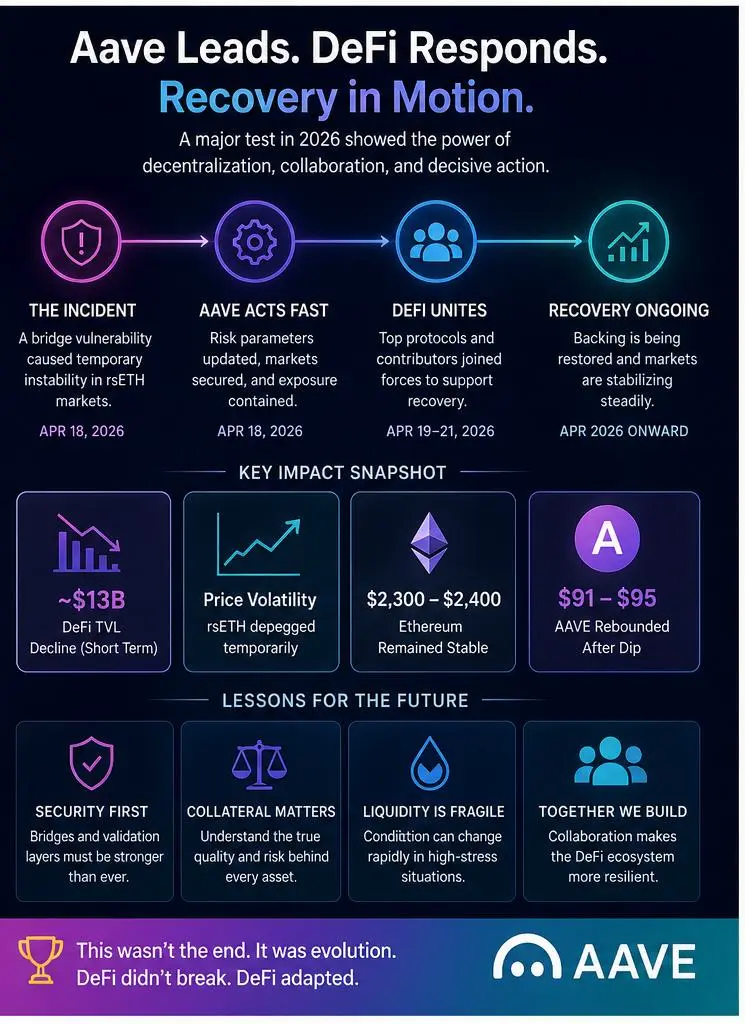
# AaveLaunchesrsETHRecoveryPlan

1.01M
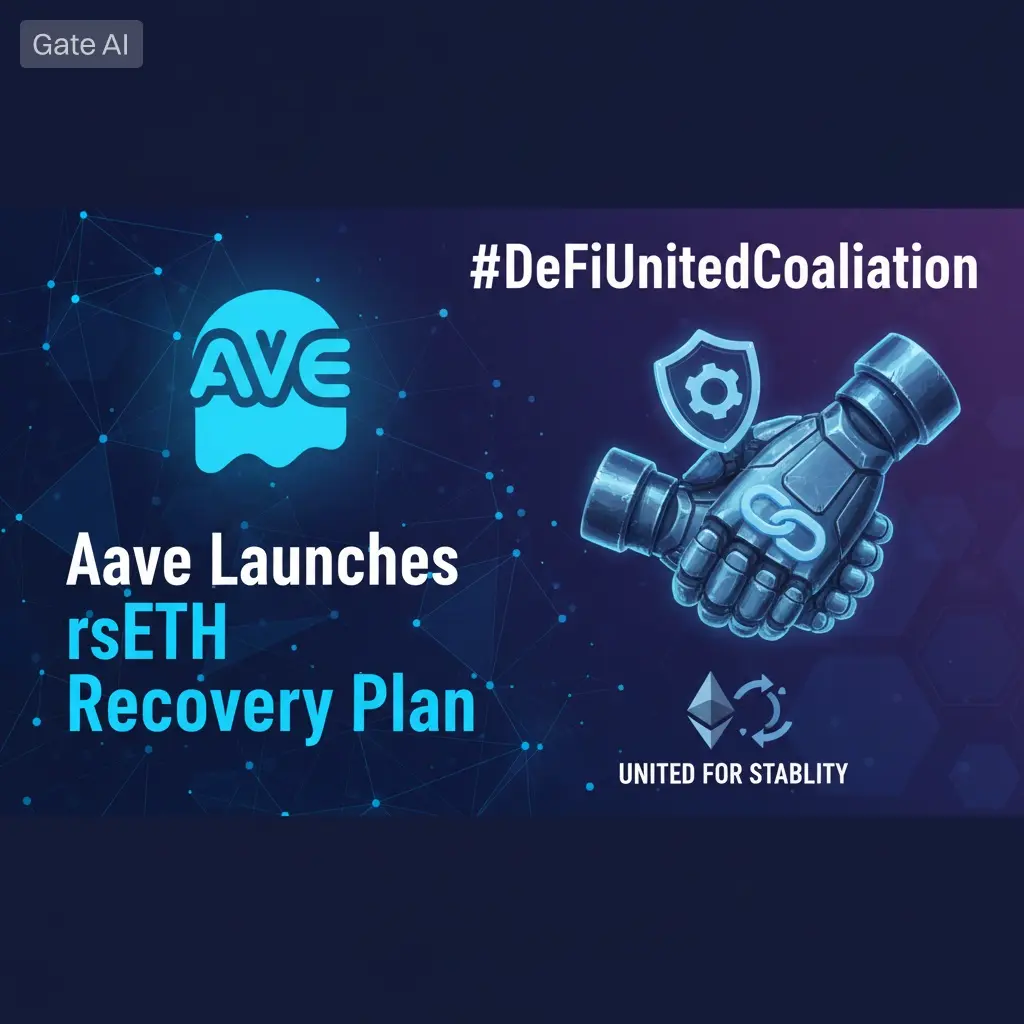
#AaveLaunchesrsETHRecoveryPlan
🚨 DeFi’s Biggest Test in 2026: How rsETH Shocked the Market — and Why It Didn’t Break It
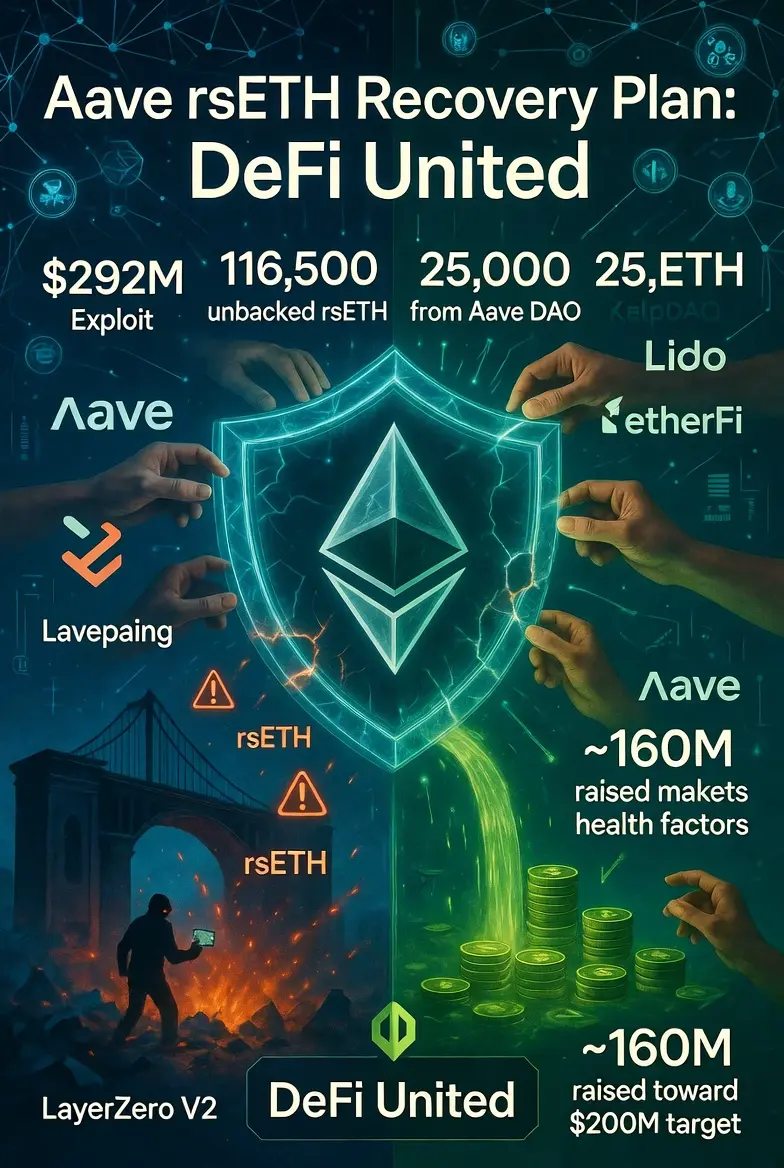
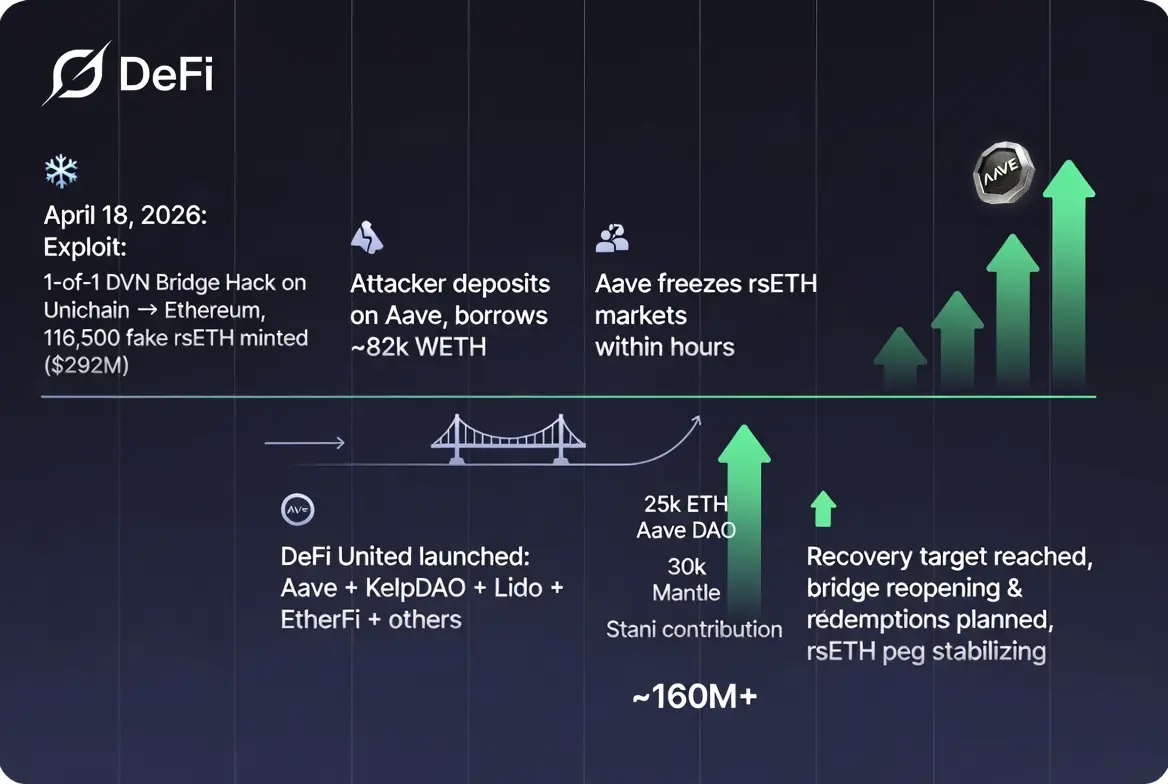
On April 18, 2026, the DeFi ecosystem faced a high-impact crisis that had the potential to trigger widespread instability across lending markets. A vulnerability in KelpDAO’s LayerZero V2 bridge allowed an attacker to mint approximately $292 million worth of unbacked rsETH, instantly creating a severe imbalance between supply and collateral backing.
This was not just another exploit. This was a real-time stress test of DeFi’s infrastructure, liquidity models, and risk manag
AAVE0.24%
STETH-0.6%
ETH-0.65%
ZRO-3.76%
post-image
post-image
post-image
post-image
  • Reward
  • 5
  • Repost
  • Share
AgentWXO:
Pay close attention 🔍
View More
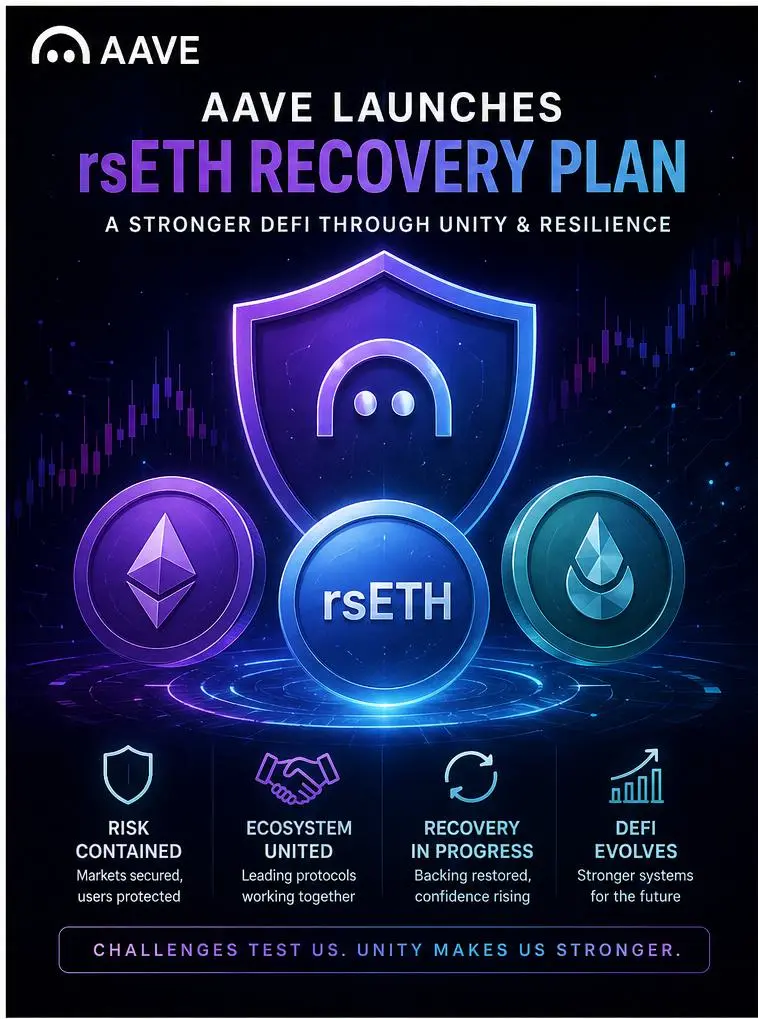
#AaveLaunchesrsETHRecoveryPlan
🚨 A Major DeFi Stress Event in 2026 — And a Strong Response
The recent rsETH market disruption became one of the most important real-world tests for decentralized finance this year. A bridge-related security issue created temporary instability, raising concerns across lending markets and liquid staking assets.
What stood out most was not the shock itself — but how leading protocols responded.
⚡ Rapid Risk Management
Aave moved quickly to reduce exposure by adjusting market parameters, limiting risk, and protecting liquidity. This showed how automated systems pl
ETH-0.65%
post-image
post-image
  • Reward
  • 2
  • Repost
  • Share
HighAmbition:
thnxx for the update
View More
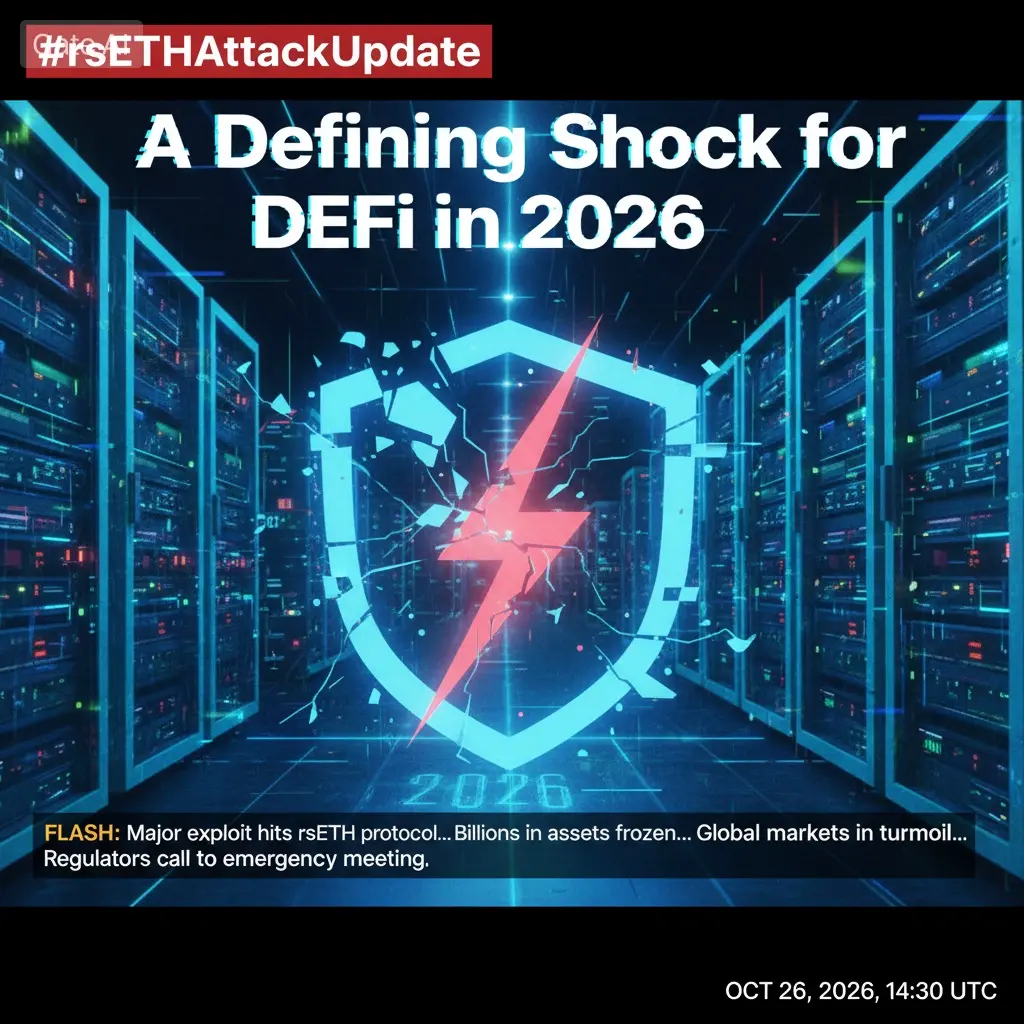
#rsETHAttackUpdate
A Defining Shock for DeFi in 2026
The rsETH exploit on April 18, 2026, didn’t just hit one protocol—it exposed a critical structural weakness across the entire decentralized finance ecosystem. What initially appeared to be an isolated bridge issue quickly evolved into a systemic liquidity crisis affecting lending markets, restaking protocols, and cross-chain infrastructure.
At the center of this crisis was Kelp DAO, which suffered a devastating loss of approximately $292 million, making it the largest DeFi exploit of 2026 so far. The attackers drained 116,500 rsETH tokens,
ETH-0.65%
ZRO-3.76%
AAVE0.24%
HighAmbition
#rsETHAttackUpdate
A Defining Shock for DeFi in 2026
The rsETH exploit on April 18, 2026, didn’t just hit one protocol—it exposed a critical structural weakness across the entire decentralized finance ecosystem. What initially appeared to be an isolated bridge issue quickly evolved into a systemic liquidity crisis affecting lending markets, restaking protocols, and cross-chain infrastructure.
At the center of this crisis was Kelp DAO, which suffered a devastating loss of approximately $292 million, making it the largest DeFi exploit of 2026 so far. The attackers drained 116,500 rsETH tokens, representing nearly 18% of the total circulating supply, immediately destabilizing confidence in liquid restaking assets.
Root Cause: Not a Smart Contract Bug, But Infrastructure Failure
Unlike many previous exploits, this attack did not originate from a flaw in smart contracts or lending logic. Instead, it targeted a weaker layer—cross-chain communication infrastructure powered by LayerZero Version 2.
The most critical vulnerability was the 1-of-1 verifier setup, meaning only a single validator was responsible for confirming cross-chain messages. This created a dangerous single point of failure in an otherwise decentralized system.
Step-by-Step Attack Breakdown
The attack was highly coordinated and executed with precision:
Attack initiated at Ethereum block 24,908,285
Target: Bridge route between Unichain and Ethereum
Attackers compromised two RPC nodes
Malicious software replaced legitimate node infrastructure
Simultaneous denial-of-service attacks disabled clean nodes
System was forced to rely on compromised data feeds
This allowed attackers to forge a fake cross-chain message, tricking the bridge into releasing real assets on Ethereum without any backing.
The result:
➡️ 116,500 rsETH minted out of thin air
➡️ Sent directly to attacker-controlled wallets
➡️ Logs erased, malware self-deleted
This wasn’t just hacking—it was infrastructure manipulation at a deep level.
Exploitation Phase: Turning Fake Assets Into Real Liquidity
Once the attackers had unbacked rsETH, they moved rapidly to extract value.
They deposited around 89,567 rsETH into lending protocols like Aave V3, primarily on Ethereum and Arbitrum.
From there, they borrowed:
~82,650 WETH
Additional wstETH positions
Total borrowed value: ~$236 million
These positions were engineered with extremely tight health factors (1.01–1.03), making liquidation difficult and prolonging systemic stress.
Immediate Market Reaction: Liquidity Crisis Unfolds
Although Aave was not directly hacked, it became the primary shock absorber.
Key Impacts:
100% utilization reached in multiple WETH pools
Borrow rates adjusted downward to stabilize liquidity
rsETH collateral frozen across 11 deployments
Loan-to-value (LTV) ratios set to zero
This triggered a cascade:
Massive withdrawals across DeFi
Total Value Locked (TVL) dropped $5B–$10B+
“Bank-run” behavior spread across protocols
A notable withdrawal of ~$154 million, reportedly linked to Justin Sun, intensified panic sentiment.
Price Impact Across the Market
Ethereum (ETH)
Dropped 2%–3.7%
Traded near $2,300–$2,380
Decline driven by sentiment and liquidity stress—not protocol failure
Bitcoin (BTC)
Held relatively stable around $78,980
Acted as a risk-off safe haven within crypto
AAVE Token
Fell 16%–20%
Traded between $95–$105
Reflected direct exposure to lending ecosystem risk
Bad Debt Scenarios: Systemic Risk Quantified
Analysts modeled multiple outcomes:
Scenario 1: Distributed Loss Model
Bad debt: ~$123.7 million
Implies ~15% depeg in rsETH
Scenario 2: Isolated L2 Loss Model
Bad debt: ~$230 million
Severe impact on:
Arbitrum: up to 27% shortfall
Base: ~23%
Mantle: extreme cases up to 71%
Aave-specific exposure
Estimated between $177M–$200M
Rapid Response: DeFi Coordination in Action
Despite the scale of the attack, response speed was critical.
Kelp DAO Actions
Emergency pause activated within 46 minutes
Prevented additional $95M–$100M loss
Halted minting and bridging
Recovery Efforts – “DeFi United”
Industry-wide collaboration to restore backing
Key contributions:
Arbitrum recovered 30,000+ ETH
Mantle proposed 30,000 ETH credit facility
Aave DAO considered 25,000 ETH support
Contributions from Lido, EtherFi, Golem Foundation
Total pledged: ➡️ 43,500+ ETH (~$100M+)
Security Attribution and Investigation
Lazarus Group was identified with high confidence as the attacker.
This aligns with previous high-profile crypto exploits, reinforcing a growing trend:
➡️ Nation-state actors targeting DeFi infrastructure
➡️ Focus shifting from smart contracts to off-chain systems
Key Lessons for DeFi and Cross-Chain Systems
This exploit revealed several critical weaknesses:
1. Single Verifier = Systemic Risk
Decentralization must extend beyond smart contracts into validation layers.
2. RPC Node Security is Critical
Attackers didn’t break code—they corrupted data sources.
3. Cross-Chain Complexity Multiplies Risk
Operating across 20+ chains introduces exponential attack surfaces.
4. Liquidity Layer is Fragile
Even safe protocols like Aave can face stress under extreme conditions.
Market Psychology: Fear, Liquidity, and Trust
The exploit triggered three key psychological phases:
Shock Phase – Immediate panic and withdrawals
Liquidity Crunch – Borrowing pressure and frozen markets
Stabilization – Governance actions and recovery pledges
Interestingly, no widespread retail wallet losses occurred. The damage was protocol-level, not user-level—an important distinction that helped prevent deeper panic.
Current Status (Late April 2026)
Gradual unfreezing of assets underway
Governance votes determining final loss distribution
rsETH partially stabilized but still under scrutiny
Security upgrades being implemented across bridges
Forward Outlook: What Comes Next?
Short-Term
Continued volatility in ETH-linked assets
Tight liquidity conditions persist
DeFi TVL recovery will be gradual
Mid-Term
Mandatory multi-verifier bridge standards
Increased audits of infrastructure layers
Higher risk premiums on restaking assets
Long-Term
Stronger, more resilient cross-chain systems
Institutional confidence returns with safeguards
DeFi evolves toward security-first architecture
Final Takeaway
The rsETH exploit was not just another hack—it was a stress test for the entire DeFi ecosystem.
Despite:
$292M drained
$200M+ bad debt risk
Billions in liquidity shifts
The system did not collapse.
Instead, it coordinated, adapted, and began recovery.
That’s the real story here:
➡️ DeFi is fragile—but resilient
➡️ Interconnected—but responsive
➡️ Risky—but evolving fast

repost-content-media
  • Reward
  • 1
  • Repost
  • Share
Dubai_Prince:
To The Moon 🌕
#CrudeOilPriceRose #EthereumFoundationUnstakes$48.9METH 🔥 #rsETHAttackUpdate – The DeFi Stress Test That Changed Everything (April 2026) 🔥
The rsETH exploit was not just another hack — it was a full-scale stress test of decentralized finance, exposing weaknesses far beyond a single protocol and shaking confidence across cross-chain infrastructure, restaking systems, and lending markets. What started as a technical breach quickly escalated into a system-wide liquidity shock.
---
⚠️ What Actually Happened?
At the center of the crisis was Kelp DAO, which suffered a massive ~$292M loss after att
ETH-0.65%
AAVE0.24%
ZRO-3.76%
AYATTAC
#EthereumFoundationUnstakes$48.9METH 🔥 #rsETHAttackUpdate – The DeFi Stress Test That Changed Everything (April 2026) 🔥
The rsETH exploit was not just another hack — it was a full-scale stress test of decentralized finance, exposing weaknesses far beyond a single protocol and shaking confidence across cross-chain infrastructure, restaking systems, and lending markets. What started as a technical breach quickly escalated into a system-wide liquidity shock.
---
⚠️ What Actually Happened?
At the center of the crisis was Kelp DAO, which suffered a massive ~$292M loss after attackers drained 116,500 rsETH (≈18% of supply). But the real danger wasn’t the size — it was how it happened.
👉 This was NOT a smart contract bug
👉 This was infrastructure-level manipulation
Attackers exploited a weakness in cross-chain communication using LayerZero V2, specifically a 1-of-1 verifier setup, creating a single point of failure.
---
🧠 Attack Breakdown (High-Level)
• Compromised RPC nodes → corrupted data layer
• Disabled legitimate nodes via coordinated attacks
• Forced system to trust malicious input
• Forged cross-chain message → minted fake rsETH
• Extracted real liquidity via lending protocols
👉 Result:
Fake assets → Real borrowing power → System-wide stress
---
💥 Exploitation Phase – Liquidity Extraction
The attackers didn’t stop at minting — they weaponized liquidity:
• Deposited rsETH into lending markets like Aave V3
• Borrowed ~$236M in ETH-based assets
• Maintained tight liquidation levels (1.01–1.03 HF)
👉 This created a liquidity trap, making it difficult to liquidate positions without further damage
---
📉 Market Reaction – DeFi Shockwave
The impact spread instantly across the ecosystem:
• WETH pools hit 100% utilization
• rsETH collateral frozen across multiple deployments
• TVL dropped $5B–$10B+
• Panic withdrawals triggered “bank-run” behavior
Even major players reportedly pulled out large funds, amplifying fear.
---
📊 Price Impact Snapshot
• ETH → Dropped $79K), acting as safe haven داخل crypto
• AAVE → Fell 16–20%, reflecting direct exposure
👉 Key insight:
This was a DeFi-specific crisis, not a full crypto collapse
---
⚖️ Systemic Risk – Bad Debt Reality
Different models estimate:
• ~$123M (mild impact scenario)
• Up to ~$230M+ (severe L2 exposure)
👉 Some chains faced extreme localized risk (up to 70%)
---
🤝 DeFi Response – Coordination Over Collapse
Despite the scale, the ecosystem reacted fast:
• Kelp DAO paused system within 46 minutes
• Prevented additional ~$100M loss
• Industry collaboration (“DeFi United”) began recovery
Major support included:
• ETH liquidity injections
• DAO-backed recovery proposals
• Cross-protocol coordination
👉 Over 43,000+ ETH pledged (~$100M+)
---
🕵️ Who Was Behind It?
High-confidence attribution points to the Lazarus Group, reinforcing a growing trend:
👉 Nation-state actors targeting infrastructure, not code
---
🧠 Key Lessons for DeFi (Critical)
1️⃣ Single verifier = systemic failure
2️⃣ RPC nodes = weakest hidden layer
3️⃣ Cross-chain = multiplied risk surface
4️⃣ Liquidity systems are fragile under stress
👉 Security must go beyond smart contracts
---
📊 Market Psychology – 3 Phases
• Shock → Panic withdrawals
• Liquidity Crunch → Frozen markets
• Stabilization → Recovery + governance action
💡 Important:
Retail users were largely unaffected directly — damage stayed protocol-level, preventing full panic
---
🔮 What Happens Next?
Short-Term:
• Continued volatility in ETH ecosystem
• Tight liquidity conditions
Mid-Term:
• Multi-verifier bridge standards
• Infrastructure-level audits
Long-Term:
• Stronger, more secure DeFi architecture
• Institutional confidence rebuilds
---
🔥 Final Takeaway
This was not just a hack —
it was a wake-up call for DeFi evolution
👉 Weak? Yes
👉 Broken? No
Because despite:
• $292M exploit
• $200M+ risk
• Billions in liquidity shifts
The system did not collapse — it adapted.
---
🚀 DeFi is not perfect… but it is learning fast
#Gateio #CryptoSecurity #SmartMoney #Web3
  • Reward
  • 1
  • Repost
  • Share
MasterChuTheOldDemonMasterChu:
Steadfast HODL💎
#rsETHAttackUpdate
A Defining Shock for DeFi in 2026
The rsETH exploit on April 18, 2026, didn’t just hit one protocol—it exposed a critical structural weakness across the entire decentralized finance ecosystem. What initially appeared to be an isolated bridge issue quickly evolved into a systemic liquidity crisis affecting lending markets, restaking protocols, and cross-chain infrastructure.
At the center of this crisis was Kelp DAO, which suffered a devastating loss of approximately $292 million, making it the largest DeFi exploit of 2026 so far. The attackers drained 116,500 rsETH tokens,
ETH-0.65%
ZRO-3.76%
AAVE0.24%
HighAmbition
#rsETHAttackUpdate
A Defining Shock for DeFi in 2026
The rsETH exploit on April 18, 2026, didn’t just hit one protocol—it exposed a critical structural weakness across the entire decentralized finance ecosystem. What initially appeared to be an isolated bridge issue quickly evolved into a systemic liquidity crisis affecting lending markets, restaking protocols, and cross-chain infrastructure.
At the center of this crisis was Kelp DAO, which suffered a devastating loss of approximately $292 million, making it the largest DeFi exploit of 2026 so far. The attackers drained 116,500 rsETH tokens, representing nearly 18% of the total circulating supply, immediately destabilizing confidence in liquid restaking assets.
Root Cause: Not a Smart Contract Bug, But Infrastructure Failure
Unlike many previous exploits, this attack did not originate from a flaw in smart contracts or lending logic. Instead, it targeted a weaker layer—cross-chain communication infrastructure powered by LayerZero Version 2.
The most critical vulnerability was the 1-of-1 verifier setup, meaning only a single validator was responsible for confirming cross-chain messages. This created a dangerous single point of failure in an otherwise decentralized system.
Step-by-Step Attack Breakdown
The attack was highly coordinated and executed with precision:
Attack initiated at Ethereum block 24,908,285
Target: Bridge route between Unichain and Ethereum
Attackers compromised two RPC nodes
Malicious software replaced legitimate node infrastructure
Simultaneous denial-of-service attacks disabled clean nodes
System was forced to rely on compromised data feeds
This allowed attackers to forge a fake cross-chain message, tricking the bridge into releasing real assets on Ethereum without any backing.
The result:
➡️ 116,500 rsETH minted out of thin air
➡️ Sent directly to attacker-controlled wallets
➡️ Logs erased, malware self-deleted
This wasn’t just hacking—it was infrastructure manipulation at a deep level.
Exploitation Phase: Turning Fake Assets Into Real Liquidity
Once the attackers had unbacked rsETH, they moved rapidly to extract value.
They deposited around 89,567 rsETH into lending protocols like Aave V3, primarily on Ethereum and Arbitrum.
From there, they borrowed:
~82,650 WETH
Additional wstETH positions
Total borrowed value: ~$236 million
These positions were engineered with extremely tight health factors (1.01–1.03), making liquidation difficult and prolonging systemic stress.
Immediate Market Reaction: Liquidity Crisis Unfolds
Although Aave was not directly hacked, it became the primary shock absorber.
Key Impacts:
100% utilization reached in multiple WETH pools
Borrow rates adjusted downward to stabilize liquidity
rsETH collateral frozen across 11 deployments
Loan-to-value (LTV) ratios set to zero
This triggered a cascade:
Massive withdrawals across DeFi
Total Value Locked (TVL) dropped $5B–$10B+
“Bank-run” behavior spread across protocols
A notable withdrawal of ~$154 million, reportedly linked to Justin Sun, intensified panic sentiment.
Price Impact Across the Market
Ethereum (ETH)
Dropped 2%–3.7%
Traded near $2,300–$2,380
Decline driven by sentiment and liquidity stress—not protocol failure
Bitcoin (BTC)
Held relatively stable around $78,980
Acted as a risk-off safe haven within crypto
AAVE Token
Fell 16%–20%
Traded between $95–$105
Reflected direct exposure to lending ecosystem risk
Bad Debt Scenarios: Systemic Risk Quantified
Analysts modeled multiple outcomes:
Scenario 1: Distributed Loss Model
Bad debt: ~$123.7 million
Implies ~15% depeg in rsETH
Scenario 2: Isolated L2 Loss Model
Bad debt: ~$230 million
Severe impact on:
Arbitrum: up to 27% shortfall
Base: ~23%
Mantle: extreme cases up to 71%
Aave-specific exposure
Estimated between $177M–$200M
Rapid Response: DeFi Coordination in Action
Despite the scale of the attack, response speed was critical.
Kelp DAO Actions
Emergency pause activated within 46 minutes
Prevented additional $95M–$100M loss
Halted minting and bridging
Recovery Efforts – “DeFi United”
Industry-wide collaboration to restore backing
Key contributions:
Arbitrum recovered 30,000+ ETH
Mantle proposed 30,000 ETH credit facility
Aave DAO considered 25,000 ETH support
Contributions from Lido, EtherFi, Golem Foundation
Total pledged: ➡️ 43,500+ ETH (~$100M+)
Security Attribution and Investigation
Lazarus Group was identified with high confidence as the attacker.
This aligns with previous high-profile crypto exploits, reinforcing a growing trend:
➡️ Nation-state actors targeting DeFi infrastructure
➡️ Focus shifting from smart contracts to off-chain systems
Key Lessons for DeFi and Cross-Chain Systems
This exploit revealed several critical weaknesses:
1. Single Verifier = Systemic Risk
Decentralization must extend beyond smart contracts into validation layers.
2. RPC Node Security is Critical
Attackers didn’t break code—they corrupted data sources.
3. Cross-Chain Complexity Multiplies Risk
Operating across 20+ chains introduces exponential attack surfaces.
4. Liquidity Layer is Fragile
Even safe protocols like Aave can face stress under extreme conditions.
Market Psychology: Fear, Liquidity, and Trust
The exploit triggered three key psychological phases:
Shock Phase – Immediate panic and withdrawals
Liquidity Crunch – Borrowing pressure and frozen markets
Stabilization – Governance actions and recovery pledges
Interestingly, no widespread retail wallet losses occurred. The damage was protocol-level, not user-level—an important distinction that helped prevent deeper panic.
Current Status (Late April 2026)
Gradual unfreezing of assets underway
Governance votes determining final loss distribution
rsETH partially stabilized but still under scrutiny
Security upgrades being implemented across bridges
Forward Outlook: What Comes Next?
Short-Term
Continued volatility in ETH-linked assets
Tight liquidity conditions persist
DeFi TVL recovery will be gradual
Mid-Term
Mandatory multi-verifier bridge standards
Increased audits of infrastructure layers
Higher risk premiums on restaking assets
Long-Term
Stronger, more resilient cross-chain systems
Institutional confidence returns with safeguards
DeFi evolves toward security-first architecture
Final Takeaway
The rsETH exploit was not just another hack—it was a stress test for the entire DeFi ecosystem.
Despite:
$292M drained
$200M+ bad debt risk
Billions in liquidity shifts
The system did not collapse.
Instead, it coordinated, adapted, and began recovery.
That’s the real story here:
➡️ DeFi is fragile—but resilient
➡️ Interconnected—but responsive
➡️ Risky—but evolving fast
repost-content-media
  • Reward
  • Comment
  • Repost
  • Share
#rsETHAttackUpdate
A Defining Shock for DeFi in 2026
The rsETH exploit on April 18, 2026, didn’t just hit one protocol—it exposed a critical structural weakness across the entire decentralized finance ecosystem. What initially appeared to be an isolated bridge issue quickly evolved into a systemic liquidity crisis affecting lending markets, restaking protocols, and cross-chain infrastructure.
At the center of this crisis was Kelp DAO, which suffered a devastating loss of approximately $292 million, making it the largest DeFi exploit of 2026 so far. The attackers drained 116,500 rsETH tokens,
ZRO-3.76%
ETH-0.65%
post-image
  • Reward
  • 6
  • Repost
  • Share
Dubai_Prince:
zindabad great 👍 post clapping 👏
View More
#rsETHAttackUpdate
A Defining Shock for DeFi in 2026
The rsETH exploit on April 18, 2026, didn’t just hit one protocol—it exposed a critical structural weakness across the entire decentralized finance ecosystem. What initially appeared to be an isolated bridge issue quickly evolved into a systemic liquidity crisis affecting lending markets, restaking protocols, and cross-chain infrastructure.
At the center of this crisis was Kelp DAO, which suffered a devastating loss of approximately $292 million, making it the largest DeFi exploit of 2026 so far. The attackers drained 116,500 rsETH tokens,
ETH-0.65%
BTC-0.32%
AAVE0.24%
HighAmbition
#rsETHAttackUpdate
A Defining Shock for DeFi in 2026
The rsETH exploit on April 18, 2026, didn’t just hit one protocol—it exposed a critical structural weakness across the entire decentralized finance ecosystem. What initially appeared to be an isolated bridge issue quickly evolved into a systemic liquidity crisis affecting lending markets, restaking protocols, and cross-chain infrastructure.
At the center of this crisis was Kelp DAO, which suffered a devastating loss of approximately $292 million, making it the largest DeFi exploit of 2026 so far. The attackers drained 116,500 rsETH tokens, representing nearly 18% of the total circulating supply, immediately destabilizing confidence in liquid restaking assets.
Root Cause: Not a Smart Contract Bug, But Infrastructure Failure
Unlike many previous exploits, this attack did not originate from a flaw in smart contracts or lending logic. Instead, it targeted a weaker layer—cross-chain communication infrastructure powered by LayerZero Version 2.
The most critical vulnerability was the 1-of-1 verifier setup, meaning only a single validator was responsible for confirming cross-chain messages. This created a dangerous single point of failure in an otherwise decentralized system.
Step-by-Step Attack Breakdown
The attack was highly coordinated and executed with precision:
Attack initiated at Ethereum block 24,908,285
Target: Bridge route between Unichain and Ethereum
Attackers compromised two RPC nodes
Malicious software replaced legitimate node infrastructure
Simultaneous denial-of-service attacks disabled clean nodes
System was forced to rely on compromised data feeds
This allowed attackers to forge a fake cross-chain message, tricking the bridge into releasing real assets on Ethereum without any backing.
The result:
➡️ 116,500 rsETH minted out of thin air
➡️ Sent directly to attacker-controlled wallets
➡️ Logs erased, malware self-deleted
This wasn’t just hacking—it was infrastructure manipulation at a deep level.
Exploitation Phase: Turning Fake Assets Into Real Liquidity
Once the attackers had unbacked rsETH, they moved rapidly to extract value.
They deposited around 89,567 rsETH into lending protocols like Aave V3, primarily on Ethereum and Arbitrum.
From there, they borrowed:
~82,650 WETH
Additional wstETH positions
Total borrowed value: ~$236 million
These positions were engineered with extremely tight health factors (1.01–1.03), making liquidation difficult and prolonging systemic stress.
Immediate Market Reaction: Liquidity Crisis Unfolds
Although Aave was not directly hacked, it became the primary shock absorber.
Key Impacts:
100% utilization reached in multiple WETH pools
Borrow rates adjusted downward to stabilize liquidity
rsETH collateral frozen across 11 deployments
Loan-to-value (LTV) ratios set to zero
This triggered a cascade:
Massive withdrawals across DeFi
Total Value Locked (TVL) dropped $5B–$10B+
“Bank-run” behavior spread across protocols
A notable withdrawal of ~$154 million, reportedly linked to Justin Sun, intensified panic sentiment.
Price Impact Across the Market
Ethereum (ETH)
Dropped 2%–3.7%
Traded near $2,300–$2,380
Decline driven by sentiment and liquidity stress—not protocol failure
Bitcoin (BTC)
Held relatively stable around $78,980
Acted as a risk-off safe haven within crypto
AAVE Token
Fell 16%–20%
Traded between $95–$105
Reflected direct exposure to lending ecosystem risk
Bad Debt Scenarios: Systemic Risk Quantified
Analysts modeled multiple outcomes:
Scenario 1: Distributed Loss Model
Bad debt: ~$123.7 million
Implies ~15% depeg in rsETH
Scenario 2: Isolated L2 Loss Model
Bad debt: ~$230 million
Severe impact on:
Arbitrum: up to 27% shortfall
Base: ~23%
Mantle: extreme cases up to 71%
Aave-specific exposure
Estimated between $177M–$200M
Rapid Response: DeFi Coordination in Action
Despite the scale of the attack, response speed was critical.
Kelp DAO Actions
Emergency pause activated within 46 minutes
Prevented additional $95M–$100M loss
Halted minting and bridging
Recovery Efforts – “DeFi United”
Industry-wide collaboration to restore backing
Key contributions:
Arbitrum recovered 30,000+ ETH
Mantle proposed 30,000 ETH credit facility
Aave DAO considered 25,000 ETH support
Contributions from Lido, EtherFi, Golem Foundation
Total pledged: ➡️ 43,500+ ETH (~$100M+)
Security Attribution and Investigation
Lazarus Group was identified with high confidence as the attacker.
This aligns with previous high-profile crypto exploits, reinforcing a growing trend:
➡️ Nation-state actors targeting DeFi infrastructure
➡️ Focus shifting from smart contracts to off-chain systems
Key Lessons for DeFi and Cross-Chain Systems
This exploit revealed several critical weaknesses:
1. Single Verifier = Systemic Risk
Decentralization must extend beyond smart contracts into validation layers.
2. RPC Node Security is Critical
Attackers didn’t break code—they corrupted data sources.
3. Cross-Chain Complexity Multiplies Risk
Operating across 20+ chains introduces exponential attack surfaces.
4. Liquidity Layer is Fragile
Even safe protocols like Aave can face stress under extreme conditions.
Market Psychology: Fear, Liquidity, and Trust
The exploit triggered three key psychological phases:
Shock Phase – Immediate panic and withdrawals
Liquidity Crunch – Borrowing pressure and frozen markets
Stabilization – Governance actions and recovery pledges
Interestingly, no widespread retail wallet losses occurred. The damage was protocol-level, not user-level—an important distinction that helped prevent deeper panic.
Current Status (Late April 2026)
Gradual unfreezing of assets underway
Governance votes determining final loss distribution
rsETH partially stabilized but still under scrutiny
Security upgrades being implemented across bridges
Forward Outlook: What Comes Next?
Short-Term
Continued volatility in ETH-linked assets
Tight liquidity conditions persist
DeFi TVL recovery will be gradual
Mid-Term
Mandatory multi-verifier bridge standards
Increased audits of infrastructure layers
Higher risk premiums on restaking assets
Long-Term
Stronger, more resilient cross-chain systems
Institutional confidence returns with safeguards
DeFi evolves toward security-first architecture
Final Takeaway
The rsETH exploit was not just another hack—it was a stress test for the entire DeFi ecosystem.
Despite:
$292M drained
$200M+ bad debt risk
Billions in liquidity shifts
The system did not collapse.
Instead, it coordinated, adapted, and began recovery.
That’s the real story here:
➡️ DeFi is fragile—but resilient
➡️ Interconnected—but responsive
➡️ Risky—but evolving fast

repost-content-media
  • Reward
  • Comment
  • Repost
  • Share
🔥 #rsETHAttackUpdate – The DeFi Stress Test That Changed Everything (April 2026) 🔥
The rsETH exploit was not just another hack — it was a full-scale stress test of decentralized finance, exposing weaknesses far beyond a single protocol and shaking confidence across cross-chain infrastructure, restaking systems, and lending markets. What started as a technical breach quickly escalated into a system-wide liquidity shock.
---
⚠️ What Actually Happened?
At the center of the crisis was Kelp DAO, which suffered a massive ~$292M loss after attackers drained 116,500 rsETH (≈18% of supply). But the r
ZRO-3.76%
AAVE0.24%
ETH-0.65%
post-image
  • Reward
  • 12
  • Repost
  • Share
discovery:
To The Moon 🌕
View More
#加密市场行情震荡- DeFi United Coalition Rallies to Restore $292M KelpDAO Shortfall
Aave has spearheaded a massive recovery initiative dubbed "DeFi United" to address the $292 million rsETH shortfall created by the KelpDAO bridge exploit, bringing together major DeFi protocols in an unprecedented show of industry solidarity.
The Incident:
On April 18, 2026, Kelp DAO suffered a devastating $292 million bridge exploit that turned its widely-used rsETH (restaked ETH) token from a trusted collateral asset into a source of systemic protocol risk. The attack, attributed to North Korean hacking group Trade
AAVE0.24%
ETH-0.65%
ZRO-3.76%
post-image
post-image
  • Reward
  • 3
  • Repost
  • Share
MasterChuTheOldDemonMasterChu:
Steadfast HODL💎
View More
#AaveLaunchesrsETHRecoveryPlan
#DeFiUnitedCoalition April 27 2026 Deep Analysis KelpDAO $292M Exploit Recovery Aave Led Systemic Response and Market Impact Update
#加密市场行情震荡
The decentralized finance ecosystem is currently facing one of its most important stress tests in 2026 following the KelpDAO bridge exploit and the resulting $292 million rsETH shortfall. As of today April 27 2026 the situation has evolved from an isolated security incident into a broader systemic recovery coordination effort led by major DeFi protocols under the “DeFi United” initiative.
This event is not only a security
AAVE0.24%
ENA-4.11%
ZRO-3.76%
post-image
  • Reward
  • 1
  • Repost
  • Share
MasterChuTheOldDemonMasterChu:
Steadfast HODL💎
Load More