# MiddleEastTensionsEscalate

99.91K

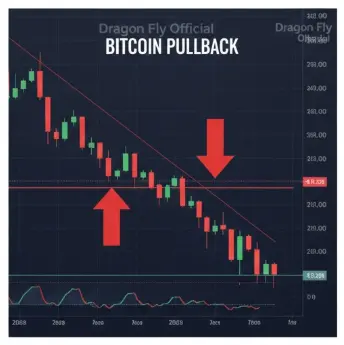
Rising U.S.–Iran tensions have driven gold above the $5,000 milestone, while Bitcoin has pulled back and market sentiment turns cautious. Would you allocate to gold now, or look for a BTC dip?

⚡ Gold Surges Amid Rising U.S.–Iran Tensions
Market Snapshot – Dragon Fly Official:
• Gold: Above $5,000/oz, driven by safe-haven demand
• BTC: Pullback, testing support zones
Why the Divergence?
• Geopolitical tensions → capital flows into gold
• Risk assets (BTC, alts) under pressure
• Traders cautious, prioritizing stability
• BTC aligns with resistance & consolidation zones
Strategy Considerations:
✔️ Allocate to gold, monitor support levels
✔️ Watch BTC dips for potential entry
✔️ Compare gold vs BTC to gauge market preference
✔️ Manage risk with stop-losses & sizing
Long-Term Outlook:
Go
BTC0.57%
DragonFlyOfficialvip
⚡ Gold Surges Amid Rising U.S.–Iran Tensions
Current Market Snapshot – Dragon Fly Official:
Gold has jumped above $5,000/oz due to escalating geopolitical tensions.
Bitcoin has pulled back, reflecting cautious market sentiment.
📉 Market Analysis: Price vs Sentiment
Price Signals:
Gold shows strong upward momentum on geopolitical news.
Bitcoin and risk assets are under pressure, testing support levels.
Market Insight – Dragon Fly Official:
Safe-haven demand is driving gold prices higher.
BTC’s pullback reflects risk-off sentiment as traders reassess positions.
The divergence between gold and BTC highlights capital rotation between traditional and digital assets.
🔎 Why the Divergence Exists
Geopolitical Tensions: Rising U.S.–Iran concerns increase safe-haven flows into gold.
Liquidity Reallocation: Risk assets, including BTC, are temporarily under pressure.
Market Sentiment: Investors are cautious, prioritizing stability over high volatility.
Technical Factors: BTC pullback aligns with resistance zones and market consolidation.
💡 Strategy Considerations
Allocate to Gold: Rising tensions may continue to push gold higher; monitor support levels for entry.
Wait for BTC Dip: A pullback may present a buying opportunity at stronger technical support.
Observe Relative Strength: Compare performance between gold and BTC to gauge market preference.
Manage Risk: Use stop-losses and position sizing for volatile periods.
📈 Long-Term Outlook
Gold remains a reliable hedge against geopolitical and macroeconomic risk.
Bitcoin may recover, but short-term volatility suggests caution.
Monitoring both markets helps balance safety (gold) and growth potential (BTC).
Summary Table
Gold Price: Above $5,000/oz
BTC Price: Pullback, testing support zones
Trend: Gold rising, BTC cautious
Market Sentiment: Risk-off, cautious
Strategy: Allocate to gold or look for BTC dip
Key Takeaway: Gold benefits from geopolitical tension, while BTC pullbacks require careful timing — balance between safe-haven and growth exposure is key.
⚠️ Risk Warning
Trading or investing in gold or BTC carries significant risk:
Prices can swing sharply and unpredictably.
Past performance does not guarantee future results.
Only invest what you can afford to lose.
Use proper risk management and position sizing.
#MiddleEastTensionsEscalate
repost-content-media
  • Reward
  • 1
  • Repost
  • Share
QueenOfTheDayvip:
2026 GOGOGO 👊
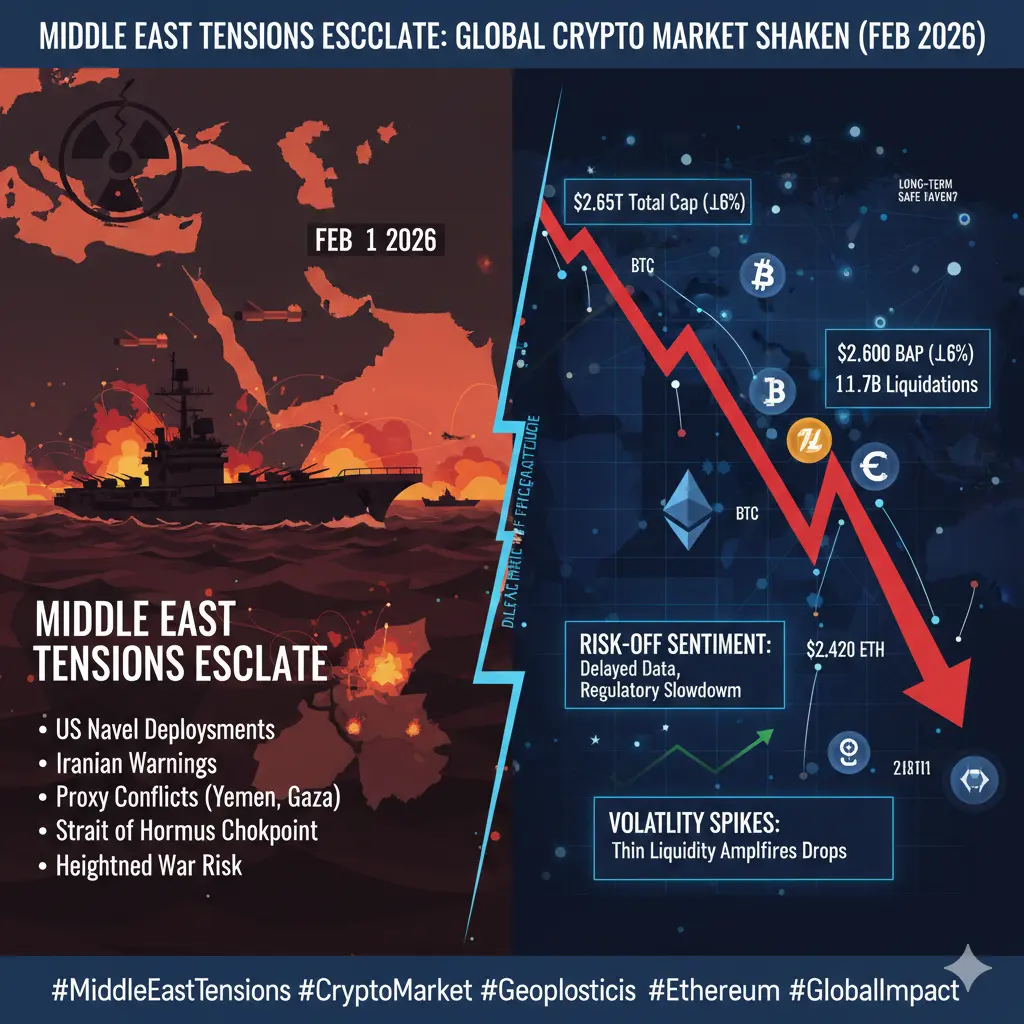
#MiddleEastTensionsEscalate The rapid escalation of geopolitical tensions in the Middle East has materially intensified stress across the cryptocurrency market, transforming what initially looked like a controlled pullback into a full-scale risk-off event. As tensions involving the U.S. and Iran escalated, crypto markets reacted immediately with accelerated price declines, thinning liquidity, and liquidation-driven volume spikes—highlighting just how sensitive digital assets remain to global instability.
Price Impact: Escalation Multiplies the Downside
Before the geopolitical flare-up intensif
BTC0.57%
ETH0.05%
MrFlower_XingChenvip
#MiddleEastTensionsEscalate The rapid escalation of geopolitical tensions in the Middle East has materially intensified stress across the cryptocurrency market, transforming what initially looked like a controlled pullback into a full-scale risk-off event. As tensions involving the U.S. and Iran escalated, crypto markets reacted immediately with accelerated price declines, thinning liquidity, and liquidation-driven volume spikes—highlighting just how sensitive digital assets remain to global instability.
Price Impact: Escalation Multiplies the Downside
Before the geopolitical flare-up intensified, Bitcoin was trading within a relatively stable consolidation range. Once escalation headlines hit, downside pressure expanded sharply. Bitcoin (BTC) extended losses to roughly 8–10%, decisively breaking below the $80,000 threshold. Ethereum (ETH) underperformed further, sliding 10–14%, while large-cap altcoins fell 12–18%. Mid- and small-cap tokens experienced severe drawdowns of 20–35%. The widening gap between majors and higher-beta assets confirms that each escalation phase compounds downside risk.
Liquidity Impact: Market Depth Erodes Rapidly
Escalation has triggered a pronounced liquidity drain across major exchanges. Estimated order-book depth declined by 25–40%, while bid–ask spreads widened by 30% or more. Slippage on larger trades increased sharply, particularly during off-peak trading hours. As geopolitical risk rises, market makers reduce exposure, causing liquidity to thin further. In this environment, even modest sell orders can push prices aggressively lower.
Volume Surge: Distress, Not Demand
Despite falling liquidity, trading volumes surged. BTC daily volume jumped 35–50%, while ETH and altcoin volumes spiked 40–70% during peak sell-offs. Importantly, this volume expansion was driven primarily by forced liquidations, margin calls, and stop-loss cascades, not organic buying. Such activity signals stress and deleveraging rather than accumulation or bullish conviction.
Liquidations: Escalation Is Non-Linear
As tensions intensified, total market liquidations climbed into the multi-billion-dollar range. Long positions accounted for approximately 70–80% of forced closures, with ETH and altcoins taking a disproportionate hit due to higher leverage profiles. Each new geopolitical headline triggered fresh liquidation waves, demonstrating that escalation compounds downside pressure instead of allowing markets to stabilize.
Sentiment Shift: From Caution to Capital Preservation
Market psychology has shifted decisively. Fear indicators pushed deeper into extreme risk-aversion territory, funding rates flipped negative across multiple venues, and institutional flows slowed markedly. Capital rotated toward cash and defensive assets, while large holders prioritized capital preservation over yield or growth, further suppressing liquidity and upside momentum.
Why Escalation Matters More Than the Initial Drop
The critical insight is that escalation amplifies impact through a feedback loop. Initial headlines trigger pullbacks; continued escalation causes liquidity withdrawal; reduced liquidity leads to outsized price moves; outsized moves trigger liquidations; liquidations fuel panic-driven volume. This loop explains why crypto reacts faster and more violently than traditional markets during geopolitical stress.
Bottom Line
Escalating Middle East tensions are doing more than pressuring prices—they are structurally weakening market conditions. Liquidity is down 30–40%, volatility is up 20–30%, trading volumes are surging due to forced selling, and most crypto assets are experiencing double-digit percentage declines.
Until geopolitical risks de-escalate, crypto markets are likely to remain fragile, headline-driven, and highly volatile. In this environment, risk management beats aggression, and survival takes priority over speculation.
repost-content-media
  • Reward
  • 1
  • Repost
  • Share
#MiddleEastTensionsEscalate
Geopolitical Risk Is Redefining Market Behavior Right Now
Escalating tensions between the United States and Iran, stoked by military actions, strongly worded rhetoric, and fears of broader regional conflict, have injected a fresh wave of uncertainty into global financial markets. In such environments, investors typically move away from assets perceived as “risky” such as stocks and cryptos and toward established safe havens like gold. That pattern is clearly visible today: gold has not only breached historically unprecedented levels (above $5,000 per ounce) but ha
BTC0.57%
  • Reward
  • 14
  • Repost
  • Share
Luna_Starvip:
Happy New Year! 🤑
View More
#MiddleEastTensionsEscalate Middle East Tensions Escalate
Middle East tensions are escalating once again and global markets are paying close attention. The region has always been a key geopolitical flashpoint but the current phase carries wider implications due to its timing and global economic conditions. With fragile growth rising debt levels and sensitive financial markets even localized conflict risks creating global ripples.
The recent escalation is driven by a combination of political military and strategic factors. Long standing rivalries unresolved conflicts and power struggles between
  • Reward
  • 7
  • Repost
  • Share
ShainingMoonvip:
2026 GOGOGO 👊
View More
#MiddleEastTensionsEscalate
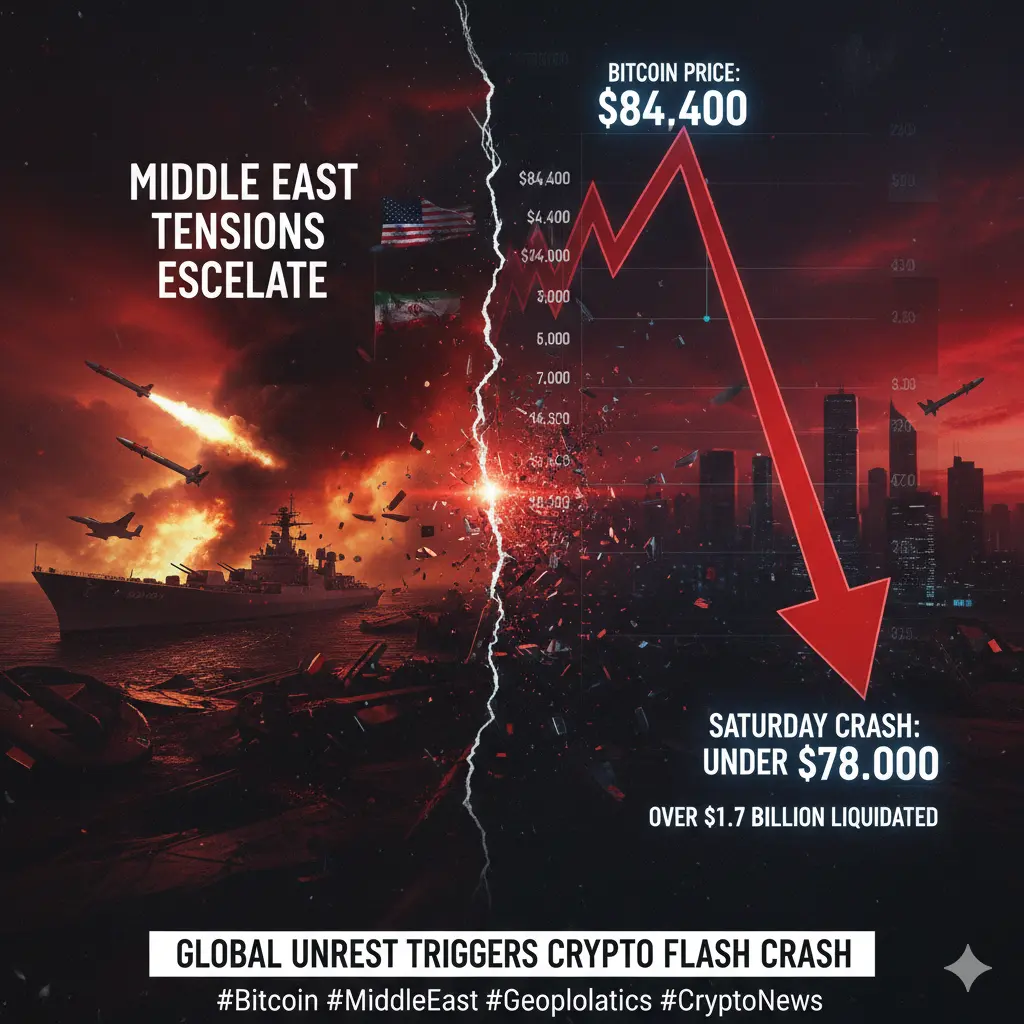
Bitcoin plunged sharply in the past few days as tensions escalated in the Middle East. At one point, Bitcoin dropped under $78,000 on Saturday, marking a significant decline from its recent price highs.
The main reasons behind this drop were rising geopolitical risks—particularly increased conflict and uncertainty involving Iran and the U.S.—plus growing concerns over U.S. political stability and new tariff threats. Thin weekend liquidity made it even easier for panic selling to push the price down. Just two days earlier, Bitcoin was trading around $84,400; since t
BTC0.57%
HighAmbitionvip
#MiddleEastTensionsEscalate
Bitcoin plunged sharply in the past few days as tensions escalated in the Middle East. At one point, Bitcoin dropped under $78,000 on Saturday, marking a significant decline from its recent price highs.
The main reasons behind this drop were rising geopolitical risks—particularly increased conflict and uncertainty involving Iran and the U.S.—plus growing concerns over U.S. political stability and new tariff threats. Thin weekend liquidity made it even easier for panic selling to push the price down. Just two days earlier, Bitcoin was trading around $84,400; since then, it has fallen more than 7%, with billions in liquidations triggered (over $1,700,000,000 on Friday alone).
So, if you’re tracking the impact: Bitcoin dropped from about $84,400 to below $78,000—over a $6,000 slide—mostly because traders got nervous about war risks and global instability.
repost-content-media
  • Reward
  • 8
  • Repost
  • Share
LittleQueenvip:
2026 GOGOGO 👊
View More
#MiddleEastTensionsEscalate
🌍 What the Escalation Actually Means for Markets
Rising tensions in the Middle East are not just regional headlines — they represent a global risk-pricing event. Markets don’t react to conflict itself, but to its potential to disrupt energy supply, trade routes, and geopolitical stability.
When uncertainty increases, capital shifts from growth to protection.
📉 Immediate Market Reactions
Historically, geopolitical escalation triggers:
Energy volatility
Oil and gas prices react first due to supply-chain sensitivity.
Risk-off behavior
Equities and high-beta assets f
BTC0.57%
  • Reward
  • 7
  • Repost
  • Share
Repanzalvip:
Happy New Year! 🤑
View More
🌍⚠️ #MiddleEastTensionsEscalate | Global Market Alert 📉
Geopolitical tensions in the Middle East are rising, creating volatility across equities, commodities, and crypto markets. Investors are turning to safe-haven assets like gold and stablecoins as uncertainty grows. 🛡️💹
🔍 Key Points to Watch:
🏦 Increased demand for gold, silver, and stablecoins
📊 Market volatility may create short-term trading opportunities
🌐 Potential impact on global trade and energy markets
💡 Stay prepared and make informed decisions using Gate.io’s real-time market data, advanced charts, and trading tools.
🚀 T
SAFE-5.22%
  • Reward
  • Comment
  • Repost
  • Share
📊 This week’s macro swirl has created a striking divergence between traditional safe havens and speculative risk assets: Gold is ripping north of $5,000/oz, while Bitcoin has pulled back sharply amid risk‑off positioning and cautious sentiment in crypto markets.
Gold’s surge — hitting fresh all‑time highs beyond $5,100 — is being driven by geopolitical tension, USD depreciation, and flight‑to‑quality demand. Investors are pricing in heightened risk from U.S.–Iran friction, dwindling faith in fiat stability, and expectations of further central bank easing. Record inflows into bullion ETFs and
BTC0.57%
  • Reward
  • Comment
  • Repost
  • Share
#MiddleEastTensionsEscalate
Market Insights by Yusfirah Rising tensions between the U.S. and Iran have triggered a significant surge in safe-haven demand, pushing gold above the $5,000 milestone, while Bitcoin and other risk assets have retraced from recent highs as investor sentiment turns cautious and risk appetite declines. Gold’s movement reflects both real-money demand for security amid geopolitical uncertainty and speculative positioning anticipating further safe-haven inflows. Current technical support for gold is near $4,950–$5,000 with immediate resistance around $5,100–$5,150. Bitc
BTC0.57%
  • Reward
  • Comment
  • Repost
  • Share
#MiddleEastTensionsEscalate
Market Insights by Yusfirah Rising tensions between the U.S. and Iran have triggered a significant surge in safe-haven demand, pushing gold above the $5,000 milestone, while Bitcoin and other risk assets have retraced from recent highs as investor sentiment turns cautious and risk appetite declines. Gold’s movement reflects both real-money demand for security amid geopolitical uncertainty and speculative positioning anticipating further safe-haven inflows. Current technical support for gold is near $4,950–$5,000 with immediate resistance around $5,100–$5,150. Bitc
BTC0.57%
  • Reward
  • 10
  • Repost
  • Share
Crypto_Buzz_with_Alexvip:
Happy New Year! 🤑
View More
Load More