GateUser-176c498f

vip
Age 0.1 Year
Peak Tier 0
No content yet
The addresses are all posted, those who understand, understand: before rushing in, control your position first and don't get carried away.
View Original
Original content no longer visible
  • Reward
  • Comment
  • Repost
  • Share
Lately, trading options feels a lot like buying a "ticket to time." The buyer wakes up every day being quietly charged by time value; even doing nothing, they're bleeding. The seller is like a landlord, most afraid that a big wave of volatility will shake the house down... Honestly, whoever has the advantage of time will eat up the other.
These days, the group is again discussing pledge unlocks and token unlock calendars, making everyone anxious about selling pressure. I actually think this kind of anxiety itself has a "time cost" — the more you wait, the more you want to run; the more you wan
View Original
  • Reward
  • Comment
  • Repost
  • Share
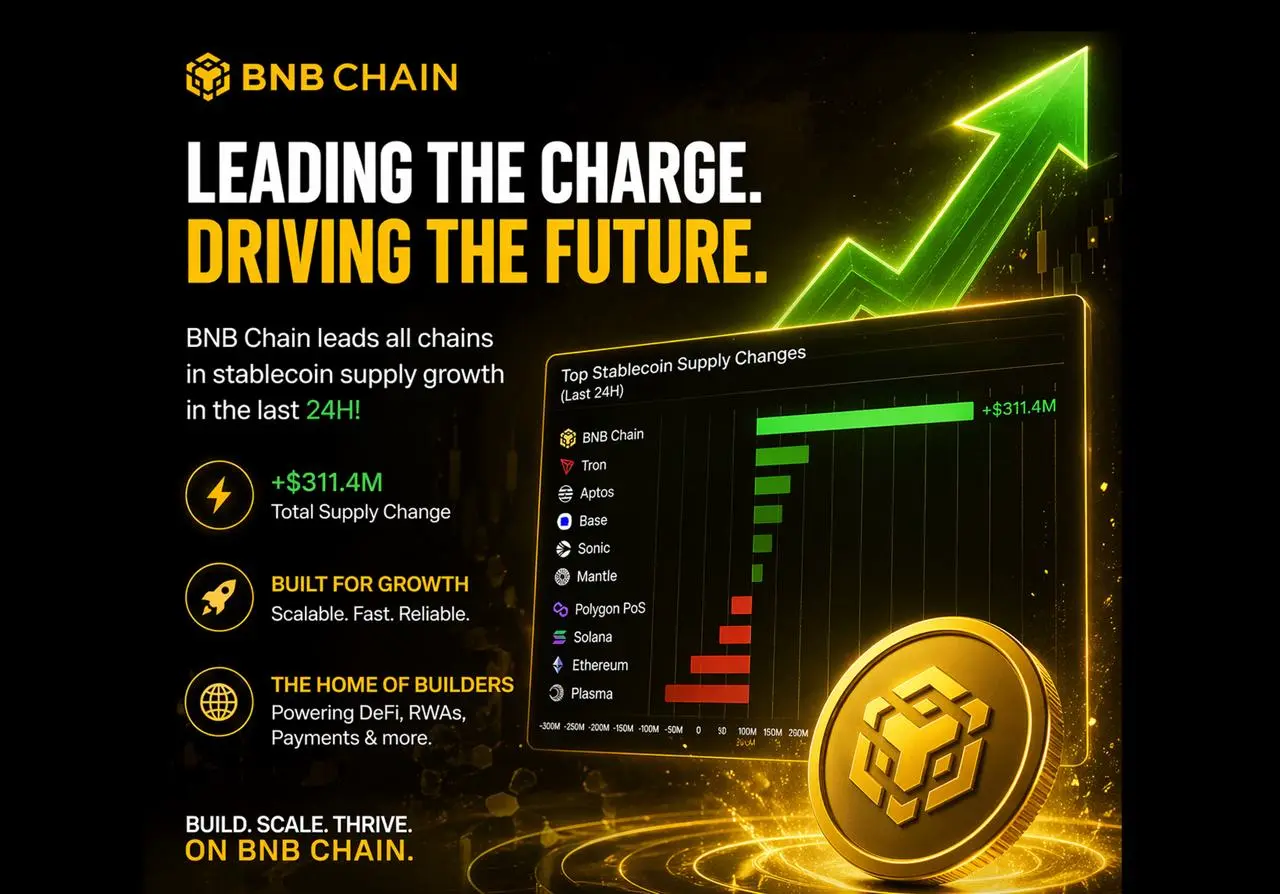
24h 311M… This is not just small-scale activity; it feels like on-chain demand is really picking up.
View Original
CryptoRevolutionMaster
Hey Folks, BNBCHAIN is currently experiencing a notable expansion in stablecoin supply, with over $311M added within the last 24 hours.
👉What we’re observing is a broader pattern:
🔥Liquidity is reallocating toward ecosystems with proven execution capabilities
🔥On-chain activity is being supported by real infrastructure, not just narrative cycles
🔥Builder engagement remains sustained, reinforcing long-term network value
Stablecoin growth, in this context, serves as a proxy for readiness. A signal that participants trust the network for settlement, trading, and application-layer activity.
👉 BNB Chain continues to strengthen its position as a high-performance environment where capital is not only entering, but actively being deployed.
#BNBCHAIN #BNB $BNB
repost-content-media
  • Reward
  • Comment
  • Repost
  • Share
In terms of quantum security, proactive planning is the key.
View Original
CryptoFrontier
Algorand, Aptos Lead Quantum Security Race: Coinbase Report
Coinbase's Quantum Advisory Council has identified Algorand and Aptos as the Layer-1 networks best positioned to handle future quantum computing threats, according to a report cited on April 24, 2026. While large-scale quantum risks remain years away, the report emphasizes that preparation is
  • Reward
  • Comment
  • Repost
  • Share
I am very looking forward to the deep integration of AI and on-chain ecosystems; intelligent trading will maximize efficiency.
View Original
CarpenterLabs
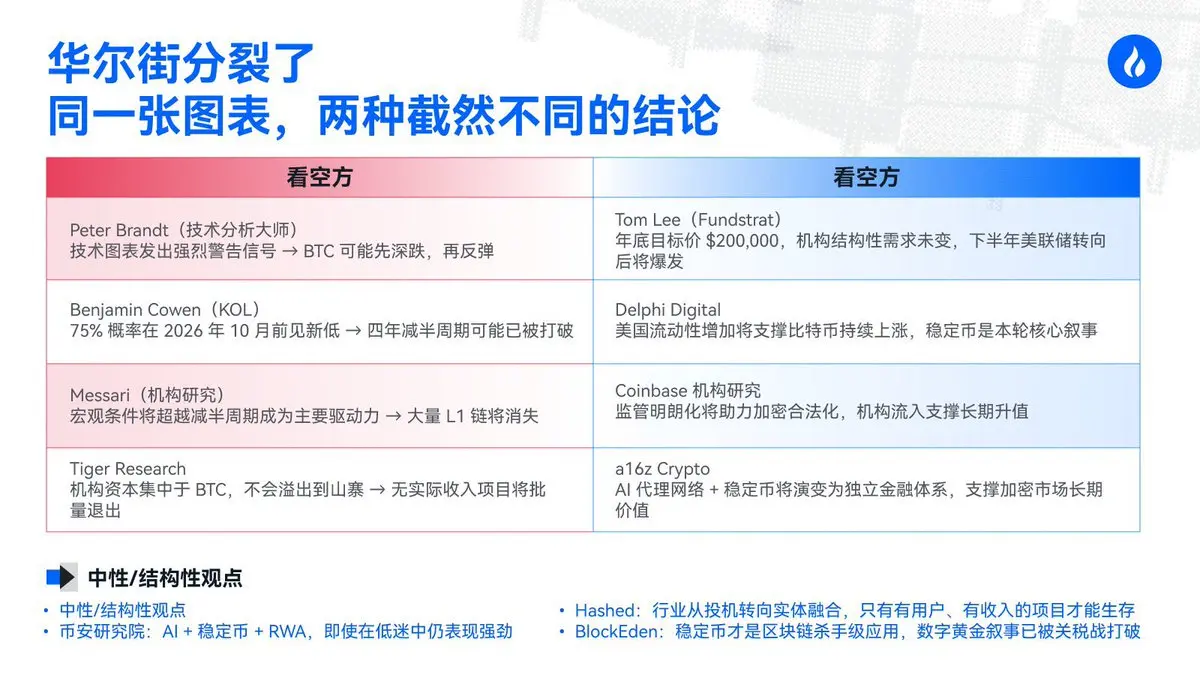
The current cryptocurrency industry has moved beyond traditional bull and bear cycles and entered a new stage of structural development.
Through the HTX research report, the industry trends and long-term platform transformation logic can be clearly understood:
▪️Macroeconomic perspective: reshaping of global liquidity, improvement of compliance systems, expansion of RWA implementation, deep integration of AI and on-chain ecosystems, becoming the core development mainline
▪️Ecosystem upgrade: HTX continues to evolve, shifting from a single trading platform to a compliant, institutionalized, AI-enabled CeFi+DeFi integrated ecosystem
▪️Future trends: widespread compliance, institutional capital entering, mature smart trading ecosystems, will become the new industry turning points
Adhering to a long-term compliance route, focusing on ecosystem innovation, and jointly building a stable Web3 future.
#HTX @HTX_Molly #HTXNovaPlus
repost-content-media
  • Reward
  • Comment
  • Repost
  • Share
Hong Kong-Shenzhen collaboration on AI, with medium to long-term potential for hardware + computing power + application integration.
View Original
CryptoFrontier
Lenovo Opens AI Hub at Hong Kong-Shenzhen Tech Park
Lenovo opened an artificial intelligence innovation center on April 23 at the Hong Kong-Shenzhen Innovation and Technology Park, according to Xinhua. The move makes Lenovo one of the first large multinational technology companies to establish operations in the Hong Kong Park of the Innovation
  • Reward
  • Comment
  • Repost
  • Share
I used to console myself with “safe once the money’s in hand.” After reading this, it really stings: what I sold wasn’t just coins—it was the option for years and years to come.
View Original
CryptoRevolutionMaster
The guy who mass-sold Bitcoin at $0.003 in 2010 didn't lose money
He lost TIME
Here's what nobody ever calculated:
Laszlo Hanyecz mass-sent 10,000 BTC for two Papa John's pizzas on May 22, 2010
At today's price that's roughly $750,000,000
But that's not the real number
The real number is TIME
Those 10,000 BTC at $75K each = 750 million dollars
Average human lifespan earns roughly $2.7M total in a lifetime
750,000,000 ÷ 2,700,000 = 277 lifetimes
He didn't mass-sell two pizzas for $30
He mass-sold 277 HUMAN LIFETIMES of labor for two pizzas
Not his lifetime
His great-great-great-great grandchildren's lifetimes
All of them
For pepperoni and cheese
But here's the part that should actually terrify every degen in this chat:
You mass-sold something too
That mass-sell at 3x instead of holding for 30x
That mass-sell at 100K MC that went to 50M
That "profit is profit" cope
Calculate YOUR pizza
Not in dollars
In lifetimes you gave away
Now you understand why exits hurt more than losses
A loss is just money
A bad exit is stolen time
And time is the only coin with a fixed supply that's decreasing every block.
Credits to Bull House 💪🔥
repost-content-media
  • Reward
  • Comment
  • Repost
  • Share
Recently, everyone has been talking about LSTs and re-staking again, and it feels like collecting cards: the returns are obviously attractive, but honestly, they can’t just appear out of thin air. Most likely, you’re trading the “stability of staking” for a bit of extra risk premium—like adding another protocol layer, another middleman, another unlock period… the longer the chain, the more it resembles stacking one layer on top of another like a stackable game. What I fear most isn’t that it’s slow—I can wait if it’s slow—but that it gets messy. If it all goes wrong, I really don’t know which
View Original
  • Reward
  • Comment
  • Repost
  • Share
You're in the pressure zone, don't FOMO, wait for confirmation before acting.
View Original
CryptoSat
$BTC At Major Resistance — Break or Fake?
Bitcoin just tapped the $78K resistance zone🎯
  • Reward
  • Comment
  • Repost
  • Share
Once regulators open the door, brokerages, brokerage/agency firms, and exchanges will likely all rush to set up “crypto + mortgage” entry points.
View Original
CryptoFrontier
Coleman: Crypto-Backed Mortgages Coming to Australia
Crypto-backed mortgage products will eventually enter the Australian lending market as regulatory frameworks mature, according to Stephanie Coleman, operations manager at Sydney-based brokerage Unconditional Finance. Speaking to Broker Daily, Coleman noted that while countries like the US are
  • Reward
  • Comment
  • Repost
  • Share
Recently, everyone has been talking about AI Agents automatically helping you perform on-chain tasks. It sounds pretty cool, but my first reaction is: who’s holding the keys… If you’re still putting your private keys into browser plugins, you might as well just give away your avatar.
My own setup isn’t big; I use a hardware wallet plus a small daily hot wallet separated, spending the least amount of money to keep the most outrageous images, and don’t turn the fun into accidents. When assets grow a bit more and you need to sign transactions frequently, multi-signature becomes even more reliable
View Original
  • Reward
  • Comment
  • Repost
  • Share
Playdate this wave is considered to set a benchmark for the industry: tools can be used, but the soul of the work must be created by people.
View Original
CryptoFrontier
Playdate Bans AI-Generated Art While Allowing AI Coding Tools
Panic, the company behind the Playdate handheld, has adopted a distinctive AI policy that prohibits AI-generated art, music, and writing in game submissions while still permitting developers to use AI coding tools, according to the article. This makes Playdate one of the first gaming storefronts to
  • Reward
  • Comment
  • Repost
  • Share
I will keep an eye on the reaction around 0.45; if it doesn't pass, it can easily turn into a waterfall, so be prepared for both scenarios.
View Original
MarcusCorvinus
$HIGH vertical bullish explosion with extreme momentum
I’m seeing aggressive buying because $HIGH pumped straight from base
No pullbacks yet pure momentum
Entry Point 0.30 to 0.34
Target Point 0.45 then 0.60
Stop Loss 0.25
I’m expecting high volatility
Needs consolidation for safer entry
This is possible because low liquidity plus hype creates spikes
Let’s go and Trade now $HIGH ‌
  • Reward
  • Comment
  • Repost
  • Share
The most frightening thing is combinatorial contagion: when rsETH suddenly surges, lending pools like Aave are drained, and the chain reaction is more deadly than the hacker themselves.
AAVE0.01%
View Original
TheBuzzingBee
😱💢💥DeFi Loses $292 Million in Under an Hour!
A single mistake in setup opened the door. One overlooked bridge, left without enough eyes, was all it took. The largest DeFi breach that year came not from brilliance, but neglect.
April 18, 2026. Time: 17:35 UTC. Someone walked out of Kelp DAO's LayerZero bridge with 116,500 rsETH.. That haul? Nearly $292 million. 46 minutes passed before Kelp hit pause on its contracts. In that window, around $250 million in stolen tokens changed hands, flipped into ETH using a wallet quietly loaded up earlier through Tornado Cash. Every move lined up ahead of time. Nothing left to chance. Damage done.
This breach marks the biggest DeFi hack so far in 2026 - no other incident comes near.
What Was Breached and the Method Used
A sea of activity swirls around Kelp DAO, it functions like a machine that lets people put in ETH or certain staked assets. Instead of sitting still, those deposits flow into EigenLayer to gather extra returns over time. Out comes rsETH, a token you can swap or move freely. Trouble struck: the link between chains, holding reserves for wrapped rsETH, took damage. That connection supports operations on over twenty networks. Arbitrum sets the pace, then come Base, Linea, even lesser-known ones like Blast and Scroll, all tied into the web.
A false signal slipped through LayerZero’s defenses, fooling the system into accepting corrupted data. Because of that, Kelp’s connection reacted as if permission came from a trusted source. A transfer began without real authorization behind it. Out went 116,500 rsETH, diverted before anyone could stop it. The destination? An address already under the attacker’s grip.
Just one fake message started it all. The breach happened because a single bridge believed it. Everything collapsed after that.
A lone signer managed approvals, so only one player had authority over trades. Because of that, the hacker slipped through by signing off on a transfer to create tons of rsETH with nothing backing it up on the original network. Michael Egorov, who started Curve Finance, said it straight: "Risks show up if everything leans on a single person."
The Contagion Moved Fast
Here’s when things turn uglier. Not only did the thief grab the cash, but turned it into a tool for more harm.
A wave of borrowed wETH surged through Aave V3 after hackers funneled stolen rsETH into the protocol. One breach spiraled, suddenly, ripple effects gripped much of decentralized finance.
Down from $26.4 billion on April 18, Aave’s locked funds hit close to $20 billion by Sunday morning in the U.S., losing $6.6 billion as its AAVE token dipped 16%. Because of the turmoil, SparkLend, Fluid, and Lido each paused trading on rsETH markets without delay. RaveDAO’s RAVE coin tumbled 90%, falling from $27.33 to just $1.15, erasing more than $5 billion in market value during one session alone. Though stability was expected, chaos unfolded fast across platforms once numbers began slipping.
Something else happened later - two more tries to pull out 40,000 rsETH, about $100 million, got stopped once Kelp hit the emergency brake. Not that it helped much after $292 million had vanished.
This Is Not an Accident But a Repeating Sequence
Truth is, 2026 hasn’t played nice with DeFi security
A breach hit the Drift Protocol hosted on Solana early April 1, wiping out close to $285 million. The incident traces back to hackers tied to North Korea. Funds vanished fast during the exploit.
A string of hacks hit several platforms, CoW Swap felt it first, then Zerion stumbled under pressure. Rhea Finance followed soon after, its defenses giving way unexpectedly. Silo Finance cracked later, joining the chain of breaches that unfolded week by week.
Q1 2026 alone scams and hacks drained about $482 million in digital currencies. While breaches pulled off big hits, trickery played its part too across those months.
A weekend saw Kelp grow by an extra $292 million.
Ledger's Chief Security Officer said it plainly: "All in all, the trust into DeFi protocols is eroded by this kind of event. And 2026 will most likely be the worst year in terms of hacks, again."
The Hard Reality of DeFi Building Blocks
Turns out the thing nobody wants to admit: what makes DeFi flexible also breaks it when stress hits. Composability builds power through connections, yet those links become weak points under pressure.
One moment rsETH served as trusted backing on Aave, SparkLend, Fluid, Compound, and Euler, built that way since open linking defines DeFi’s reason to exist. These systems let one another operate freely. It’s by design. Yet right after the breach, fake holdings flooded mainly Aave, used fast to pull out genuine ETH through loans, turning isolated theft into widespread strain.
When a single part breaks, each system relying on it as security gets hit too. This isn’t an error somewhere. It’s how the whole setup works.
When the bridge reserve runs out, people holding tokens outside Ethereum start wondering if those tokens are still backed. This worry triggers rushed exits from layer 2 chains, even though Ethereum's supply isn’t directly impacted. Suddenly, Kelp may need to break apart restaked assets just to cover withdrawal requests.
One failure pulls another down. Always happens like that.

What Must Shift
What it takes isn’t hidden. Still, progress drags behind need]
Bridges must require multiple signatures instead of just one. A single broken key cannot unlock them when multiple approvals are required. One weak link might fail, yet the whole system stays shut tight
When it comes to collateral onboarding, tighter rules are stepping in. Lending setups now face pressure, checking bridge design must come first, never second. Restaked tokens won’t slip through without a close look at their backbone. The sequence flips: scrutiny before acceptance, not the other way around. Protocols hesitate less when structure is confirmed early. Safety leans on timing, one wrong order risks more than delays
That delay matters. Kelp waited till 20:10 UTC to say anything, even though the breach started much earlier. A full three hours passed before their first message came out. Silence like that won’t work when systems are already breaking
When bridges act strange, systems halt right away through cross-protocol circuit breakers instead of waiting hours for human intervention. Alerts spark instant shutdowns across linked networks rather than delayed fixes. Quick halts happen before problems spread beyond control points. Machines react faster than people when connections show warning signs. Freezes roll out automatically once irregularities appear in communication channels
Michael Egorov sees an upside in the wreckage: "Crypto is a harsh environment which no bank would have survived, yet we are working with that. DeFi will learn from this incident and become stronger than before."
Could be. Though when lessons cost $292 million each, prices are climbing fast.
A single flaw opened the door. A fake message slipped through. 46 minutes later, millions were gone. This breach passed Drift’s loss by a narrow margin. Now it stands as 2026’s biggest DeFi collapse. Links between systems turned small cracks into total failure.
One step ahead of safeguards, bridges keep growing more complex. When validators lack variety, weak spots remain. Collateral rules haven’t matched the pace either. As long as these gaps stay open, stories like this will reappear. Not a matter of if, just when.
Survival of DeFi isn’t what’s being tested. Speed is how quickly it can change before another $292 million mistake shows up.
✅️ FOLLOW FOR MORE✅️
$BTC $SOL #GatePreIPOsLaunchesWithSpaceX $XRP
repost-content-media
  • Reward
  • Comment
  • Repost
  • Share
Lately I’ve been seeing a bunch of “address profiling/tag clustering” tools. They keep saying things like a certain wallet is a whale, and another wallet is “smart money,” and it makes me feel a bit tempted but also a bit hesitant… To be blunt, on-chain is indeed transparent, but people aren’t. One person can have a dozen-plus addresses, shuffling funds back and forth, or even splitting a team multi-signature setup and moving it on. Even if the profile looks convincing, it could still be acting. I’ll look at fund flows, but more as clues for “where this fish went,” not as a conclusion.
It also
View Original
  • Reward
  • Comment
  • Repost
  • Share
After high volatility, it is often the starting point or the end point of a trend; the key is which side the data points to.
View Original
CryptoSat
$POWER just completed a high-volatility cycle… and the data behind the move tells a deeper story
  • Reward
  • Comment
  • Repost
  • Share
I'm a newbie who just buys profile pictures for fun, and when it comes to judging whether a project is "reliable or not," I basically look for three things: GitHub that hasn't been inactive for a week and isn't just full of readme edits; audit reports that don't just show the logo—at least flip to the "Fixed/Unfixed" page to see if there are any serious issues; and permission upgrades that are preferably multi-signature, with signers not just one or two fake accounts with the same name... Anyway, I first filter out obviously perfunctory ones.
Can I understand the audit?
No, I can't, so I onl
View Original
  • Reward
  • Comment
  • Repost
  • Share
This post is so authentic: it has the warmth of everyday life and the discipline of trading. Keep up this rhythm.
View Original
鱼馆鱼人
I fished all day today, and the catch was pretty good.
Today I mainly caught flower bones and Dinggui fish, 70 yuan/6 hours, about 5 jin (2.5 kg) or so, considered landed.
The boss said that the average purchase price for this kind of fish is 16 yuan!
For other points, most of the long positions were exited at the highest points.
When I was warning the group about risks, most of the long positions were basically closed out, because I just wanted to relax on Saturday and Sunday!
$Peace is also fine, today the highest reached 6.7M, and the doubled position costs were also closed out, feeling good!
Didn’t go to Hong Kong, although every exchange kept calling me, but Fish Brother didn’t know what to do.
Very happy on Saturday and Sunday, drinking wine at MMC in the evening.
repost-content-media
  • Reward
  • Comment
  • Repost
  • Share
Emotional betting remains emotional betting; position management is the hard currency.
View Original
Furan86999
What does this situation between Iran and the U.S. look most like right now? It’s like one side is talking about “reconciling today,” while the other raises their fists even higher. Diplomats shuttle back and forth and try to mediate in Tehran, but the Pentagon reports actions of troop increases and redeployments. As the April 21 “ceasefire deadline” gets closer, the market feels more like it’s playing an emotional betting game: the S&P hits new highs, risk assets rebound, and even crypto gets excited along with it. The problem is— is this dawn, or a lure to buy before the storm?
First, lay out the core contradiction clearly: whether the so-called talks can succeed is not about whether people are willing to shake hands, but whether both sides can find a plan that they can both explain to their people internally on hard conditions such as uranium enrichment timeframes, restrictions on nuclear activities, and the easing of sanctions. Economic interests are naturally the catalyst—everyone wants oil prices not to run wild, inflation not to come back, and capital not to flee. But don’t ignore the other side: troop increases, deterrence, and red-line statements are also bargaining chips on the negotiation table. In many cases, the closer you get to the deadline, the bigger the moves become— which actually shows that both sides are stepping up and probing by adding more.
The logic behind the market’s preemptive celebration isn’t complicated: it’s betting on “the most comfortable script”—talks succeed, oil prices fall, inflation pressure eases, rate-cut expectations become more stable, and risk assets keep rising. But the point at which the market is most likely to lose money is exactly this: expectations are running ahead of reality. When everyone is talking about talks, and the price has already priced in “successful negotiations,” at the moment it truly lands, a typical “good-news realization” may occur— it may not be a trend reversal, but short-term pullbacks and taking profits are almost certain events. Conversely, if negotiations don’t advance as expected, or sudden breaking news sparks a close call, the market will instantly switch to another script: oil prices jump, the dollar strengthens, and risk assets retreat collectively— you’ll see “the same group of people shift from optimism to panic at the same speed.”
How should you allocate during that period of turbulence? I’ll give you a more practical “three-tier approach”—not aiming for a single decisive answer, only for something steadier:
First tier: keep cash/keep rounds.
The most valuable thing in a volatile period is liquidity. Don’t put all your positions in at once; leave room to respond to unexpected volatility, so you won’t be forced to cut losses due to emotion.
Second tier: separate a core position from a satellite position.
The core position is more defensive: large-cap assets, cash-like allocations, and low-volatility positioning, with the goal of withstanding volatility. The satellite position is more offensive: thematic assets and flexible assets, using smaller positions to chase expectations. Separating “wanting to make more” from “not being allowed to lose big” makes your mindset much more comfortable.
#美伊局势和谈与增兵博弈 #美股创下历史新高
repost-content-media
  • Reward
  • Comment
  • Repost
  • Share
Recently, I've seen people have their assets stolen by phishing sites again, and I really don't want to hear "I just signed my name" anymore.
Mnemonic phrases are essentially house keys—don't give them to anyone;
signing authorizations shouldn't be treated as "logging in," as some authorizations are unlimited from the start, and no matter how much you cry later, you can't get it back.
And those on-chain data tool tags have recently been criticized for being outdated or even misleading...
I now basically don't believe in "if it says it's secure, then it's secure,"
I'd rather spend hal
View Original
  • Reward
  • Comment
  • Repost
  • Share
  • Pin