HashbrownHero

vip
Age 0.1 Year
Peak Tier 0
Breakfast talks about hash rate, lunch talks about yield. A veteran in mining history, now shifting focus to on-chain settlement and modular approaches.
If the average price can really be below 0.01, then the room for growth will be much more comfortable afterward.
View Original
CryptoSat
$BULLA Trade Update
Close 60 to 70% at the break-even point (BEP) or with a small profit. As of now, $BULLA has achieved 3 entries.
1st entry will be Target 1. If you took 3 entries, your average entry would be below 0.01.
  • Reward
  • Comment
  • Repost
  • Share
Last night before bed, I saw someone ask again, "Is this protocol trustworthy or not?" Actually, beginners don't need to hard-read the white paper; just look at three things: Is the GitHub active (are people really updating code and merging records, or is it all just documentation changes)? Don't just look at the cover of the audit report that says "Audited"; flip through a couple of pages to see if there are high-risk items and how they were closed. Also, check the upgrade permissions—be especially wary of those who say they can upgrade with a multi-signature key at will; even with multi-sign
View Original
  • Reward
  • Comment
  • Repost
  • Share
Hold steady to rebound, break below to probe downward, simple and straightforward.
View Original
CryptoSat
Critical moment for Bitcoin😱
if it holds → bounce toward __ possible
If breaks → $__ likely next
  • Reward
  • Comment
  • Repost
  • Share
Ready, but I only focus on those with high certainty; treat the others as learning.
View Original
CryptoSat
Get READY FOR SIGNALS GUYS 🍸
  • Reward
  • Comment
  • Repost
  • Share
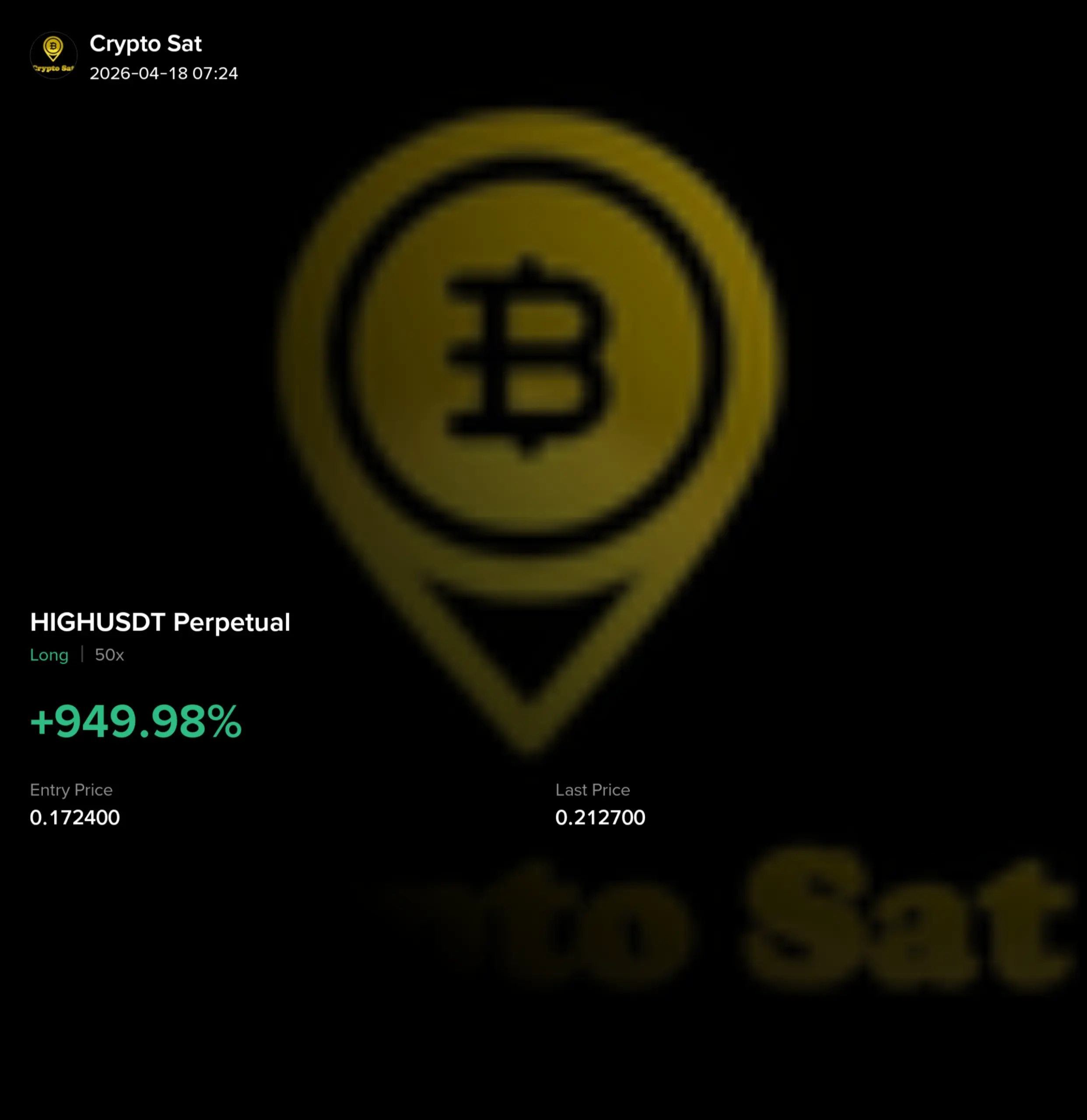
This time, I missed out on the parking spot and just took off, I accept it.
View Original
CryptoSat
THIS setup totally failed, $HIGH price shot up without hitting the entry points.
Don’t take new trades. If you’re already in, set your stop-loss at the entry price 👍
#WeekendTradingPlan
repost-content-media
  • Reward
  • Comment
  • Repost
  • Share
Lately, the market feels like there's a "nobody's home" vibe again. Liquidity dries up, and any logic seems to be written on paper—blow a little wind, and it's gone. Frankly, my current principle is simple: survive first, then talk about bottom fishing. Don't hold your position stubbornly; keep some cash (or equivalents) on hand. Being able to sleep at night is more important than catching the lowest point.
AI agents, automated trading—these are also quite lively. As on-chain interactions increase, security corner cases are easily overlooked... I looked at a few projects, and their narratives
View Original
  • Reward
  • Comment
  • Repost
  • Share
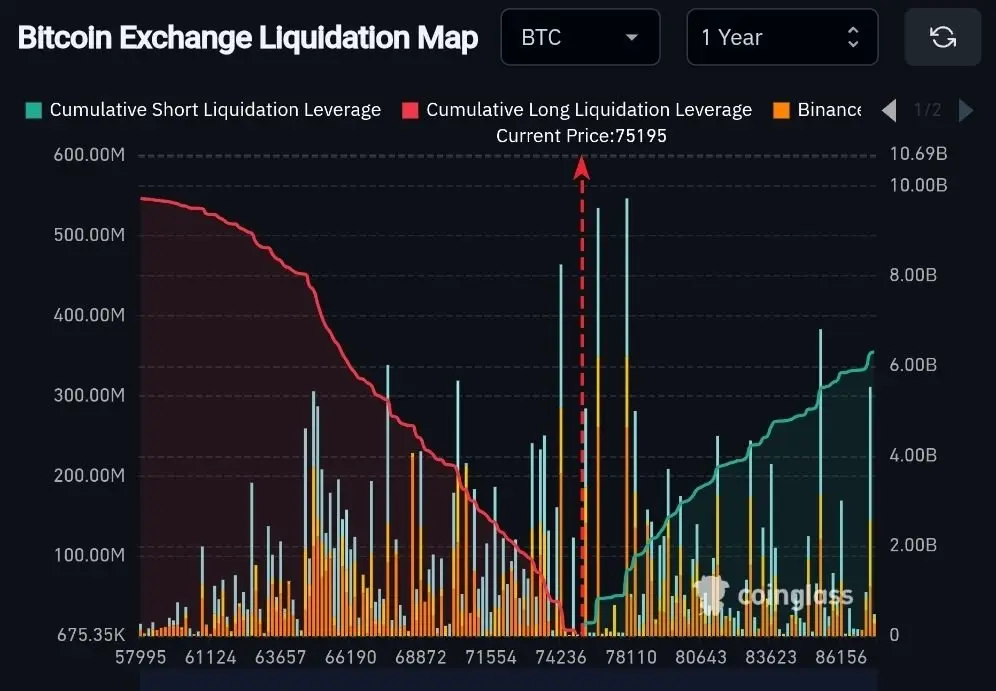
Today's keyword: imbalance.
View Original
CryptoSat
$BTC Liquidation Map Update
Bitcoin longs currently outnumber shorts 3:2, setting the stage for potential volatility.
The chart shows cumulative liquidation leverage over the past year, with a clear spike in long liquidations whenever price pushes higher.
Current #BTC price: $75,195
With more longs than shorts in the system, any sharp move higher could trigger a short squeeze, while a sudden drop risks cascading long liquidations.
Watch this imbalance closely. 👀
repost-content-media
  • Reward
  • Comment
  • Repost
  • Share
Lately, I've been thinking about cleaning up my follow list. In the past, I would just focus on the project’s roadmap when evaluating it, but after experiencing losses from mining operations, I realized: no matter how beautiful the milestones are written, without investing money, it's just a PPT. Now I prefer to look at government treasury expenditures—where the money is going, whether the pace is steady, and if they’re just fooling around in big buckets like "market cooperation." To put it simply, teams that take their work seriously will leave traces in their spending: development, manpower,
View Original
  • Reward
  • Comment
  • Repost
  • Share
This is what I love to see: strong support + clear risk control, just follow the plan and execute.
View Original
CryptoManMab
Price just bounced nicely from a strong demand zone.
{future}(HEMIUSDT)
Entry: 0.0079 – 0.0081
Stop Loss: 0.0076
Take Profit 1: 0.0085
Take Profit 2: 0.0090
Take Profit 3: 0.0096
  • Reward
  • Comment
  • Repost
  • Share
Pixels' "character differentiation + multi-path economy" system is at least one level more advanced than pure gold farming cycles, worth keeping an eye on.
View Original
Furan86999
Over the past few years, the blockchain game industry has been stuck in an awkward cycle: first attracting people with high returns, then relying on new users to retain the old ones as they exit, until the model collapses, leaving behind a "sea of data" and a group of educated players. Many projects claim to be making games, but in reality, they are still conducting financial experiments. It’s precisely because of this that, when I look at Pixels again, I care less about its art style or short-term token price, and more about whether it has pushed blockchain gaming in a different direction.
In my view, the most noteworthy aspect of Pixels isn’t that it made a farming game, but that it attempts to bring "behavior" back to the center of the economic system. The biggest problem with traditional P2E is that it compresses everyone’s goals into maximizing profits. Players no longer care about experience, the world, or social interactions; all actions ultimately serve one purpose: converting time into tokens as quickly as possible, then turning tokens into money. On the surface, such a system seems lively, but it’s actually very fragile because once returns decline, behaviors collapse instantly, and everyone leaves simultaneously.
What’s relatively clever about Pixels is that it doesn’t base its economic model solely on a gold-farming logic. You can plant, harvest, build, complete tasks, and participate in trading; you can also develop your own management route around land and resources. Different types of players assume different roles within this system. Some are producers, responsible for resource supply; some are traders, making money through market efficiency; some are consumers, driving demand through purchases and upgrades; and others are essentially engaging in social and long-term development, bringing activity and stickiness to the entire world. Once roles are differentiated, the economy is no longer just a simple "reward distribution—token selling" closed loop but more closely resembles a real market.
That’s why I say the core of Pixels isn’t the game shell but the production relationships. It’s not just giving you a gameplay but providing a behavior structure that’s participatory, tradable, investable, and accumulative. Tokens are important here, but they shouldn’t be the whole story. The real value doesn’t come from a phrase like “it will rise in the future,” but from whether there are use cases within the system, whether there’s demand to support it, and whether it can sustain circulation. If a token can only be driven by sentiment, it’s essentially an old narrative; but if it begins to support consumption, trading, upgrades, identity, and resource allocation, it has the chance to transform from a pure financial symbol into a genuine ecological tool.
Another point that cannot be ignored is the significance of Ronin for Pixels. Many people attribute growth to lower gas fees and smoother chains, but I believe the deeper value lies in the fact that Ronin has already proven that blockchain games can have large-scale user recognition. In other words, Pixels isn’t re-educating a completely blank market but is meeting demand within an ecosystem that already has blockchain gaming culture and asset awareness. This directly lowers the conversion threshold and makes it easier for players to accept the logic of “assets, trading, and behavioral value.” Its growth isn’t explosive out of nowhere but built upon a verified user base, climbing steadily.
Of course, Pixels is far from a "sure win." The challenges it faces are very real: if new user growth slows, will resource demand decline accordingly? If players quickly find the optimal strategies, will behaviors converge into a single path again? If content updates can’t keep pace, can slow-paced gameplay like farming still sustain activity? These issues are still present, just not fully exposed yet.
But even so, I believe Pixels has given the industry something more important than a “short-term hit”: it has reignited discussions about whether blockchain games can shift from a financial narrative back to content-driven products, from airdrops to behavioral value, from crude subsidies to refined operations. If blockchain games are to have a next phase of growth, it’s likely not about who offers higher APY, but about who can create a more authentic world, a more stable cycle, and a longer-lasting reason for players to stay.
So, in my view, Pixels isn’t the endpoint or the answer; it’s more like a turning point. At least it shows the market that blockchain games don’t have to survive solely on bubbles—they can start to operate more like a real economy.
  • Reward
  • Comment
  • Repost
  • Share
Go for it, but remember to take profits in batches, and don't be stubborn once TP2/TP3 levels are reached.
View Original
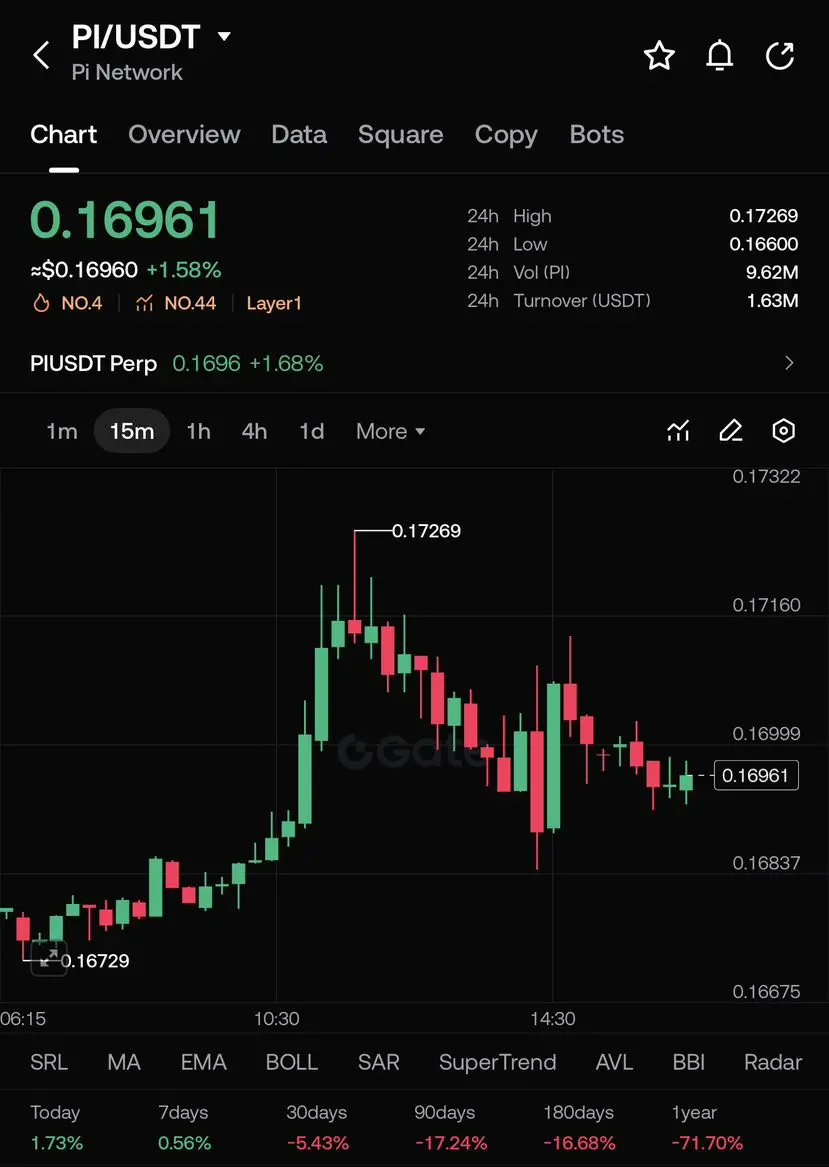
LedgerBull
$PI showing early recovery strength after short-term pullback.
Structure stabilizing with buyers defending support.
EP
0.16850 - 0.17000
TP
TP1
0.17250
TP2
0.17500
TP3
0.17800
SL
0.16600
Liquidity below recent range has been tested and price is holding above support. Any dip into the entry zone looks like a reaction into demand, with structure favoring continuation if higher lows continue to form.
Let’s go $PI ‌
repost-content-media
  • Reward
  • Comment
  • Repost
  • Share
Recently, I saw someone make a chart showing the supply of stablecoins, ETF net inflows, and off-exchange capital inflows and outflows, then immediately draw conclusions... I understand, the chart looks tempting, but correlation does not really equal causation. More stablecoins might just mean changing parking spots, ETF inflows could be hedging trades moving bricks, and off-exchange money is coming and going, there’s no such straight line.
Especially now, with extreme fee rates, the group is arguing loudly: is it a reversal or just more bubble squeezing? Honestly, I don’t know either, so I ju
View Original
  • Reward
  • Comment
  • Repost
  • Share
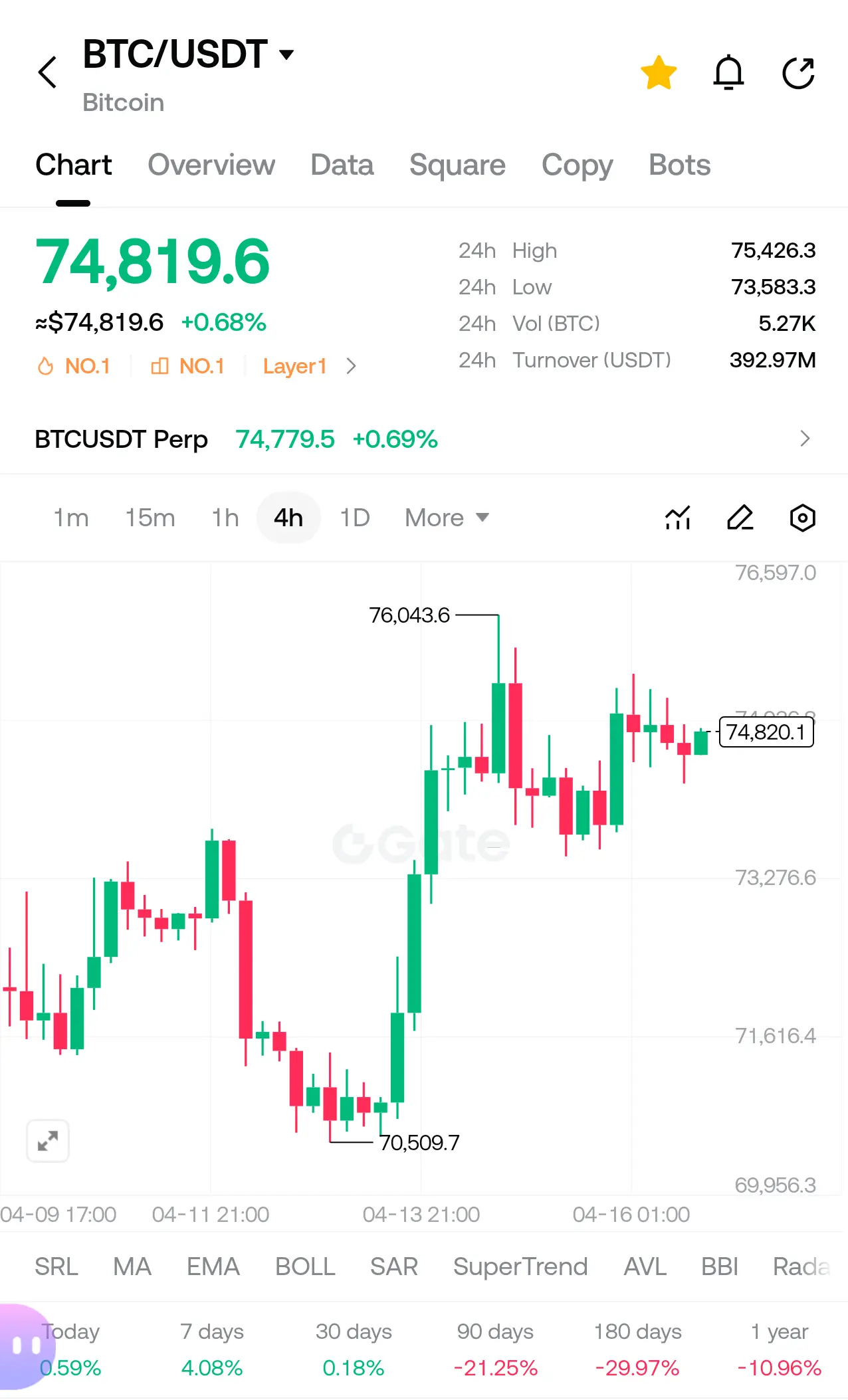
If 76k breaks cleanly, there should be a period of acceleration, first watch 76.5 and then look at 78.
View Original
MarcusCorvinus
$BTC bullish, breakout pressure is building
I’m seeing strength after the rebound from 70.5k.
Price is holding well on 4H and compressing under resistance.
Entry : 74.2k – 74.8k
Target : 76.5k → 78k
Stop Loss : 72.9k
How it’s possible :
Sweep below support was taken, buyers stepped in, and now price is holding higher.
If 76k breaks clean, expansion follows.
I’m bullish while this range holds.
Let’s go and Trade now $BTC
repost-content-media
  • Reward
  • Comment
  • Repost
  • Share
Support using verification + anti-bot measures to eliminate spam, allowing those who genuinely create content to earn money.
View Original
BlockchainDiary
Currently, some KOLs are a bit fake, for example, many with high likes and shares are actually bought.
Why is this happening? Because brands are still looking at data, and they allocate budgets to those who look good on paper.
But the problem is that those who genuinely create content find it harder to make money, as budgets are eaten up by fake traffic, and users are increasingly distrustful of this content.
This is the so-called engagement farming, which essentially involves faking data.
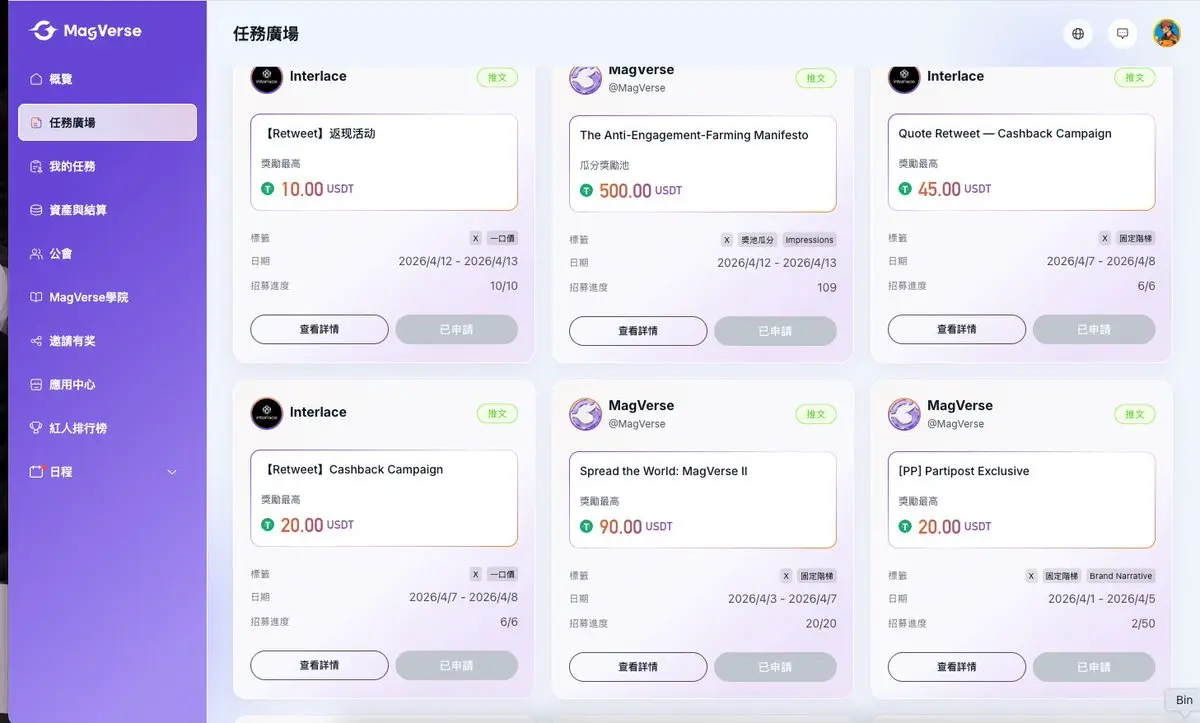
Recently, I saw what @Magverse_AI is doing; their approach is quite straightforward—focusing not on how popular you appear on the surface, but on your real results.
For example:
Verifying KOLs, filtering out bots, linking earnings to actual performance, and on-chain settlements that cannot be faked.
If you're a content creator, you might want to think: do you want to continue competing with fake data, or start competing with real value?
Join us together 👉
#onchain #aiagents
repost-content-media
  • Reward
  • Comment
  • Repost
  • Share
If the performance benchmark is met and additional bonuses are awarded, this clause also puts considerable pressure on the manager.
View Original
BraveBullsAreNotAfra
Breaking News from Gate, April 15 — Singapore-based quantitative hedge fund Meridian & Saturn Capital (MS Capital) announced that it has secured a dedicated investment mandate of $1 billion for trading Chinese stocks. The funds primarily come from a Middle Eastern sovereign wealth fund. The agreement also includes a clause: if MS Capital reaches a preset performance benchmark, additional capital injections will be made. This mandate is one of the largest allocations from a Middle Eastern sovereign fund to Chinese quantitative strategies to date, reflecting growing interest amid regional volatility and the enhanced performance driven by AI-powered tools. MS Capital manages approximately $1.5 billion in assets, including an initial $500 million from Middle Eastern clients. The firm is in talks with other regional funds and plans to open offices in Abu Dhabi, Hong Kong, and the United States.
  • Reward
  • Comment
  • Repost
  • Share
The Korean financial market has indeed reached a turning point; whoever digitizes their processes first will be the first to reap the benefits.
View Original
BraveBullsAreNotAfra
Ripple and Korea's major insurance company Kyobo Life Insurance announced a strategic partnership on April 14, planning to test tokenized government bond trading in a regulated environment through the Ripple Custody platform. Ripple characterized this as "Korea's first blockchain-based tokenized government bond settlement."
Core of the partnership: shorten settlement cycles and reduce counterparty risk.
Traditional government bond transactions usually require two business days (T+2) to settle.
The main testing goal of this collaboration is to evaluate whether a blockchain-based processing mechanism can reduce settlement time to nearly instant, bringing two specific benefits:
First, reduce counterparty risk (a shorter settlement window means less exposure time);
Second, accelerate the flow of institutional funds.
This partnership is essentially a test of traditional financial infrastructure, not the launch of digital assets as a standalone product line.
Fiona Murray, Managing Director of Ripple Asia-Pacific, said: "Korea's institutional financial market is at a turning point. Kyobo Life Insurance is one of Korea's most respected financial institutions and is the first large insurance company to take this step with us."
  • Reward
  • Comment
  • Repost
  • Share
Lately I've been interacting with airdrops again, which really feels a bit like back in the day mining for graphics cards... but now it's easier to get caught out: projects shout "no witch hunts" while hiding rules deeper than the pool fees.
My approach is pretty simple: first check if on-chain settlements are reliable and if the contract permissions don't have outrageous backdoors, then decide whether to spend gas to "participate."
I don't chase the full set of interactions; I do what fits real needs smoothly, like cross-chain transfers or exchanges. Otherwise, just for a little click her
View Original
  • Reward
  • Comment
  • Repost
  • Share
  • Pin