AlphaAfterTea

vip
Age 0.1 Year
Peak Tier 0
Don’t chase the earliest opportunities, only go for the most reliable second chances; skilled at breaking down narratives into verifiable on-chain signals.
What’s the signal here? Kind of interesting.
View Original
God-givenTeam
Does this mean there's some kind of hint???
What's going on?
repost-content-media
  • Reward
  • Comment
  • Repost
  • Share
The more I look at governance, the more it feels a bit awkward: everyone talks about decentralization, but in practice, they delegate their votes to "the most professional few," and in the end, it becomes a small number of addresses making decisions every day. Honestly, who do governance tokens really govern... maybe mainly the time cost of ordinary people, because if you don’t monitor the forums or follow every proposal detail, you can only leave it to others to decide for you.
Recently, when cross-chain bridge hacks happen, the community immediately shifts into a consensus mode of "don’t act
View Original
  • Reward
  • Comment
  • Repost
  • Share
I'm just someone who loves analyzing on-chain data. Recently, everyone has been talking about "data availability, ordering, finality," and it's giving me a headache. Actually, focusing on one main thread is enough: whether your transaction can ultimately be "seen and recognized" by everyone. Data availability is like whether the receipt is publicly displayed; ordering is about who goes first and who goes after, and whether someone can jump the queue; finality is whether this matter is considered settled and official. When the group chats about stablecoin regulation, reserve audits, and various
View Original
  • Reward
  • Comment
  • Repost
  • Share
Wishing everyone not only financial freedom but also spiritual freedom, shining brightly.
View Original
ExtremeWayBit
$BTC $SOL Once, we all had dreams that seemed out of reach! But since dreams support us, how can we be content with mediocrity! Keep going! Stranger, may everyone's life be bright and glorious!❤️
repost-content-media
  • Reward
  • Comment
  • Repost
  • Share
I used to think I was a "person who can hold on," but when spot prices shake, I get itchy to switch, and when contracts bounce back, I get liquidated directly... Now I sum it up in plain language: don't take "seeing the right direction" as "being able to prove yourself with full position."
My current approach is pretty simple—first treat the part I can sleep peacefully with as the core position, and only use the rest to tinker, and every time I tinker, I assume I might lose several times in a row, so the position is small enough that even losing doesn't affect my mindset.
Recently, everyon
View Original
  • Reward
  • Comment
  • Repost
  • Share
I've recently revisited the terms L2 (data availability, ordering, finality) and felt that there's no need to be scared. Basically, there's one main thread: who do you really trust, and whether you can reconcile the accounts if something goes wrong. Where the data is stored, who queues up, how long it takes to be considered a "true transaction"—these determine whether you're playing for excitement or playing for certainty.
Later, I realized that many newcomers are led by memes and celebrity calls, essentially using attention as liquidity. When the rotation speeds up, it's easier to catch the f
View Original
  • Reward
  • Comment
  • Repost
  • Share
The large divergence between bulls and bears actually indicates that it's time to carefully select individual companies rather than betting on industry beta.
View Original
CryptoFrontier
Semiconductor Long Trade Becomes Most Crowded, Institutions Seek Subsector Alpha
The essay discusses the crowded positioning in the semiconductor market, with growing institutional interest amid AI investments. It highlights bearish sentiments from notable investors and pressures facing China's A-share sector, while also noting a shift towards exploring niche subsector opportunities.
  • Reward
  • Comment
  • Repost
  • Share
Recently, the group messages have been overwhelming, with one moment a KOL screenshot of "all-in" and the next a celebrity meme trending, attention shifting like opening blind boxes. Honestly, when it comes to impulsive buying, no one can take the blame for you: whether it's the group or the KOLs, they are responsible for speaking out, and you're responsible for pressing the keys.
I now prefer to treat "narrative" as a hypothesis to be verified: Are there new wallets continuously appearing on the chain? Are old wallets quietly exiting? Is liquidity suddenly thinning out... Just take a quick lo
View Original
  • Reward
  • Comment
  • Repost
  • Share
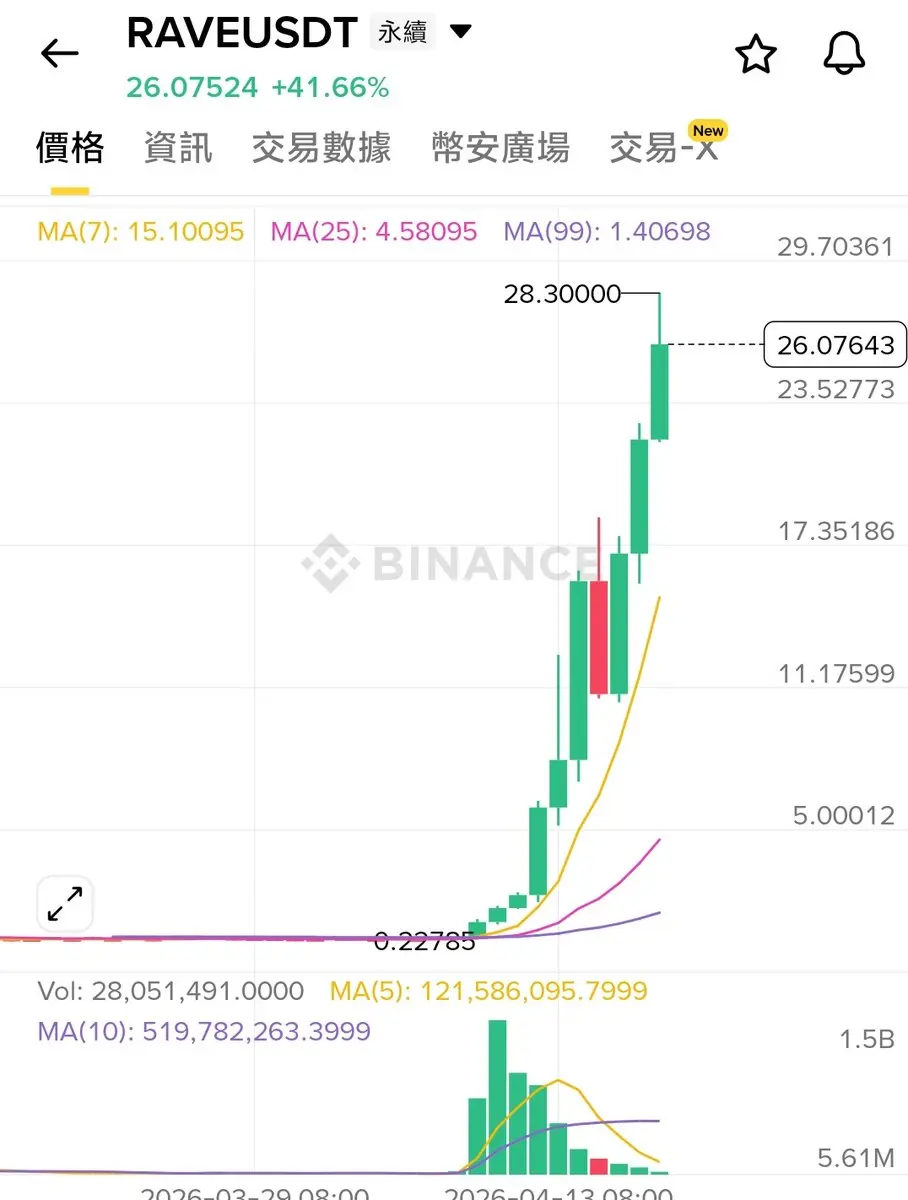
High-level shrinking volume + sentiment retreat, the short-selling logic is valid, but remember to set a stop loss.
View Original
SituLieqiMarketTrend
RAVEU's high-level shrinking volume is extremely severe. You can now short directly; there is no more room for upward movement, and no one is buying anymore.
repost-content-media
  • Reward
  • Comment
  • Repost
  • Share
Someone asked me whether grid/DCA or a single trade is better for sleeping well. I actually just want to say: it depends on whether you can accept the anxiety of "waking up to find you've taken the wrong direction." A single trade is satisfying, but you have to monitor it all the time, especially recently with talks about tax increases, tighter or relaxed regulations. When deposit and withdrawal expectations change, your emotions can instantly lead you astray. Grid and DCA are like installing a speed limiter on yourself—slower, clumsier, but at least you know what you're waiting for: verifiabl
View Original
  • Reward
  • Comment
  • Repost
  • Share
Lately, watching those "sandwich" "arbitrage" trades on the chain feels a bit like watching a crowd on the roadside: you think you've scored a bargain, but you might actually be paying a toll for others. Especially when slippage is large and rushing into hot pools, the trade feels good at the moment, but when you recalculate the net value, it doesn't quite add up.
I'm now more willing to break down "opportunities" into verifiable signals: the same group of addresses repeatedly eating the same type of path, always being right next to you in the block, gas surprisingly willing to be burned...
View Original
  • Reward
  • Comment
  • Repost
  • Share
SoSoValue + BeInCrypto's data all point to the same thing: buying activity is becoming more "legitimate."
View Original
Coinstages
🏛️ ALTCOIN ETF AWAKENING: SOLANA AND CHAINLINK LOG RECORD INFLOWS AS INSTITUTIONS RETURN
According to the latest data from SoSoValue and BeInCrypto, spot ETFs for Solana (SOL) and Chainlink (LINK) recorded their most significant daily inflows in over a month on April 16.
repost-content-media
  • Reward
  • Comment
  • Repost
  • Share
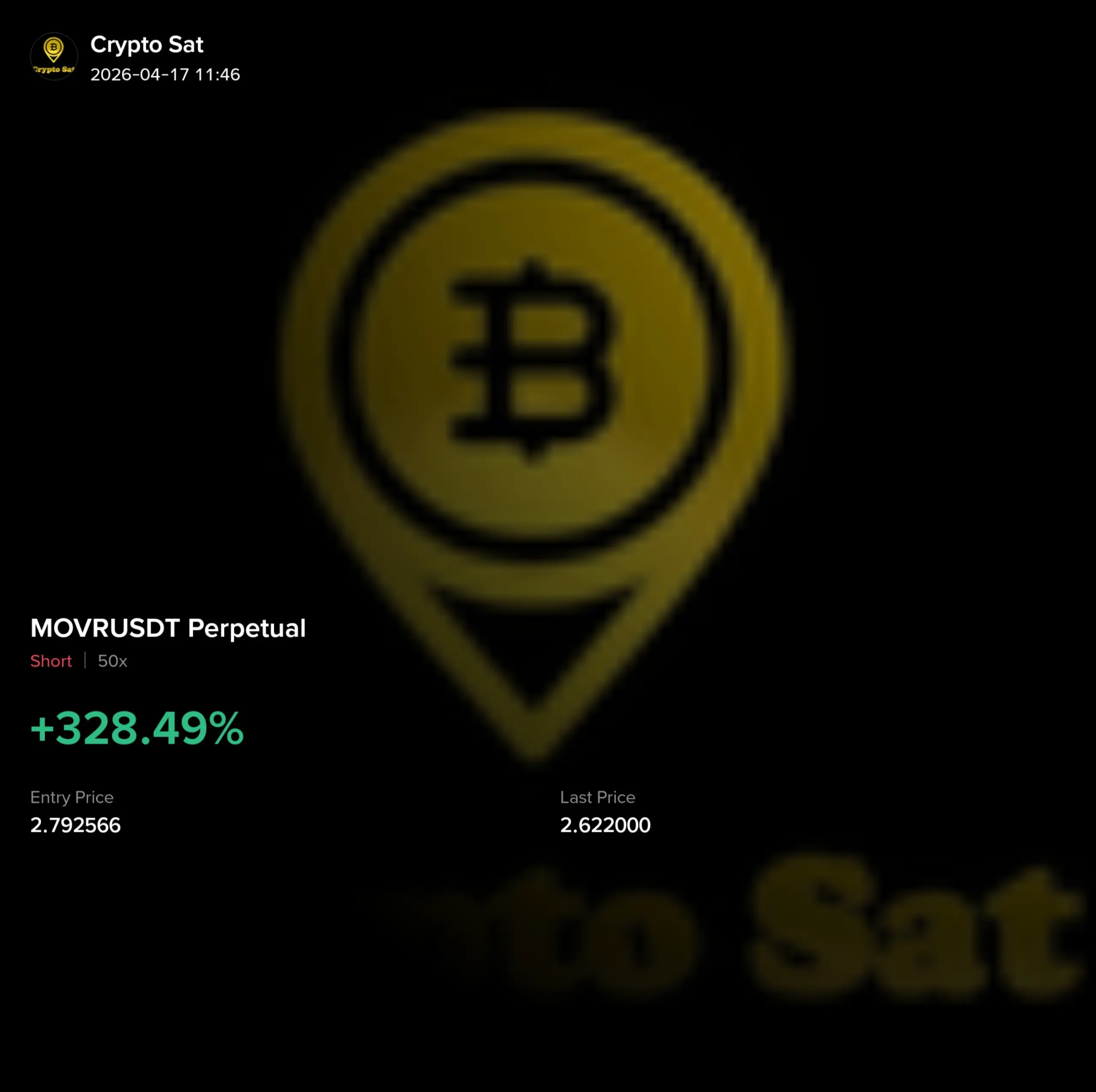
MOVR is so volatile, especially avoid using high leverage; just follow the plan.
MOVR-6.7%
View Original
CryptoSat
$MOVR TRADE UPDATE
I must recommend you shift your stop-loss to entry price once tp3 hits...
This is highly risky trade so don't gamble with huge amounts 👍
repost-content-media
  • Reward
  • Comment
  • Repost
  • Share
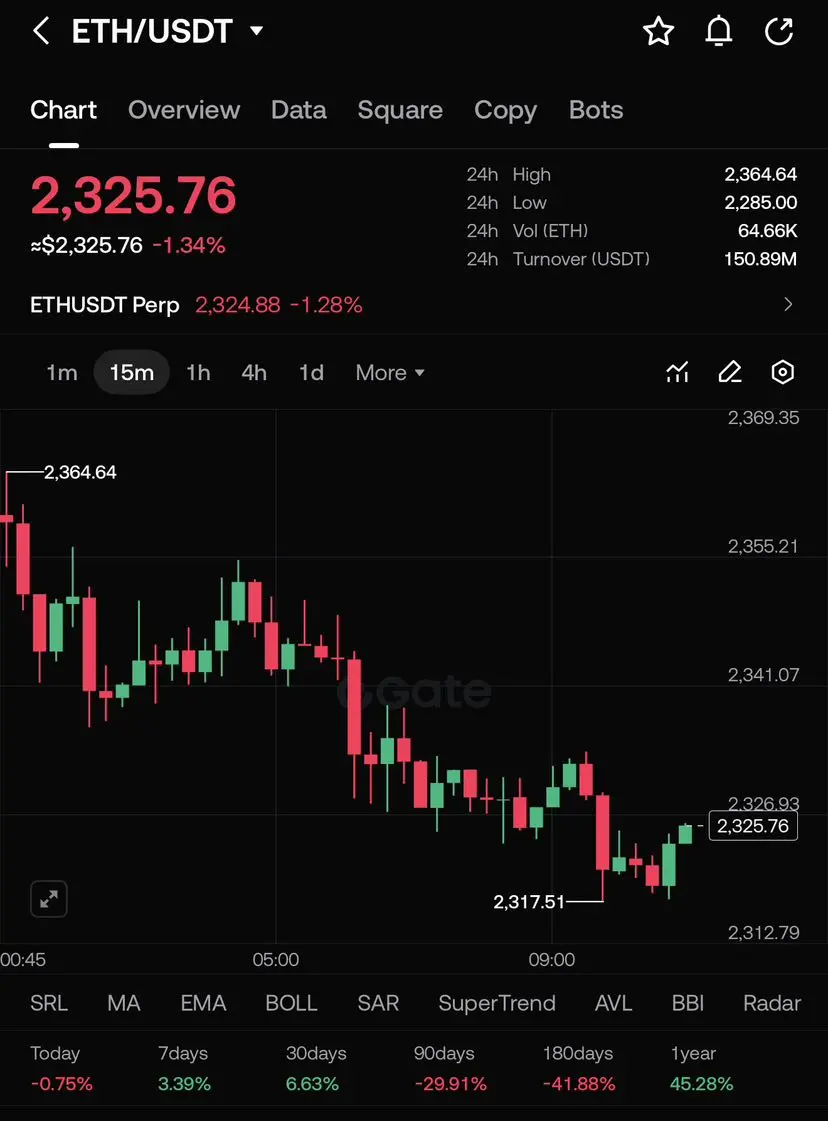
If 2220 gets hit, I guess a bunch of people will be shouting "buying the dip" again.
View Original
LedgerBull
$ETH showing short-term weakness after rejection from local highs.
Sellers in control with structure leaning bearish on lower timeframes.
EP
2320 - 2340
TP
TP1 2290
TP2 2260
TP3 2220
SL
2365
Liquidity above 2350 was swept before downside continuation, confirming sell-side pressure. Lower highs forming with weak bounce attempts suggest further downside unless structure reclaims resistance.
Let’s go $ETH ‌
repost-content-media
  • Reward
  • Comment
  • Repost
  • Share
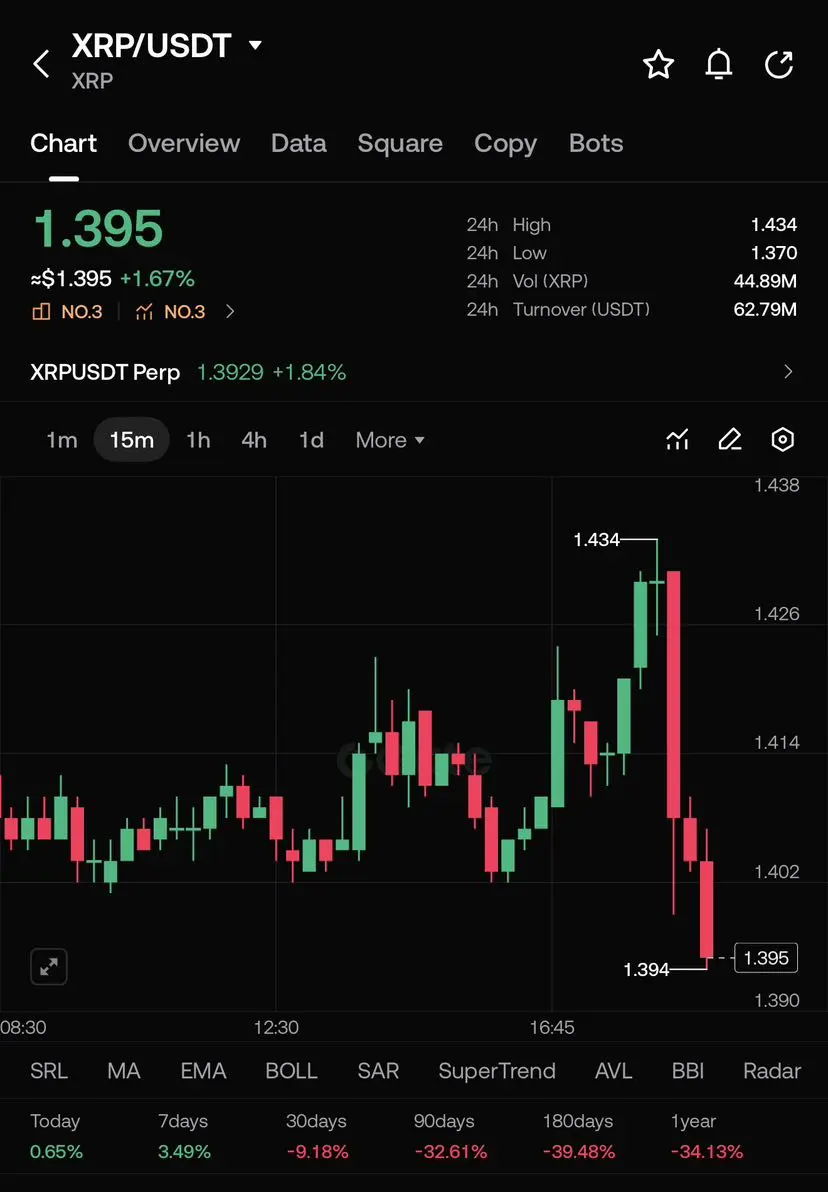
I'm more concerned about whether there is a decent support around 1.34. If the trading volume decreases after dropping there, it might only then have a rebound opportunity.
View Original
LedgerBull
$XRP showing rejection from local highs with momentum shifting bearish.
Sellers gaining control as structure starts breaking down on lower timeframes.
EP
1.395 - 1.410
TP
TP1 1.370
TP2 1.340
TP3 1.300
SL
1.440
Liquidity above 1.43 was swept before a sharp reversal, indicating distribution. Weak follow-through on upside and strong bearish candles suggest continuation lower unless price reclaims the broken resistance.
Let’s go $XRP ‌
repost-content-media
  • Reward
  • Comment
  • Repost
  • Share
Many people only shout “the central bank’s bond issuance is bearish,” but in your piece you break down the path, and the logic is more like a macro class.
View Original
BraveBullsAreNotAfra
What is the true impact of the central bank selling U.S. Treasuries on the crypto market?
Let's start with the conclusion: the impact is real, but not direct—it propagates through the chain of "yield → liquidity → risk appetite" into the crypto market.
1. Transmission Path: How does the central bank's sale of U.S. Treasuries affect BTC?
First step: Treasuries are sold → yields rise. When the central bank reduces its holdings of Treasuries, bond prices fall, and yields go up correspondingly. The 10-year U.S. Treasury yield is the "anchor" for global risk pricing; when it rises, the relative attractiveness of all risk assets declines.
Second step: Higher yields → pressure on crypto assets. If yields stubbornly stay high (recent data shows the 10-year yield above 4%), the opportunity cost of holding "zero-yield" assets like BTC increases—your money in Treasuries earns a steady return, so why take risks on buying coins? This directly suppresses BTC valuation logic.
Third step: Dollar appreciation → further pressure on crypto. If, after selling bonds, some central banks switch to holding cash in dollars, it can temporarily boost the dollar index, and historically, a strong dollar often correlates negatively with crypto asset performance.
2. Recent real-world cases confirm this logic—In March 2026, after the Fed adopted a hawkish stance and hinted at slowing rate cuts, BTC dropped 5% in a single day, and the entire crypto market lost over $100 billion in market cap, with over $117 million BTC being sold from OG addresses in one day.
In late March 2026, the 10-year Treasury yield approached a high of 4.5% for the year, and Bitcoin simultaneously fell below $68,000. The movement of these data points was almost synchronized.
3. However, an important counter-narrative deserves attention: not all central bank bond sales are bearish for crypto.
Recent data shows that emerging markets like China and India have indeed been reducing their U.S. debt holdings (China has reduced about $71.5 billion in the past two years), but at the same time: private buyers have stepped in to buy, and foreign holdings have actually increased from $8.77 trillion to $9.25 trillion; gold demand hit record highs, interpreted as "de-dollarization and diversified allocation"; some analyses suggest that this macro anxiety (fiscal risks, geopolitical tensions, expectations of a weaker dollar) could be long-term bullish for BTC’s "hard asset" narrative—since some are starting to see BTC as a tool to hedge against sovereign currency risks.
But it’s important to emphasize: this narrative is currently more "emotional resonance" than quantifiable capital inflow, and empirical data backing it is not yet solid.
4. Key variable: How to interpret rising yields?
There’s a subtlety here—how the market perceives rising yields determines BTC’s direction:
- If rising yields are seen as inflation expectations heating up (real yields low), it’s bullish for BTC, strengthening its inflation hedge narrative.
- If yields are driven by liquidity tightening (real yields high), it’s bearish, as the cost of holding zero-yield assets increases.
Currently, the environment leans more toward the latter, so short-term bond sell-offs pushing yields higher generally create a bearish macro backdrop for crypto.
5. Bottom-line short-term judgment:
If large-scale bond sales push U.S. Treasury yields higher and strengthen the dollar, the crypto market is likely to face short-term pressure, with BTC and high-beta altcoins falling more than gold.
In the medium to long term: if this bond sell-off is interpreted as a signal of "de-dollarization + fiscal unsustainability," it could actually reinforce BTC’s scarcity narrative and attract some long-term capital.
Variable monitoring: Keep an eye on the 10-year real yield (TIPS) and the dollar index DXY, as they are the most direct leading indicators.
Markets are not monolithic; how macro signals are interpreted often matters more than the signals themselves.
This is also what makes the crypto market the most challenging and interesting.
  • Reward
  • Comment
  • Repost
  • Share
Recently, memes have become lively again, but honestly, what I fear most is not a pullback, but being driven by emotions to add more positions.
My stop-loss is set very "simple": first, think clearly about what signals on the chain would appear if this narrative is disproven (such as new addresses, coin holding distribution, sudden drop in trading activity).
Once I see that kind of "the hype is still there, but the chain shows signs of cooling off," I reduce my position, without waiting for the K-line to teach me a lesson.
Airdrop season is the same; task platforms with anti-witchcraft +
View Original
  • Reward
  • Comment
  • Repost
  • Share
Lately, I've been jokingly frustrated and annoyed by testing network points.
It was supposed to be just practicing and familiarizing with the process, but the more I click, the more it feels like clocking in at work.
I defaulted to thinking, "I'll definitely get something in return later," and once that expectation kicked in, I started increasing my time and Gas fees.
In the end, I unknowingly lost money on costs.
I set a very simple stop-loss for myself: one chain / one project, at most two nights of tinkering.
If I don't see new addresses or significant activity on-chain (just the
View Original
  • Reward
  • Comment
  • Repost
  • Share
Japan's recent move to include cryptocurrencies in the Financial Instruments and Exchange Act, along with addressing insider trading and disclosure obligations, has raised compliance thresholds to the maximum, but it is considered a positive development for institutional entry.
View Original
CryptoNewcomersAreHere22222
(FSA) Previously regulated cryptocurrencies under the "Funds Clearing Law," using payment methods as the basis for supervision. As the investment uses of cryptocurrencies continue to expand, the proportion of users holding assets for profit has significantly increased, and the current regulatory framework has become insufficient to effectively protect investors' rights. Based on this background, the Financial Services Agency has decided to transfer the regulatory framework to the "Financial Instruments and Exchange Act," placing cryptocurrencies alongside stocks, bonds, and other traditional financial products in legal classification, and related industry players will face compliance standards similar to those of traditional financial institutions. This transition also brings Japan's cryptocurrency regulatory structure closer to the mainstream financial regulations of major G7 economies. Core provisions of the amendment: strengthened obligations and upgraded penalties.
Main changes in the amendment:
Insider trading ban: Explicitly prohibits trading cryptocurrencies using material non-public information, filling gaps in current law.
Annual disclosure obligations: Cryptocurrency issuers must regularly disclose financial and business information to regulators and investors.
Change of operator name: Registered operators are officially renamed from "cryptocurrency exchange operators" to "cryptocurrency trading operators."
Increased criminal penalties: The maximum prison term for unlicensed operators is increased from 3 years to 10 years, and the fine cap is raised from 3 million yen to 10 million yen.
  • Reward
  • Comment
  • Repost
  • Share
  • Pin